

Exploring the Symphony of Neurons: The Brain’s Intricate Communication Network
The Brain’s Cellular Orchestra
The brain, an organ of astonishing complexity, orchestrates our thoughts, movements, emotions, and sensations through an intricate network of neurons. Understanding how these neurons communicate within this elaborate system not only unveils the mysteries of our brain’s functionality but also sheds light on the essence of our very being. In this exploration, we delve into the neuron’s structure and function, revealing how these cells enable the brain’s regions to interact seamlessly, creating the symphony of our cognitive and physical capabilities.
Neurons: The Brain’s Communicative Conduits
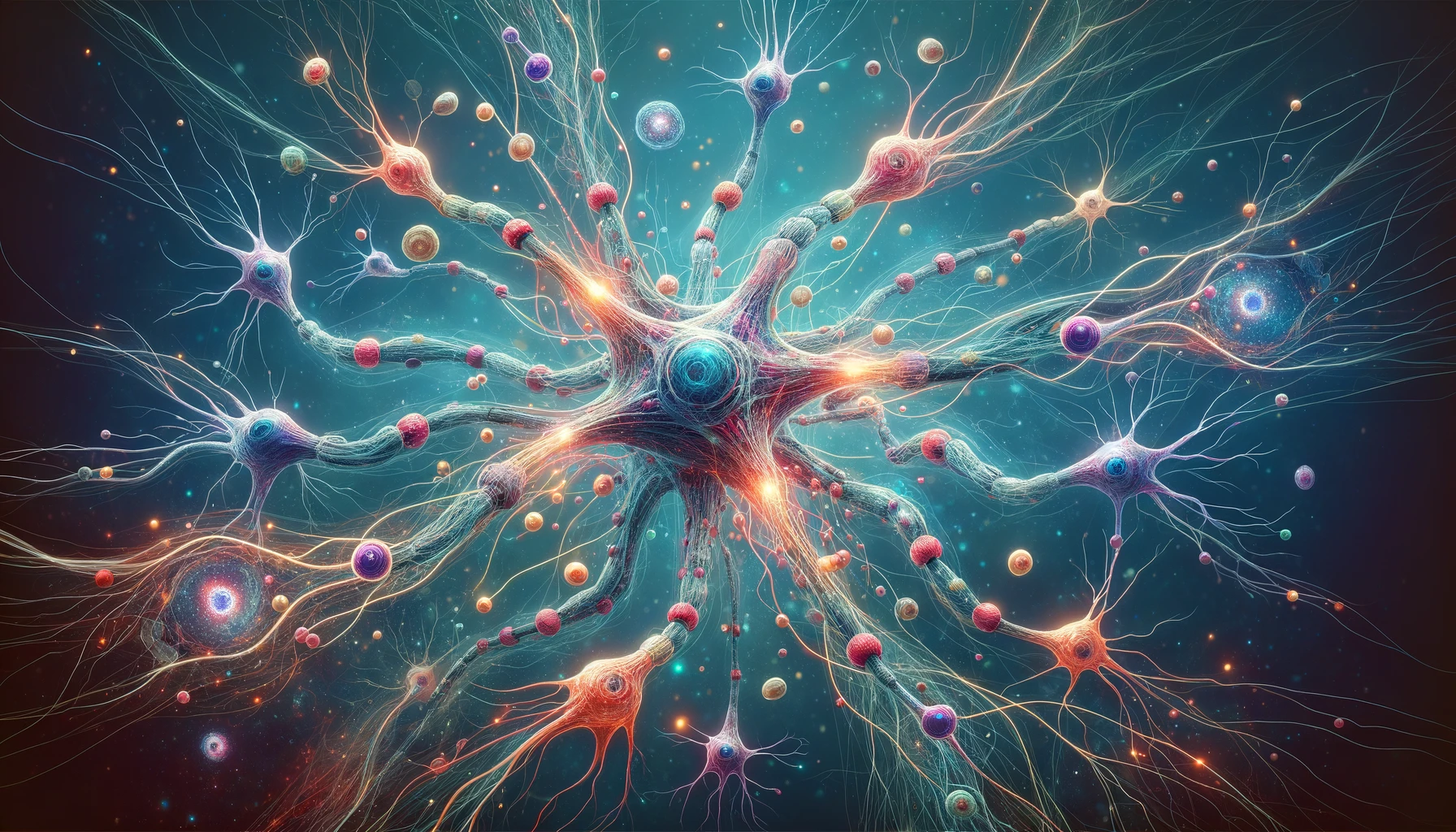
At the core of the brain’s communication system are neurons, the specialized cells responsible for transmitting and processing information. Each of the estimated 86 billion neurons in the human brain is a marvel of biological engineering, featuring unique extensions that facilitate intercellular communication. Dendrites, with their bush-like or branching structure, serve as the neuron’s antennae, receiving signals from other neurons. In contrast, the axon, a singular, tail-like projection, plays the role of the broadcaster, transmitting signals to other neurons.
These neuronal extensions are not static; they dynamically evolve based on our interactions and environmental exposures, underscoring the brain’s adaptability—a phenomenon known as neuroplasticity. This adaptability is essential for learning, memory formation, and the overall ability to respond to changing circumstances.
The Neuronal Network: An Electrical and Chemical Ballet
Neurons form the brain’s electrical information highway, creating pathways that allow for the rapid transmission of signals across vast distances at speeds reaching 250 miles per hour. This electrical signaling is the neuron’s primary function, facilitating the communication that underpins every thought, decision, and action.
When an electrical impulse, or action potential, travels down an axon and reaches the synaptic terminal, it triggers the release of neurotransmitters. These chemical messengers bridge the gap—the synapse—between neurons, carrying the signal onward to excite or inhibit neighboring neurons. The dance between excitatory and inhibitory signals is crucial for maintaining the brain’s overall balance and functionality.
Neurotransmitters: The Brain’s Chemical Messengers
Key players in this inter-neuronal communication are neurotransmitters, each with specific roles in modulating brain activity. Glutamate, the predominant excitatory neurotransmitter, activates neurons, propelling the brain’s electrical activity. In contrast, GABA, the primary inhibitory neurotransmitter, plays a pivotal role in calming neuronal activity, preventing excessive stimulation that could lead to disorders such as anxiety.
Beyond these, other neurotransmitters like serotonin, dopamine, and acetylcholine contribute to a range of vital functions, from regulating mood and anxiety to enhancing focus, motivation, and memory. This delicate balance of neurotransmitters is essential for the brain’s optimal performance and our overall well-being.
The Network Effect: A Collective Performance
With each neuron potentially connected to a thousand others, the brain forms an incredibly dense network of synaptic connections, estimated to number around 100 trillion. This vast network is the foundation of the brain’s immense storage capacity, allowing for the encoding, storage, and retrieval of countless memories and pieces of information.
Conclusion: The Neuronal Symphony
Understanding the nuanced communication between neurons offers a glimpse into the brain’s profound capabilities. These cellular interactions underpin everything from our simplest movements to our most complex thoughts, embodying the brain’s power and potential. By appreciating how neurons talk to one another, we gain insight into the orchestration of the brain’s functions and a deeper appreciation for the intricate biological symphony that drives our existence.