Mirror Therapy for Stroke Recovery
Mirror therapy is a simple, low-cost rehabilitation technique. A mirror is placed between the arms or legs so that the reflection of the healthy limb appears to be the affected one. Moving the healthy limb creates the visual illusion of normal movement in the impaired limb.
Origins
Vilayanur Ramachandran developed mirror therapy in the 1990s to treat phantom limb pain, where amputees feel pain in a missing limb. Seeing the reflection of the intact limb appeared to relieve the perception of a clenched or painful phantom. The method was later applied to stroke rehabilitation, complex regional pain syndrome and other conditions.
How it may work
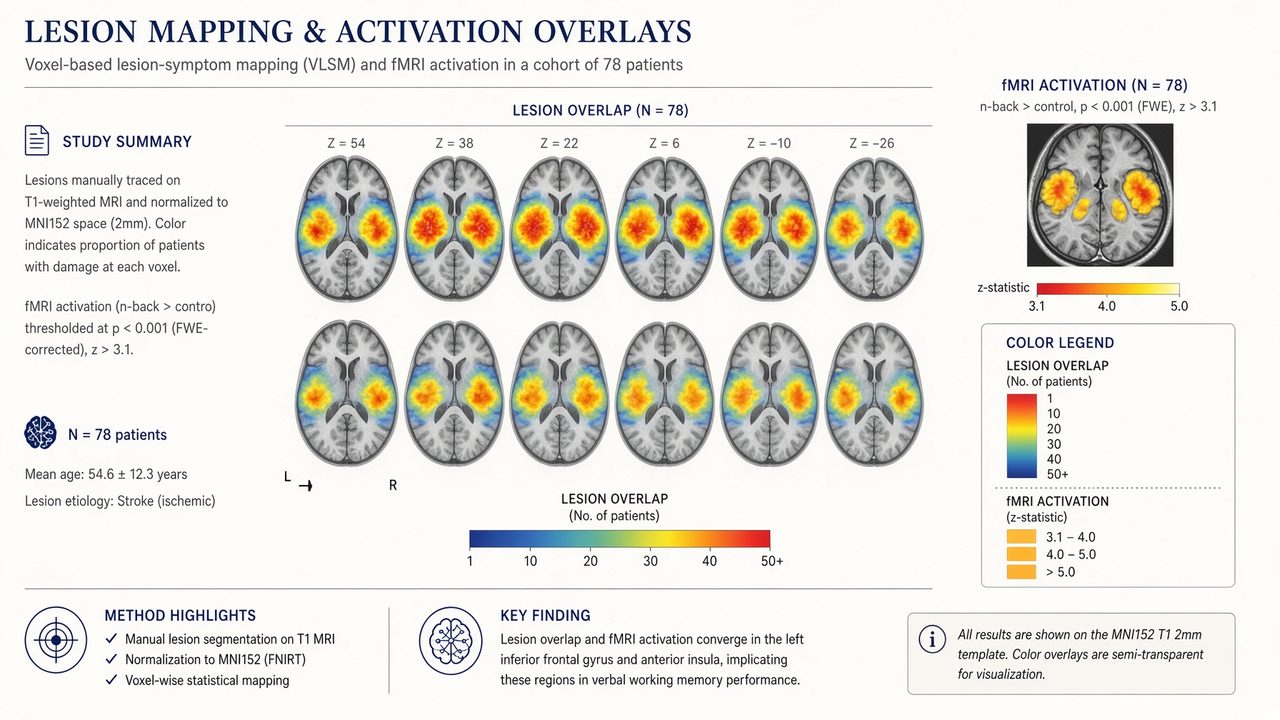
- Visual feedback activating motor regions: observing movement of what appears to be the affected limb activates the motor cortex on the injured side, probably through the mirror neuron system and visuomotor pathways, as shown in imaging and transcranial magnetic stimulation studies by Eckart Altenmüller and others.
- Overcoming learned nonuse: seeing normal movement may encourage attempts to use the weak limb.
- Attention to the affected side: helpful in people with neglect.
- Resolving sensory mismatch: the illusion may reduce conflict between motor intent and visual feedback, which has been proposed as a contributor to pain.
- Motivation and engagement: the technique is easy to understand and use.
What research shows
A Cochrane review of stroke rehabilitation, updated by Jan Mehrholz and others, concluded that mirror therapy improves motor function and activities of daily living modestly after stroke, with some evidence of reduced pain in complex regional pain syndrome, though the quality of evidence is moderate. Trials in Germany, including that of Thieme and colleagues, support its use for arm and leg function. Effects on the hand are often smaller than for the whole arm. Results for phantom limb pain are mixed, with a small randomized trial in military amputees reporting less pain with mirror therapy than with control conditions, and other trials showing little benefit.
How to practice
- Set up: sit at a table with a mirror upright between your arms, reflective side facing the healthy limb. Hide the affected limb behind the mirror.
- Look at the reflection while moving the healthy hand or foot slowly, and try to move the affected limb at the same time, if able, or imagine it moving.
- Sessions: typically 15 to 30 minutes, daily or several times weekly, for four to six weeks or more.
- Tasks: wrist flexion, finger tapping, grasping, reaching, and ankle movements. Progress to functional tasks.
- Supervision: begin with a therapist, and then continue at home.
Who may benefit
People with mild to moderate weakness after stroke, phantom limb pain, and complex regional pain syndrome. People with severe visual or cognitive impairment, significant neglect or severe pain on movement may find it difficult.
Related methods
- Motor imagery and action observation: imagining or watching movements
- Virtual mirror therapy using video or virtual reality
- Combined approaches: electrical stimulation, constraint-induced therapy
Takeaway
Mirror therapy tricks the brain into seeing recovery, and the illusion can help the real thing. It is cheap, safe and worth discussing with your rehabilitation team.
Further reading from authoritative sources
This article is educational and does not replace advice from a licensed clinician. See the medical disclaimer. Looking for specialist care? Browse the neurology clinic directory.