Cingulate Cortex Complexities: Emotion and Error Detection
Wrapped around the corpus callosum like a collar, the cingulate cortex serves as a hub linking emotion, attention, memory and action. The Latin word for collar or belt gives it its name. Its subregions have strikingly different jobs, which is why the structure is often described as complex.
Subdivisions
- Anterior cingulate cortex (ACC): involved in attention, motivation, error monitoring, pain and emotion. Subparts include the dorsal ACC, associated with cognitive control, and the subgenual and pregenual ACC, associated with emotion and mood.
- Midcingulate cortex: movement, pain and action selection
- Posterior cingulate cortex (PCC): part of the default mode network, involved in memory and self-referential thought
- Retrosplenial cortex: spatial memory and navigation
Error detection and conflict
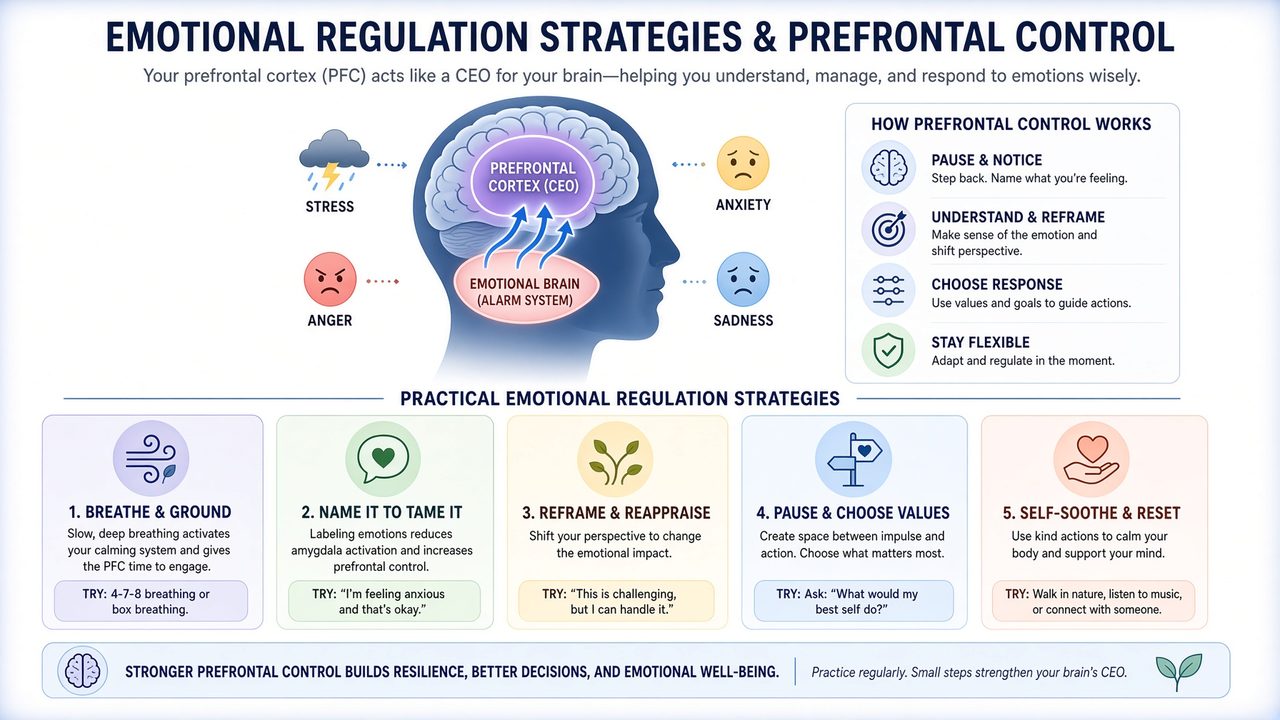
When you make a mistake, the ACC produces a signal, recorded with EEG as the error-related negativity, within about 100 milliseconds of the response. It also activates when two responses conflict, as in the Stroop task, where you name the ink color of a color word. The conflict monitoring theory proposes that the ACC detects such conflict and signals the prefrontal cortex to increase control. Newer theories emphasize its role in judging whether effort is worthwhile and in guiding learning from outcomes.

Emotion and pain
The ACC contributes to the unpleasantness of pain, rather than its location or intensity, which the somatosensory cortex handles. It also responds when we observe others in pain, supporting empathy. Because of this role in suffering, lesions to the cingulum, a procedure called cingulotomy, have been used rarely in severe, treatment-resistant pain, obsessive-compulsive disorder and depression.
Autonomic control and motivation
The ACC influences heart rate and blood pressure through hypothalamic and brainstem connections. Damage can reduce motivation. Bilateral damage may cause akinetic mutism, in which a person is awake but barely moves or speaks.
Disorders
- Depression: the subgenual ACC is overactive in some depressed patients, and Helen Mayberg's team targeted it with deep brain stimulation for treatment-resistant depression, with mixed results in trials.
- Anxiety and PTSD: altered ACC reactivity
- OCD: hyperactivity in cortico-striatal circuits including the ACC, with cingulotomy as a last resort
- ADHD: reduced ACC activity in some studies
- Schizophrenia: reduced error signaling
- Chronic pain: altered ACC activity and connectivity
- Alzheimer's disease: the posterior cingulate shows early metabolic reductions
- Frontotemporal dementia: the ACC is affected early, with apathy and emotional blunting
Plasticity and training
Cognitive training and mindfulness meditation have been associated with changes in ACC activity and structure. Neurofeedback protocols targeting ACC-related activity are being studied, but evidence remains preliminary.
Practical points
- Learn from errors: the ACC response is stronger when you care about performance and feel safe to make mistakes.
- Manage chronic stress, which can alter ACC function.
- Address pain holistically, since emotional processing shapes the experience.
- Stay socially engaged, as empathy engages these circuits.
Takeaway
The cingulate cortex is a monitor of what matters: it flags errors, weighs effort and feels the sting of pain. Its subregions show that cognition and emotion are tightly intertwined.
Further reading from authoritative sources
This article is educational and does not replace advice from a licensed clinician. See the medical disclaimer. Looking for specialist care? Browse the neurology clinic directory.