Salience Network Secrets: How the Brain Decides What Matters
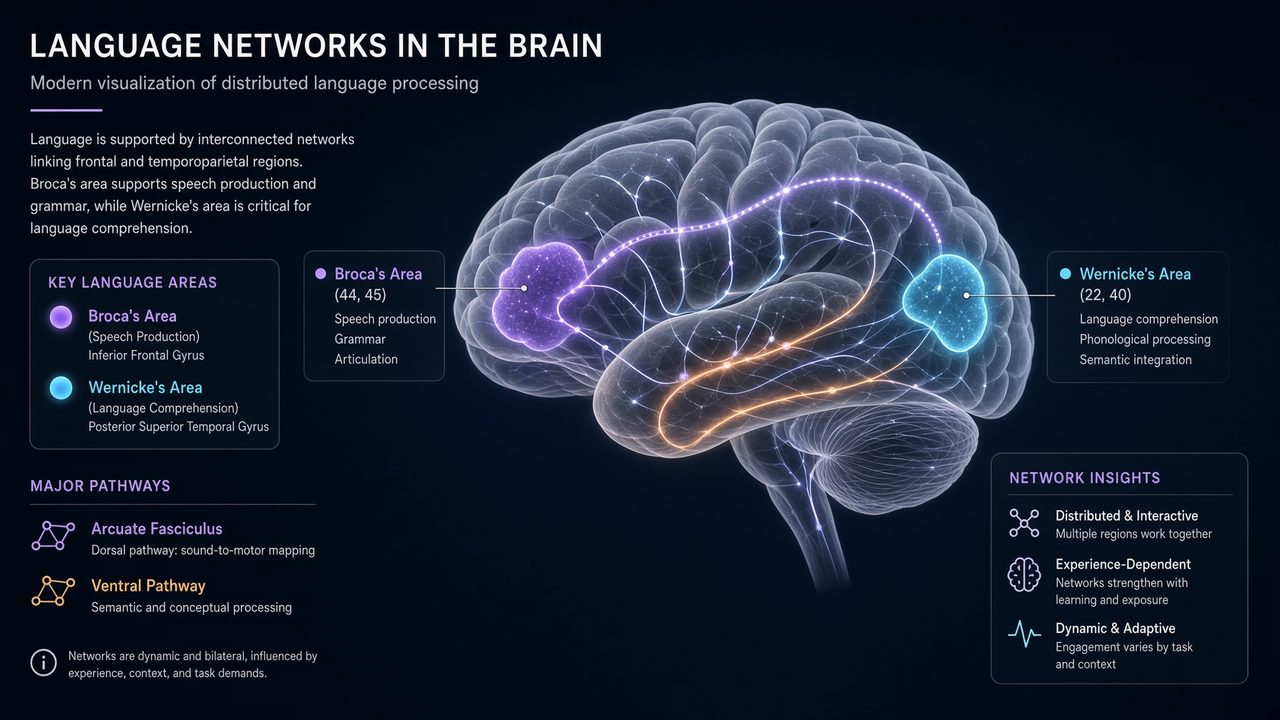
At any moment, your senses bring in far more information than you can process. How does the brain decide what deserves attention? A system called the salience network detects the most relevant or emotionally significant events, and directs the brain to respond.
Core regions
- Anterior insula: integrates body signals, emotion and awareness
- Dorsal anterior cingulate cortex: monitors conflict, error and the need for control
- Subcortical nodes, including the amygdala, ventral striatum, hypothalamus and parts of the thalamus and brainstem
Von Economo neurons, large spindle-shaped neurons found in the insula and cingulate in humans and certain other large-brained species, are thought to support rapid communication within this network and are affected early in frontotemporal dementia.
What it does
Detecting salience
Salient stimuli include things that are novel, threatening, rewarding or relevant to current goals, such as your name or a sudden noise, as well as internal signals such as a racing heart or hunger.
Network switching
Vinod Menon and colleagues proposed that the salience network acts as a switch between the default mode network (internal thought) and the central executive or frontoparietal network (external task focus). When something important appears, the salience network deactivates the default mode and engages executive systems.
Autonomic and emotional responses
Through links to the hypothalamus and brainstem, it helps generate bodily reactions such as heart rate changes in response to emotion.
Interoception and awareness
The anterior insula contributes to conscious feelings and the sense of the body's state.
Cognitive control
The anterior cingulate signals when conflict arises, such as when a habitual response must be overridden.
Salience in everyday life
The salience network explains why you instantly notice your phone buzzing at a quiet dinner, why anxiety makes minor sensations seem alarming, and why meaningful items grab attention more than neutral ones. What counts as salient is shaped by experience, mood and learning.
When salience goes awry
- Anxiety: the network may be hyperreactive, labeling harmless signals as threats
- Depression: altered salience processing may bias attention toward negative information
- Schizophrenia: Kapur's aberrant salience hypothesis proposes that dopamine dysregulation causes irrelevant stimuli to feel intensely meaningful, contributing to delusions and hallucinations
- Autism: differences in salience attribution and connectivity are reported
- PTSD: heightened responses to trauma-related cues
- Chronic pain: persistent insula and cingulate activation
- Addiction: drug cues become hypersalient
- Frontotemporal dementia: early degeneration of salience network regions leads to loss of empathy, emotional blunting and impulsive behavior
- ADHD: difficulties in prioritizing relevant stimuli
Training salience
- Mindfulness practice increases awareness of bodily sensations and may alter insula and cingulate activity.
- Cognitive behavioral therapy helps recalibrate what is perceived as threatening.
- Biofeedback provides external signals to help recognize and regulate arousal.
- Reducing information overload and notifications limits the constant triggers of salience detection.
- Setting clear goals helps define what is relevant.
Takeaway
The salience network is the brain's filter and switch, deciding what gets your attention. Understanding it helps explain focus, anxiety and a range of brain conditions.
Further reading from authoritative sources
This article is educational and does not replace advice from a licensed clinician. See the medical disclaimer. Looking for specialist care? Browse the neurology clinic directory.