The Brain's Glymphatic System: Cleaning Up While You Sleep
Most organs rely on lymphatic vessels to clear waste, but the brain lacks conventional ones. In 2012, Maiken Nedergaard and colleagues described the glymphatic system, a network that helps flush metabolic waste from brain tissue. It appears to work best during deep sleep, offering a possible explanation of why we need to sleep.
How it works
The name combines "glial" and "lymphatic," because astrocytes play a central role. The proposed pathway is:
1. Inflow. CSF in the subarachnoid space enters the brain along perivascular spaces surrounding penetrating arteries, driven partly by arterial pulsation. 2. Exchange. Water channels called aquaporin-4, concentrated on astrocyte endfeet, facilitate movement of fluid into brain tissue, where it mixes with interstitial fluid and picks up waste products such as amyloid-beta, tau and lactate. 3. Outflow. The fluid drains along perivascular channels around veins and via meningeal lymphatic vessels, discovered in 2015, toward lymph nodes in the neck.
Sleep and the glymphatic system
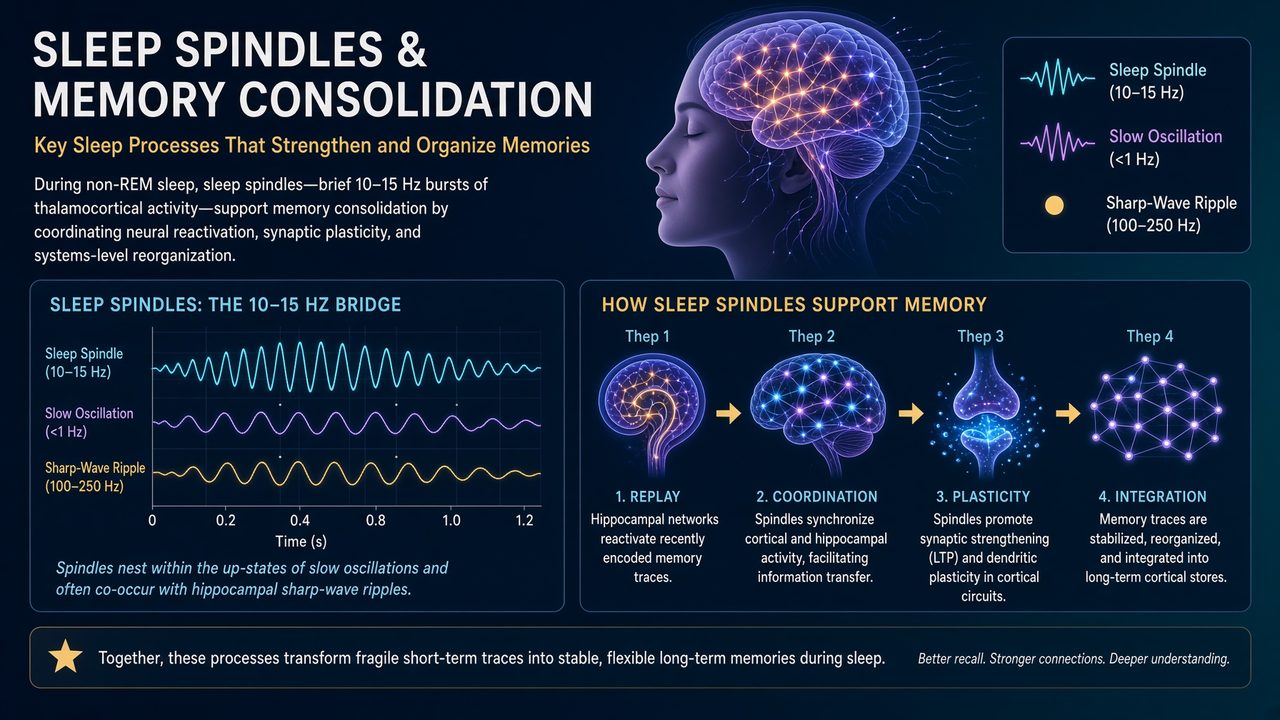
In mice, glymphatic flow was far greater during sleep and under certain anesthetics than in wakefulness, with the brain's extracellular space expanding by about 60 percent, which allows more fluid movement. Norepinephrine levels drop during sleep, which may permit this expansion. Slow-wave sleep appears particularly favorable, as coordinated slow waves in neuronal activity and CSF pulsations may drive flow. Human imaging studies show that CSF pulsations increase during non-REM sleep, and that a night of sleep deprivation raises amyloid-beta levels in the brain in PET studies.

Other influences on flow
- Body position: rodent studies suggested that side sleeping might clear waste more efficiently than other positions, but this has not been proven in humans.
- Exercise increased glymphatic influx in mice.
- Alcohol: low doses may enhance flow, while chronic heavy exposure impairs it in animals.
- Age and hypertension reduce flow.
- Traumatic brain injury and stroke can impair the system.
Links to disease
Impaired clearance of amyloid-beta and tau could contribute to Alzheimer's disease. Poor sleep and sleep apnea are associated with higher risk of dementia, and reduced AQP4 polarization has been seen in aged and Alzheimer's brains. Glymphatic dysfunction has been proposed to play a role in:
- Traumatic brain injury and chronic traumatic encephalopathy
- Small vessel disease and stroke
- Parkinson's disease
- Migraine
- Normal pressure hydrocephalus
Caveats
The glymphatic concept is debated. Some groups argued that flow in the brain is driven more by diffusion than by bulk flow, and others found that clearance may be reduced rather than increased in certain anesthetized states. Human evidence relies on indirect imaging. Most of what we know comes from rodents, so conclusions for people should be drawn cautiously. Still, the broad link between sleep and brain clearance is supported by multiple lines of evidence.
Practical steps for brain-friendly sleep
- Aim for seven to nine hours for adults, with consistent timing.
- Treat sleep apnea and other sleep disorders.
- Limit alcohol and late caffeine.
- Exercise regularly, though not too close to bedtime.
- Keep the bedroom dark, cool and quiet.
- Manage blood pressure, since vascular health influences perivascular flow.
Takeaway
The glymphatic hypothesis offers a compelling reason to prioritize sleep. While details are still debated, protecting sleep is a reasonable way to support the brain's housekeeping.
Further reading from authoritative sources
This article is educational and does not replace advice from a licensed clinician. See the medical disclaimer. Looking for specialist care? Browse the neurology clinic directory.