The Neurobiology of Habit Loops
Brushing your teeth, checking your phone or reaching for a snack while watching television: much of daily life runs on habits. They arise from a distinct learning process in the brain, and understanding it explains why habits are so persistent, and how to reshape them.
The habit loop
Researchers describe a three-part loop, popularized by Charles Duhigg's book and rooted in the work of Ann Graybiel and others:
1. Cue: a trigger, such as a time, place, emotion, person or preceding action 2. Routine: the behavior itself 3. Reward: the outcome that reinforces the loop
With repetition, the brain begins to anticipate the reward when the cue appears, and craving drives the routine.
What changes in the brain
From goal-directed to habitual control
Early in learning, behavior depends on the dorsomedial striatum and prefrontal cortex, where actions are chosen for their expected outcomes. With extensive practice, control shifts to the dorsolateral striatum (the putamen in humans), where stimulus-response associations are stored. Habits then persist even if the outcome is no longer wanted, as shown in experiments where rats continue pressing a lever for food after being fed to satiety or after the food has been devalued.
Chunking
Graybiel's group recorded striatal neurons in rats learning to run a maze. Early on, neurons fired throughout the run. As the route became habitual, firing concentrated at the start and end, as if the brain had bundled the whole sequence into a single unit.
Dopamine and craving
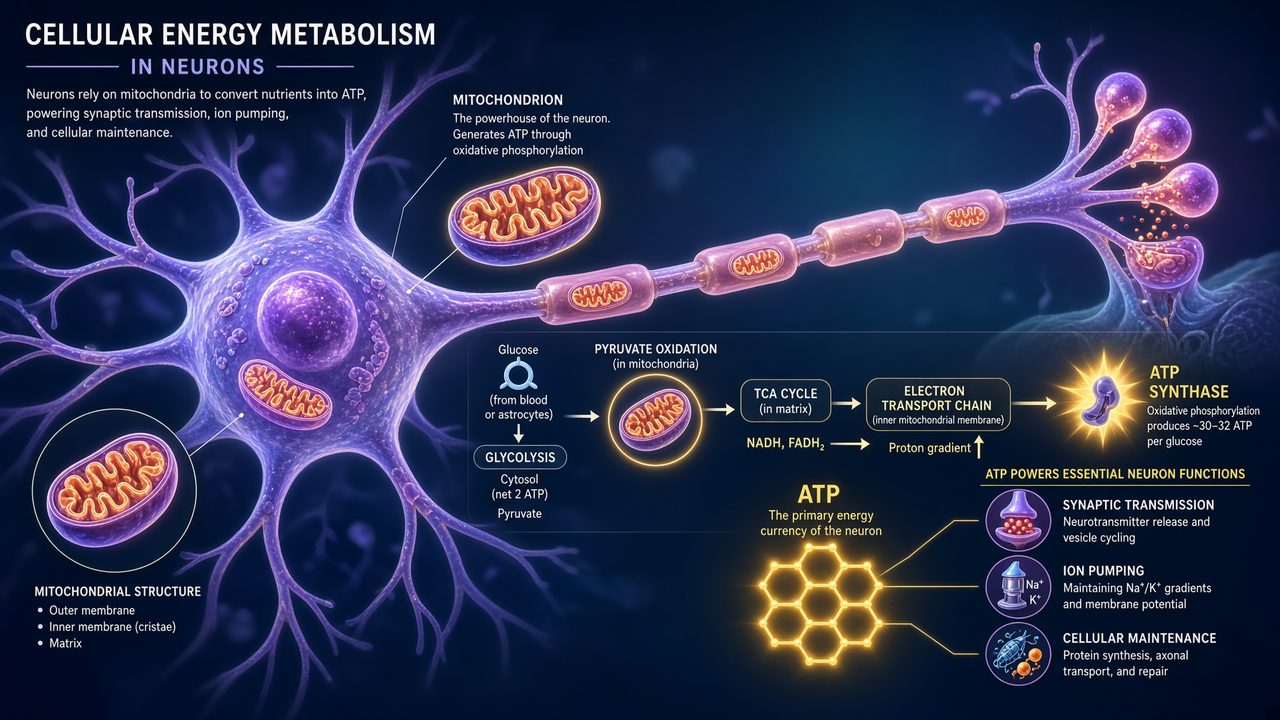
Dopamine neurons initially fire when a reward is received. As learning proceeds, they fire in response to the cue, which creates motivation to pursue the reward. This is why cues can generate powerful urges, even before any enjoyment.
Why habits are hard to break
Old habits are not erased. New learning, such as extinction, creates a competing association, and the original loop remains available, so it can return when context changes, stress rises or willpower is low. Prefrontal control weakens with fatigue, stress and sleep loss. Studies by Wendy Wood suggest that around forty percent of daily actions are performed habitually, in the same context as before.
Habits and disorders
- Addiction: drugs hijack the learning system so that cues trigger compulsive use.
- Obsessive-compulsive disorder: excessive habit-like routines linked to cortico-striatal loops
- Tourette syndrome: tics resembling unwanted habits
- Binge eating and gambling
- Parkinson's disease and Huntington's disease: damage to the striatum impairs habit formation or control
Changing habits
- Identify the cue and reward. Keep a record of when and why the habit occurs.
- Keep the cue and reward, change the routine. For example, replace a cigarette at work breaks with a short walk.
- Alter the environment. Remove cues for unwanted habits and make desired actions obvious and easy.
- Add friction to bad habits, such as deleting apps or keeping snacks out of sight.
- Start tiny. A two-minute version of a new habit is easier to repeat.
- Use implementation intentions: "When X happens, I will do Y."
- Attach new habits to existing ones, a technique called habit stacking.
- Reward immediately, even in small ways.
- Expect lapses and return without self-criticism.
- Be patient. A study by Phillippa Lally found that automaticity took an average of about 66 days, with a range from 18 to 254.
- Seek professional help for habits that feel compulsive or addictive.
Takeaway
Habits are efficient, and they are also powerful. By working with the loop of cue, routine and reward, rather than relying on willpower alone, you can build habits that serve you.
Further reading from authoritative sources
This article is educational and does not replace advice from a licensed clinician. See the medical disclaimer. Looking for specialist care? Browse the neurology clinic directory.