The Pineal Gland and the Rhythm of Sleep
The pineal gland is a tiny, pinecone-shaped structure near the center of the brain. Descartes famously called it the seat of the soul, but its real job is more measurable: it makes melatonin, the hormone that tells your body it is night.
How light controls melatonin
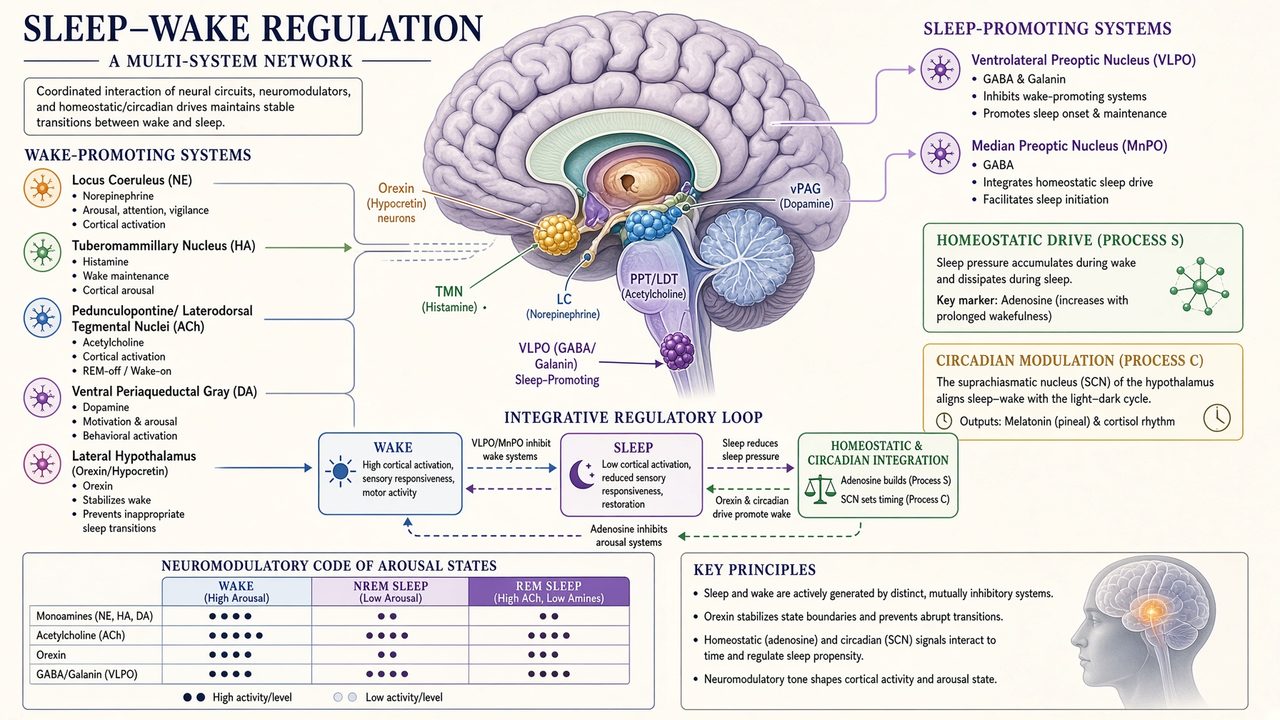
Specialized retinal cells containing the pigment melanopsin sense light, especially blue wavelengths, and send signals to the suprachiasmatic nucleus, the brain's master clock. At night, the clock signals through a multi-step pathway, via the hypothalamus, spinal cord and superior cervical ganglion, to the pineal gland, which releases melatonin. Light exposure shuts the process down.
What melatonin does
Melatonin does not act as a strong sedative. Instead it signals biological night, lowering core body temperature slightly and making sleep easier, while supporting the timing of other rhythms. Levels typically begin to rise about two hours before habitual bedtime, peak in the middle of the night and drop by morning. Production is highest in childhood and declines with age.

Why evening light matters
Bright light and screens in the evening can suppress melatonin and delay the body clock, making it harder to fall asleep. Studies show that exposure to room light before bed can shorten melatonin duration, and shift workers face chronic circadian disruption.
Melatonin supplements
- Jet lag: melatonin can help adjust timing, with reasonably consistent evidence for eastward travel across several time zones.
- Delayed sleep phase: low doses taken several hours before the desired bedtime can help shift the clock.
- Insomnia: effects are modest, shortening time to fall asleep by a few minutes on average.
- Shift work: results are mixed.
- Children with neurodevelopmental conditions: sometimes prescribed under medical supervision.
Supplement products vary widely in actual content, and some contain much more or less than labeled. Lower doses, often 0.5 to 3 mg, are commonly studied and may work as well as higher ones. In the United States it is sold as a supplement, while in many other countries it requires a prescription. People who are pregnant, take blood thinners, immunosuppressants or other medications, or have seizure disorders should check with a clinician first. Long-term safety data are limited.
Other roles
The pineal gland is linked to seasonal rhythms in animals, and melatonin also acts as an antioxidant and affects immune function and reproductive timing, though the clinical significance in humans is still being clarified.
Calcification
Pineal calcification is common with age and visible on scans. It is generally not considered harmful, though the significance is still studied, and claims that fluoride "decalcifies" it for spiritual benefit lack scientific support.
Pineal disorders
Rare pineal tumors, such as pineocytomas and germ cell tumors, may block fluid flow and cause headache and vision problems. Damage to the sympathetic pathway can reduce melatonin output.
Habits for healthy rhythms
- Get bright light in the morning, ideally outdoors.
- Dim lights in the evening and reduce screen use before bed.
- Keep consistent sleep and wake times.
- Sleep in darkness, blocking light from outside.
- Avoid late caffeine and heavy meals.
Takeaway
The pineal gland is a small timekeeper. Protecting your natural melatonin rhythm with light habits is more effective than relying on pills.
Further reading from authoritative sources
This article is educational and does not replace advice from a licensed clinician. See the medical disclaimer. Looking for specialist care? Browse the neurology clinic directory.