The Neuroscience of Healthy Aging
Brains change with age. Some changes are normal and mild, and others signal disease. Understanding the difference, and knowing what supports resilience, helps people age with confidence.
Normal changes
- Structure: brain volume declines slowly, typically about 0.2 to 0.5 percent per year after midlife, with the prefrontal cortex and hippocampus affected more than other regions. White matter integrity declines.
- Neurotransmitters: dopamine, acetylcholine and other systems decline gradually, which may influence speed, attention and motivation.
- Processing speed and working memory: these slow down in many older adults, and multitasking becomes harder.
- Memory: retrieving names and details may take longer, while recognition and familiar knowledge remain strong. Vocabulary and general knowledge, called crystallized intelligence, often increase into the sixties and seventies.
- Sleep: deep sleep decreases, and sleep becomes lighter and more fragmented.
- Emotion: many older adults report greater emotional stability and positive outlook, a pattern described by Laura Carstensen as the positivity effect.
When change is not normal
Memory loss that disrupts daily life, such as repeatedly asking the same questions, getting lost in familiar places, trouble managing finances or personality change, should be evaluated. Mild cognitive impairment and dementia are not part of normal aging, and several causes, including medication effects, depression, thyroid problems, vitamin B12 deficiency, sleep apnea and hearing loss, are treatable.

Resilience and cognitive reserve
Some people show brain changes on imaging yet function normally. Yaakov Stern at Columbia introduced the idea of cognitive reserve, which suggests that education, complex work, bilingualism, social engagement and stimulating hobbies help the brain cope with damage. Brain maintenance, meaning preserving brain structure through healthy lifestyle and avoiding pathology, is also important. Studies of "SuperAgers" over 80 with memory as good as people decades younger, such as those at Northwestern, found thicker cortex in some regions and more von Economo neurons.
What helps
- Exercise: aerobic and resistance training support hippocampal volume and cognition.
- Cardiovascular health: controlling blood pressure, cholesterol and diabetes.
- Diet: Mediterranean and MIND-style patterns.
- Sleep: consistent, sufficient sleep.
- Social engagement and purpose.
- Mental stimulation: learning new skills, reading, music, languages.
- Hearing and vision care.
- Limit alcohol, and avoid smoking.
- Manage stress and depression.
- Review medications with a pharmacist.
- Regular checkups.
Myths worth dropping
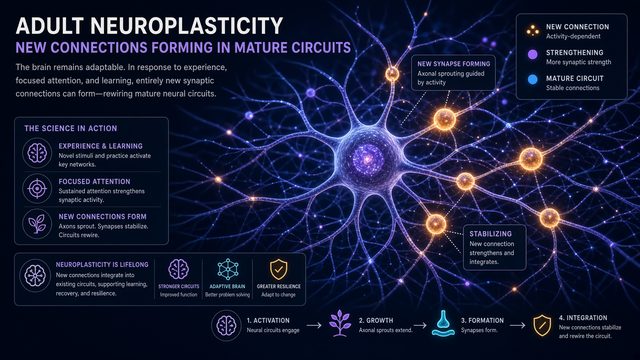
Two common myths are that we lose most of our neurons with age and that old brains cannot learn. In reality, healthy aging involves modest neuron loss but substantial changes in connections, and older adults can learn new skills, build new synapses and in some regions maybe even generate new neurons. Studies of older adults learning photography, quilting or digital skills show gains in memory when the activity is demanding and new. Slower speed is not the same as lost ability, and extra time and good strategies often close the gap.
Why early checkups matter
A baseline cognitive check, vision and hearing tests, and review of blood pressure, glucose and medications can catch treatable problems. Bringing a family member to an appointment to describe changes they notice is often useful, since people may not recognize their own lapses.
Takeaway
Aging changes the brain, but it also leaves room for growth and adaptation. Consistent habits and early attention to problems help preserve function and independence.
Further reading from authoritative sources
This article is educational and does not replace advice from a licensed clinician. See the medical disclaimer. Looking for specialist care? Browse the neurology clinic directory.