Biofeedback and Circadian Rhythm Support
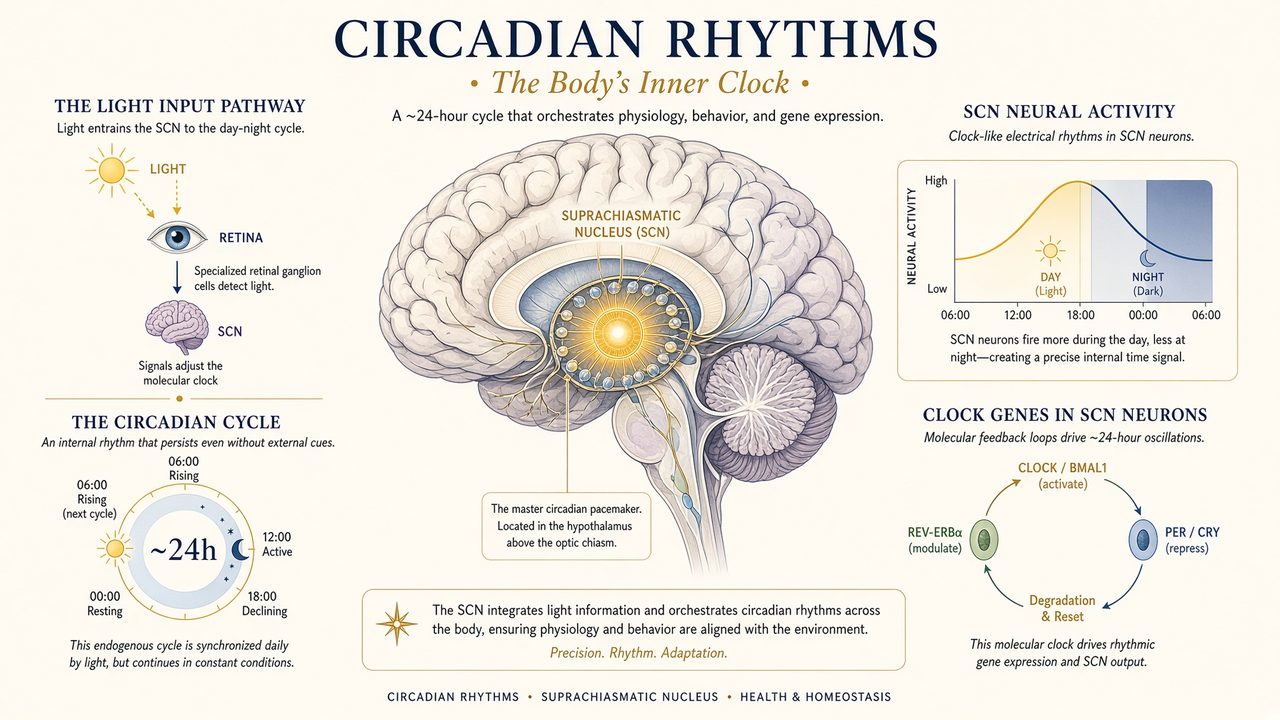
The circadian clock is set mainly by light, timing of sleep and meals, and sometimes melatonin. Biofeedback is not a clock-resetting tool, but it can play a supporting role in helping people follow circadian-friendly routines and manage the stress and arousal that undermine them.
What biofeedback can and cannot do
- Cannot: directly change the timing of the suprachiasmatic nucleus. Evidence that biofeedback shifts circadian phase is lacking.
- Can: lower arousal at bedtime, improve sleep continuity, reduce stress and give feedback that motivates healthy habits.
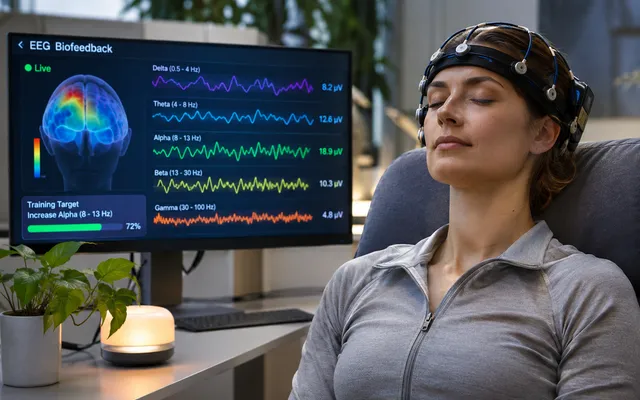
- Neurofeedback: protocols targeting sleep-related rhythms, such as SMR, have shown modest benefits for insomnia in small studies, and are being explored for sleep, but there is no good evidence that they correct circadian misalignment.
Useful measurements
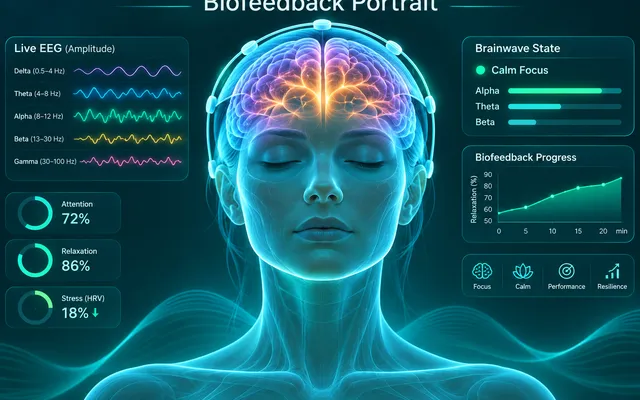
- Heart rate and heart rate variability: both follow circadian patterns, with a nocturnal dip in heart rate and rise in HRV during sleep. Tracking resting heart rate and HRV over time may reflect recovery, stress and schedule changes.
- Skin temperature and core temperature trends: distal skin temperature rises before sleep, and some wearables track it. These measures are approximate, and cannot replace laboratory measurement of circadian phase, such as dim light melatonin onset.
- Activity and light exposure: wearable devices can track rest-activity patterns and light, helping people see irregularity and social jet lag.
- Sleep diaries combined with data: helpful for identifying patterns.

Practical uses
- Evening wind-down: use HRV or breathing biofeedback for 10 to 20 minutes before bed to lower arousal, alongside dimmed lights.
- Delayed sleep phase: relaxation skills help night owls fall asleep at earlier times when also using morning light, fixed wake times and, as advised, low-dose melatonin.
- Shift work: biofeedback can help workers relax for daytime sleep and manage stress, with strategies such as timed light, naps and blackout curtains.
- Jet lag: relaxation supports sleep, as covered elsewhere.
- Seasonal mood: HRV or relaxation training may help with stress, alongside light therapy.
- Aging: older adults with fragmented sleep may benefit from relaxation, together with daytime light and activity.
- Tracking consistency: data on bedtime and wake time regularity can motivate more consistent schedules.
Foundations first
For circadian support, these matter most:
- Morning light and dim evenings
- Regular sleep and wake times
- Regular meals and daytime activity
- Limited late caffeine and alcohol
- Melatonin timing as advised by a clinician
- Treatment of sleep disorders
Biofeedback layers on top of these foundations.
Cautions
- Avoid over-monitoring, which can create anxiety about sleep.
- Consumer devices have limits in accuracy.
- See a sleep specialist for persistent circadian rhythm disorders, such as delayed or advanced sleep phase, non-24-hour rhythm or shift work disorder.
Building a simple plan
A workable plan combines a fixed wake time, morning light, a calm evening and ten minutes of breathing or relaxation practice before bed. If you use a wearable, review weekly averages of bedtime, wake time and resting heart rate instead of nightly scores, and adjust one habit at a time. If your schedule or sleep timing still conflicts with daily life after a few weeks, a sleep specialist can assess circadian rhythm disorders and offer timed light or melatonin treatment.
Takeaway
Biofeedback is a helpful companion for circadian health, supporting calm and consistency. The clock itself still responds best to light and routine.
Further reading from authoritative sources
- National Institute of Neurological Disorders and Stroke (NINDS)
- National Center for Complementary and Integrative Health (NCCIH)
This article is educational and does not replace advice from a licensed clinician. See the medical disclaimer. Looking for specialist care? Browse the neurology clinic directory.