How the Brain Regulates Body Temperature During Sleep
Cool rooms help you sleep, and a warm bath before bed can too. These facts reflect a deep link between thermoregulation and sleep, controlled by the same brain region that governs sleep timing.
The temperature rhythm
Core body temperature varies about 1 degree Celsius (roughly 2 degrees Fahrenheit) across the day. It peaks in the late afternoon or early evening, begins to fall about two hours before habitual bedtime, reaches a minimum in the second half of the night, typically two to three hours before waking, and then rises. The circadian clock in the suprachiasmatic nucleus drives this rhythm, and sleep itself adds to the decline.
The role of the hypothalamus
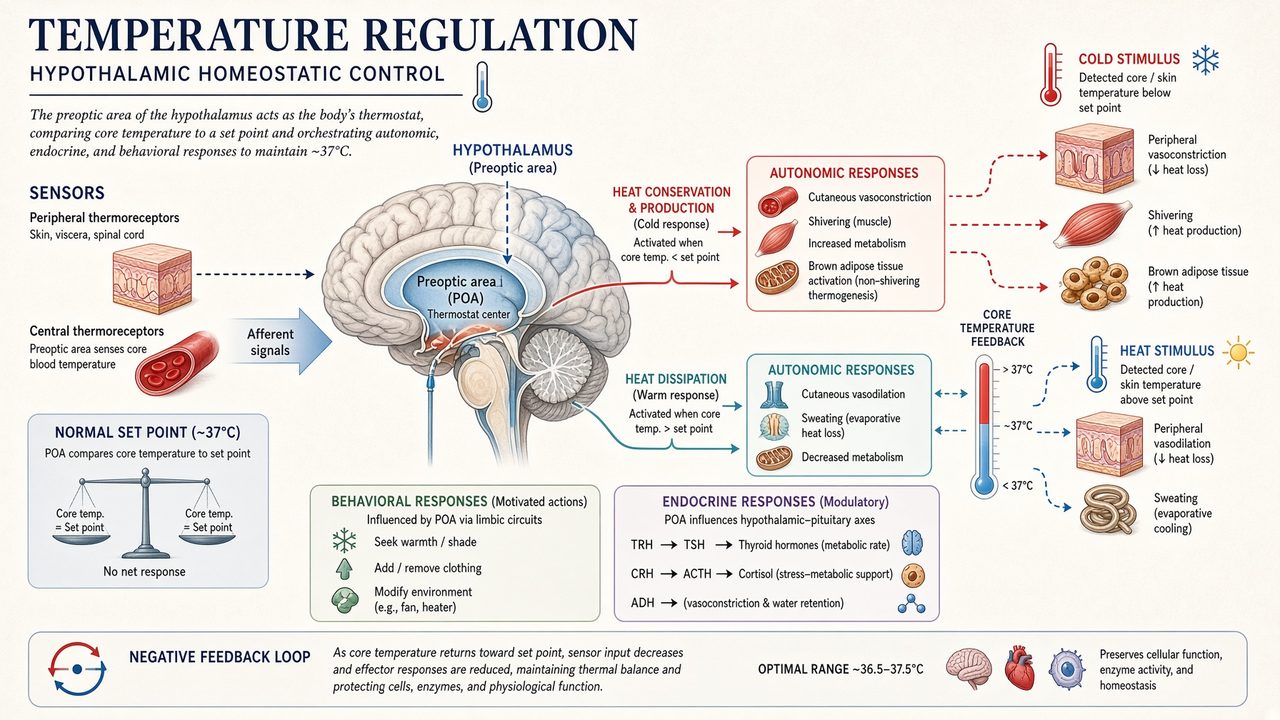
The preoptic area of the hypothalamus is both the brain's thermostat and a key sleep-promoting region. Neurons there sense temperature and control heat loss responses such as sweating and skin blood vessel dilation. Warming the preoptic area promotes sleep in animals, and cooling the brain with sleep onset may be part of the mechanism. During REM sleep, thermoregulation is impaired, and shivering and sweating responses are largely suspended, so the body drifts toward the environmental temperature, which makes extreme room temperatures disruptive in REM.

Distal vasodilation and sleep onset
Before sleep, blood vessels in the hands and feet dilate, releasing heat, which lowers core temperature. Studies by Kurt Kräuchi found that the degree of warmth in the hands and feet before bed predicts how quickly people fall asleep. Wearing socks to bed can speed sleep onset, as it encourages heat loss from the extremities, and warm baths one to two hours before bed help by increasing skin blood flow, then promoting rapid cooling afterward, and improve sleep quality in a meta-analysis by Shahab Haghayegh and colleagues.
Optimal bedroom temperature
Sleep experts commonly suggest a bedroom temperature of about 15 to 19 degrees Celsius (60 to 67 degrees Fahrenheit), though individual preferences vary. Bedding, clothing and humidity matter, since the microclimate under blankets is what counts. Hot environments cause more awakenings and less slow wave and REM sleep.
Conditions that affect temperature and sleep
- Menopause: hot flashes and night sweats fragment sleep, due to altered hypothalamic temperature regulation. Treatment options, including hormone therapy and non-hormonal medications, should be discussed with a clinician.
- Fever and infection
- Pregnancy and the luteal phase of the menstrual cycle, with a slightly higher core temperature
- Insomnia: some studies suggest a smaller nighttime temperature drop in people with insomnia, and cooling caps have been tested with modest results.
- Sleep apnea, thyroid disease and medications can cause night sweats.
- Aging: temperature rhythms flatten.
Tips for temperature-friendly sleep
- Keep the bedroom cool, dark and quiet.
- Take a warm bath or shower one to two hours before bed.
- Use breathable bedding, such as cotton or linen, and layers you can adjust.
- Wear socks if your feet are cold, or use a warm foot source, then remove if too hot.
- Avoid heavy meals, alcohol and intense exercise close to bedtime, since they raise body temperature.
- Use fans or cooling mattress pads if you run hot.
- See a doctor for drenching night sweats, unexplained fever or weight loss.
Takeaway
Sleep follows temperature. Helping your body shed heat in the evening is a simple way to fall asleep more easily.
Further reading from authoritative sources
- National Institute of Neurological Disorders and Stroke (NINDS)
- National Center for Complementary and Integrative Health (NCCIH)
This article is educational and does not replace advice from a licensed clinician. See the medical disclaimer. Looking for specialist care? Browse the neurology clinic directory.