Melatonin and the Brain: The Hormone of Darkness
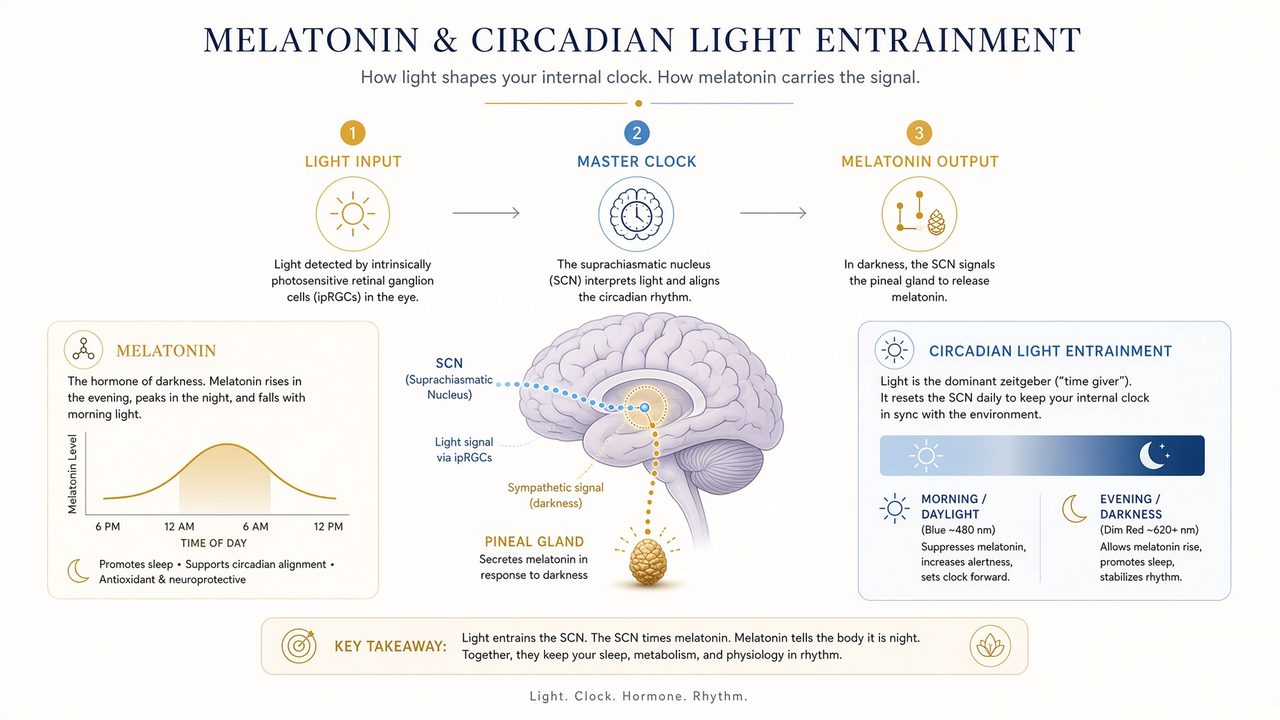
Melatonin is often called the sleep hormone, but a better description is the hormone of darkness. Produced by the pineal gland at night, it tells the body that it is biological night. It does not simply knock you out, and understanding the difference helps in deciding whether supplements make sense.
How melatonin is made
The pineal gland, a small structure deep in the brain, synthesizes melatonin from serotonin. Production is controlled by the suprachiasmatic nucleus, the brain's clock, and inhibited by light. Levels start rising in the evening about two hours before habitual bedtime, called the dim light melatonin onset, peak in the middle of the night and fall toward morning. Bright light, even indoors, suppresses it.
What it does
Melatonin acts on MT1 and MT2 receptors, found in the SCN and elsewhere. MT1 activation seems to reduce the clock's alerting signal, and MT2 helps shift the clock's timing. Melatonin also lowers core body temperature slightly, facilitating sleep. It has antioxidant properties and influences immune and cardiovascular function, although the significance of these roles is still being studied.

Changes over life
Melatonin production is high in childhood, and the teenage rise in melatonin timing is delayed, one factor behind later sleep schedules. Output falls with age, and some older people have lower nighttime levels, although the link to insomnia is not simple.
Melatonin supplements
When they may help
- Delayed sleep phase, in which people fall asleep very late
- Jet lag, particularly after eastward travel
- Shift work disorder, in some cases
- Blind people with non-24-hour sleep-wake disorder, for whom melatonin can synchronize the clock
- Some children with neurodevelopmental conditions such as autism and ADHD, under medical guidance
- Modest help for insomnia, with studies showing people fall asleep slightly sooner, by about 7 to 12 minutes on average
When they are less helpful
Melatonin is not a strong sleeping pill. Effects for general insomnia are small, and it does not treat sleep apnea, restless legs syndrome or the causes of poor sleep.
Dose and timing
Research suggests that low doses, around 0.5 to 3 mg, can be as effective as higher doses. Timing is critical. For shifting the clock, taking it a few hours before the desired bedtime may be more effective than right at bedtime. In the United States, melatonin is sold as a dietary supplement, so products are not regulated like drugs. Studies have found that actual content can differ widely from the label, in some cases containing far more or less than stated, and sometimes other compounds.
Safety
Short-term use is generally well tolerated. Possible side effects include daytime drowsiness, headache, dizziness, nausea and vivid dreams. Less is known about long-term use. Important cautions:
- Children. Accidental ingestion by children has risen, and many pediatric groups advise using it only under a clinician's guidance and storing it safely.
- Pregnancy and breastfeeding. Data are limited, so consult a doctor.
- Medications. Melatonin can interact with blood thinners, blood pressure drugs, diabetes medicines, immunosuppressants and others.
- Driving. Avoid driving or operating machinery after taking it.
Supporting natural melatonin
- Dim the lights in the evening.
- Limit bright screens at night.
- Get daylight in the morning, which strengthens the day-night rhythm.
- Sleep in darkness.
- Keep a regular schedule.
- Avoid late caffeine and heavy alcohol, which can disrupt sleep and melatonin.
When to see a doctor
If trouble sleeping lasts more than a few weeks or involves loud snoring, pauses in breathing or severe daytime sleepiness, seek medical evaluation instead of self-treating with supplements.
Further reading from authoritative sources
- National Institute of Neurological Disorders and Stroke (NINDS)
- National Center for Complementary and Integrative Health (NCCIH)
This article is educational and does not replace advice from a licensed clinician. See the medical disclaimer. Looking for specialist care? Browse the neurology clinic directory.