Shift Work and Cognitive Health
Millions of people work nights, early mornings or rotating shifts, and their bodies are asked to do something that biology resists: be awake when the internal clock says to sleep. The consequences affect alertness, safety, mood and long-term health.
Why it is hard
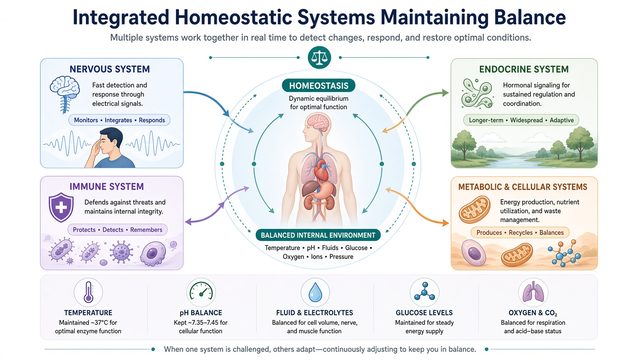
The circadian system promotes alertness during the day and sleep at night. Night workers face a double problem: reduced alertness during the night, when the clock drives sleep, and difficulty sleeping during the day, when the clock drives wakefulness and light, noise and social demands intrude. Most night workers never fully adapt, particularly if they return to daytime schedules on days off. Daytime sleep is typically one to four hours shorter than nighttime sleep.
Effects on brain function
- Alertness and performance: slower reaction times, more errors and microsleeps, especially between about 2 and 6 a.m. Drowsy driving after night shifts is a major risk.
- Cognition: studies of long-term shift workers, such as a French study by Jean-Claude Marquié and colleagues, found impaired memory and processing speed in those with 10 or more years of shift work, equivalent to several years of cognitive aging, with partial recovery after leaving shift work.
- Mood: higher rates of depression and anxiety.
- Safety: more medical errors, accidents and injuries are associated with long shifts and night work.

Health risks
Large studies link long-term shift work with higher rates of obesity, type 2 diabetes, cardiovascular disease and some cancers, and the International Agency for Research on Cancer classified night shift work as probably carcinogenic to humans. Mechanisms include circadian disruption, sleep loss, melatonin suppression by light at night, altered eating patterns and stress. Pregnancy outcomes may also be affected.
Who copes better
Some people are more tolerant. Younger age, a natural evening preference (chronotype) and no sleep disorders help. Older workers and morning types often adapt less well. Shift work sleep disorder is diagnosed when insomnia or excessive sleepiness is caused by a work schedule.
Strategies for workers
- Protect sleep: make the bedroom dark, quiet and cool, use blackout curtains, earplugs or white noise, and tell household members your schedule.
- Anchor sleep: try a consistent sleep time on workdays, and a anchor sleep period of four hours that is the same on days off, which can help maintain adaptation.
- Use light strategically: bright light during the early part of the night shift to boost alertness, and sunglasses on the commute home to avoid morning light that shifts the clock toward daytime.
- Naps: a 20 to 30 minute nap before or during a night shift can improve alertness.
- Caffeine: use early in the shift, and avoid it in the last four to six hours before sleep.
- Eat sensibly: light, balanced meals during the night, and avoid heavy meals before sleep.
- Exercise regularly.
- Melatonin at the start of the sleep period may help some people, with medical advice.
- Drive safely: consider rides or naps after night shifts.
- Seek medical help for persistent insomnia or sleepiness, and screen for sleep apnea.
For employers
Forward-rotating shifts (morning to evening to night), shorter shifts, adequate time off between shifts, limits on consecutive nights, and access to rest breaks reduce risk.
Takeaway
Shift work strains the body clock and the brain. Smart scheduling and sleep protection help preserve alertness and long-term health.
Further reading from authoritative sources
- National Institute of Neurological Disorders and Stroke (NINDS)
- National Center for Complementary and Integrative Health (NCCIH)
This article is educational and does not replace advice from a licensed clinician. See the medical disclaimer. Looking for specialist care? Browse the neurology clinic directory.