Sleep and Emotional Processing
Many people say "sleep on it" before making emotional decisions. Neuroscience supports the wisdom: sleep plays an active role in how the brain handles feelings and emotional memories.
Sleep deprivation and emotional reactivity
In a study by Matthew Walker and Seung-Schik Yoo, participants who were sleep deprived for one night showed about 60 percent greater amygdala activation to negative images than rested participants, with weaker connectivity between the amygdala and the medial prefrontal cortex that normally regulates it. People who are sleep deprived show greater mood swings, anxiety and irritability, and are more likely to interpret neutral faces as threatening. Chronic sleep restriction is a major risk factor for depression and anxiety disorders.
REM sleep and emotional memory
Walker proposed the sleep to forget, sleep to remember hypothesis: during REM sleep, the brain reactivates emotional memories in an environment where the stress neurotransmitter noradrenaline is suppressed, allowing the memory content to be retained while its emotional charge is reduced. Evidence includes:
- Imaging studies showing that emotional reactivity to previously viewed images declines after a night of sleep with REM, compared with waking.
- Studies suggesting that REM sleep supports integration of emotional memories into broader networks.
- In PTSD, REM sleep is often fragmented and noradrenaline is elevated, which may impair this process, and nightmares are common. The alpha-1 blocker prazosin, which reduces noradrenergic activity, is sometimes used for PTSD nightmares.
- Not all research agrees: some studies show that sleep strengthens negative memories, and the effect depends on timing, the type of material and individual differences. The picture is evolving.

Sleep also affects positive emotion
Sleep-deprived people respond more strongly to rewarding stimuli but have less pleasure from everyday activities, and are less accurate in reading others' emotions, which can affect relationships. Adequate sleep supports empathy and social functioning.
Brain mechanisms
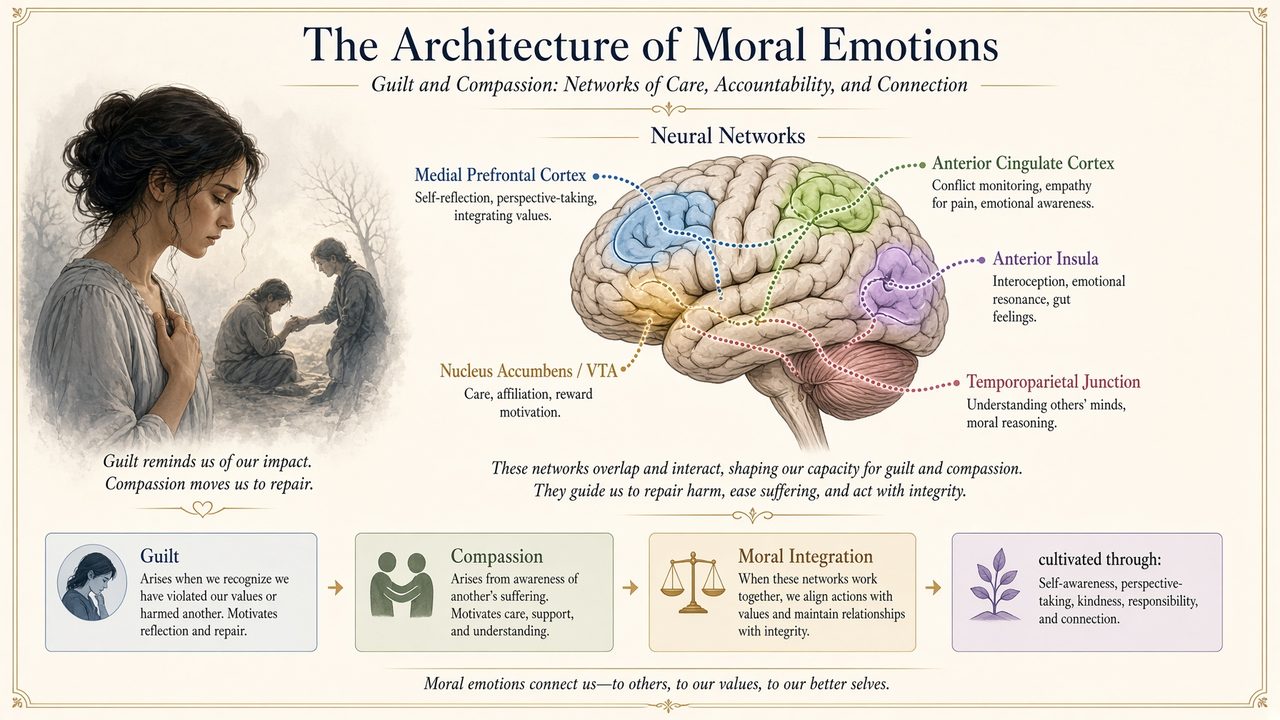
- Prefrontal cortex: supports top-down regulation, and is highly sensitive to sleep loss.
- Amygdala: over-reactive without sleep.
- Hippocampus: consolidates the context of emotional memories.
- Neuromodulators: reduced noradrenaline during REM, and altered serotonin, dopamine and acetylcholine.
- Slow oscillations and spindles: may participate in transferring memories to cortical stores.
Practical implications
- Prioritize seven to nine hours of regular sleep, as sleep is a pillar of emotional health.
- Do not skip sleep to study or work on a stressful project.
- After an upsetting event, try to sleep as normal, since sleep supports processing, though sleep difficulties are common and understandable.
- Make big emotional decisions after rest.
- Treat insomnia with CBT-I, which also improves mood and anxiety.
- Limit alcohol, which suppresses REM early in the night and fragments sleep.
- Be aware that some antidepressants affect REM sleep.
- Seek help if nightmares, flashbacks or sleep problems persist after trauma.
Children, teens and older adults
Teenagers, whose body clocks shift later and who often get too little sleep, show particularly strong links between short sleep and low mood, irritability and risk-taking. Young children with insufficient sleep have more tantrums and trouble with self-control. In older adults, reduced REM and fragmented sleep are associated with greater emotional vulnerability. At every age, regular sleep timing and a calming wind-down routine support the nightly emotional reset described above.
Takeaway
Sleep is a nightly session of emotional maintenance. Protecting it helps you meet the day with a steadier mind.
Further reading from authoritative sources
- National Institute of Neurological Disorders and Stroke (NINDS)
- National Center for Complementary and Integrative Health (NCCIH)
This article is educational and does not replace advice from a licensed clinician. See the medical disclaimer. Looking for specialist care? Browse the neurology clinic directory.