Sleep and the Aging Brain
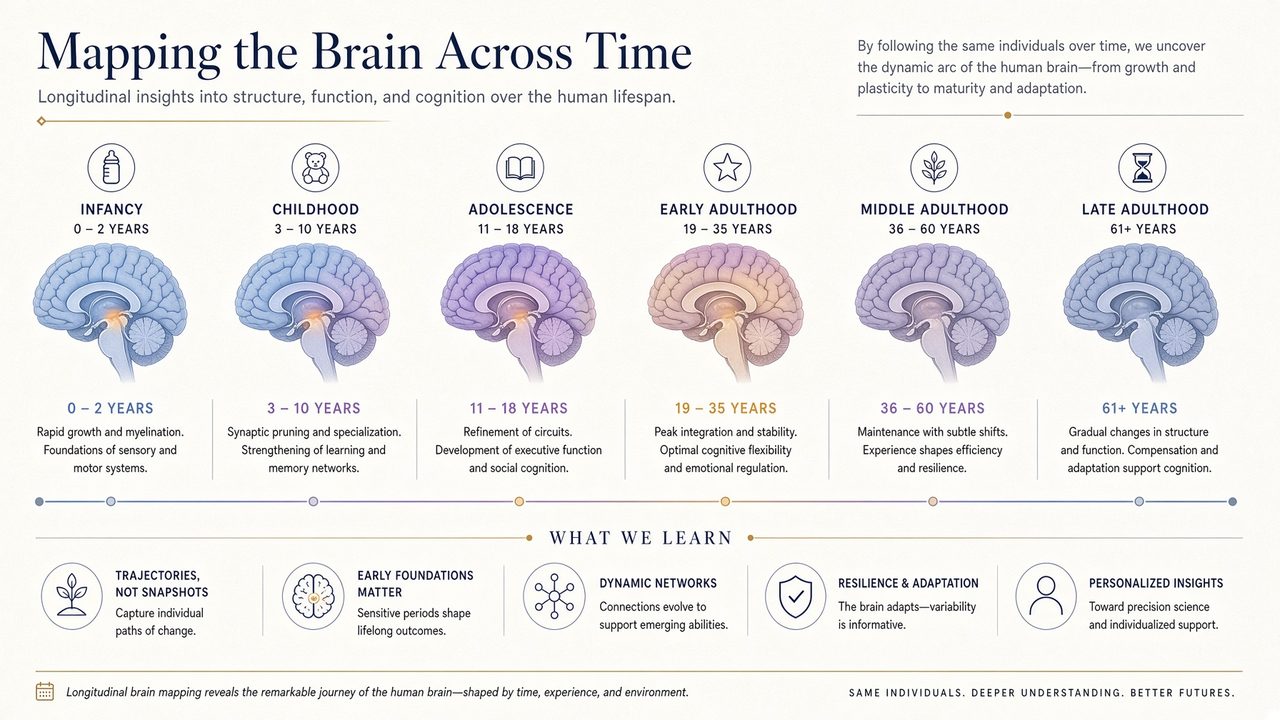
Older adults often report lighter sleep, earlier waking and more nighttime awakenings. Some changes are part of normal aging, while others signal disorders that affect brain health, which makes sleep an important target for healthy aging.
How sleep changes with age
- Less slow wave sleep: deep sleep declines from young adulthood, and can be sharply reduced by the 60s and 70s.
- More fragmentation: more awakenings and lighter sleep.
- Earlier timing: a shift toward earlier bedtimes and wake times (advanced phase), and a weaker circadian signal.
- Reduced spindles and slow oscillations, linked with memory consolidation.
- Total sleep need stays similar, around seven to eight hours, though many older adults sleep less because of difficulty, not need.
- Napping rises, and excessive daytime sleepiness may be a warning sign.
Sleep and cognition
A study by Bryce Mander, Matthew Walker and colleagues found that reduced slow wave sleep in older adults is associated with greater atrophy in the medial prefrontal cortex and poorer overnight memory consolidation. Sleep disruption in older adults has also been linked to poorer attention and executive function.

Sleep and dementia
- Amyloid and tau: in animals and humans, amyloid-beta levels rise after sleep deprivation, and the brain's waste clearance system (the glymphatic system, described by Maiken Nedergaard) is more active during sleep. A study by Yo-El Ju and colleagues found that disrupted slow wave sleep increased amyloid-beta in cerebrospinal fluid, and poor sleep in older adults has been linked with increased amyloid on PET scans and tau accumulation.
- Epidemiology: meta-analyses show that sleep problems, including insomnia, short or long sleep duration and sleep apnea, are associated with higher risk of dementia. A large analysis from the Whitehall II cohort found that sleeping six hours or less in midlife was associated with a higher risk of dementia later in life.
- Two-way relationship: Alzheimer's disease itself disrupts sleep and circadian rhythms, sometimes years before symptoms, so sleep changes may be both a cause and an early sign.
- Treatment trials: the dual orexin receptor antagonist suvorexant reduced tau in a small study and is approved for insomnia, and trials are ongoing. CPAP for sleep apnea may slow cognitive decline in some patients. Whether improving sleep prevents dementia is not yet proven.
Common sleep disorders in older adults
Insomnia, sleep apnea, restless legs syndrome, periodic limb movements, REM sleep behavior disorder (which can precede Parkinson's disease and Lewy body dementia), and circadian rhythm disturbances are common. Pain, nocturia, medications and depression also interfere.
Protecting sleep
- Keep a regular schedule and get morning light, ideally outdoors.
- Stay active: exercise improves sleep, and so does social engagement.
- Limit naps to 30 minutes, early in the day.
- Avoid caffeine in the afternoon and alcohol near bedtime.
- Review medications with a doctor or pharmacist, since many affect sleep, and avoid sedative antihistamines such as diphenhydramine, which are linked to cognitive risks in older adults.
- Address pain and nighttime urination.
- Use CBT-I, which is effective in older adults and safer than medication.
- Screen for sleep apnea.
- Make the bedroom safe, dark and quiet.
- See a doctor for loud snoring, acting out dreams, severe daytime sleepiness or memory changes.
Takeaway
Sleep changes with age, but poor sleep is not simply an inevitable part of getting older. Protecting sleep is one of the best investments in brain health.
Further reading from authoritative sources
- National Institute of Neurological Disorders and Stroke (NINDS)
- National Center for Complementary and Integrative Health (NCCIH)
This article is educational and does not replace advice from a licensed clinician. See the medical disclaimer. Looking for specialist care? Browse the neurology clinic directory.