Dyslexia and the Reading Brain

Dyslexia is a specific learning difficulty that affects accurate and fluent word reading and spelling, despite adequate intelligence and instruction. It affects an estimated 5 to 10 percent of people, and is the most common cause of reading difficulty.
How the brain reads
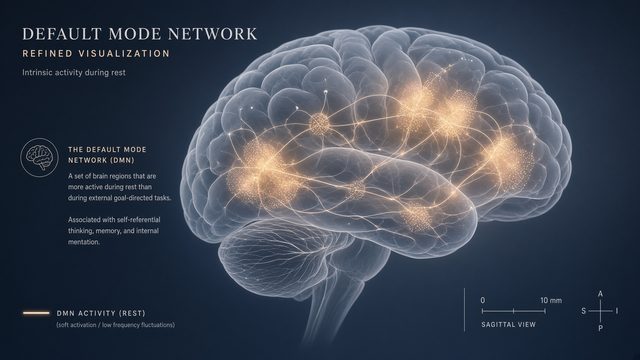
Reading is a recent cultural invention, so the brain repurposes existing systems. Stanislas Dehaene and others describe a network linking visual regions, such as the visual word form area in the left occipitotemporal cortex, with left temporoparietal regions for connecting letters to sounds and left frontal regions for articulation and meaning. Learning to read strengthens these pathways.
What differs in dyslexia
Imaging studies by Sally and Bennett Shaywitz, Guinevere Eden and others show reduced activity in left temporoparietal and occipitotemporal regions during reading tasks, along with differences in white matter connections such as the arcuate fasciculus. Core difficulties involve phonological processing, or manipulating the sounds of language. Some people also have difficulties with rapid naming, working memory, or visual processing. Dyslexia runs in families, and genetic studies have identified several risk genes, such as DCDC2 and KIAA0319, each with small effects. Differences in brain structure are visible in some preschoolers with a family history before reading instruction, suggesting that they are not simply the result of reading less.

Early signs
- Delayed speech or trouble learning rhymes and letter names
- Difficulty recognizing that words are made of sounds
- Trouble connecting letters with sounds
- Slow, effortful reading, guessing words, and spelling errors
- Family history of reading problems
- Avoidance of reading, and frustration or low confidence
Dyslexia is not about seeing letters backward, and it is not due to low intelligence or laziness.
Evaluation
Psychologists and educational specialists assess phonological skills, reading accuracy, fluency, spelling and cognitive abilities. Hearing and vision should be checked. Evaluation can be requested through schools, and adults can be assessed privately.
What helps
- Structured literacy: explicit, systematic, multisensory teaching of phonics, with ample practice, such as Orton-Gillingham-based programs. Studies show that intensive instruction can improve reading and change brain activity patterns.
- Early intervention: kindergarten and first-grade screening and support
- Accommodations: extra time, audiobooks, text-to-speech, spell checkers and speech-to-text
- Support for confidence and emotional wellbeing
- Home practice: reading together, word games, and patience
- Advocacy: individualized education plans and legal protections
Strengths and success
Many people with dyslexia are creative, strong in visual or spatial thinking, entrepreneurship and problem solving, though not every person has such strengths. With support, many succeed in higher education and careers.
Dyslexia across languages
Dyslexia occurs in all languages, but how obvious it is depends on the writing system. Languages with consistent spelling, such as Italian, make accuracy easier, while English, with its irregular spelling, makes difficulties more visible. Fluency and spelling problems persist in all languages.
For parents
Read aloud daily, point out sounds in words, play rhyming games and talk to the school early if you have concerns. Do not wait for a child to grow out of it, because early help produces the best results.
Technology
Audiobooks, dictation, and reading pens help students access grade-level content while they build decoding skills.
Takeaway
Dyslexia reflects how the brain wires for reading, not intelligence. The right instruction, started early, makes a major difference.
Further reading from authoritative sources
This article is educational and does not replace advice from a licensed clinician. See the medical disclaimer. Looking for specialist care? Browse the neurology clinic directory.