Epilepsy and the Brain: Seizures Explained
A seizure is a sudden burst of abnormal electrical activity in the brain that temporarily affects movement, sensation, awareness or behavior. Epilepsy is diagnosed when a person has recurrent, unprovoked seizures or a high risk of them. About one in twenty-six people will develop epilepsy at some point in their lives, according to estimates from patient and public-health organizations.
What causes seizures
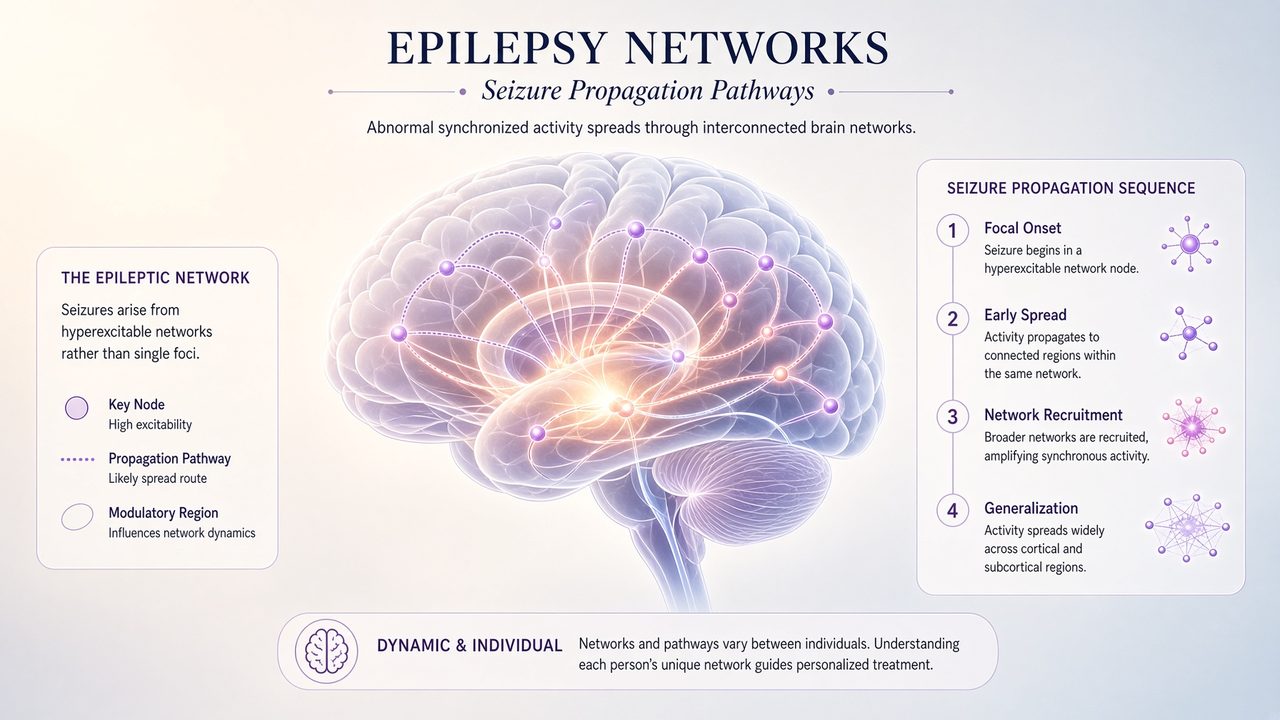
Neurons normally fire in balanced patterns. In epilepsy, networks become hyperexcitable, so large groups of neurons discharge together excessively. This imbalance can arise from structural brain differences, genetic factors, injury or disease.
Common causes include:
- Brain injury from trauma or stroke
- Infections such as meningitis or encephalitis
- Brain tumors
- Developmental malformations and genetic syndromes
- Neurodegenerative disease, including Alzheimer's
- Prenatal injury or lack of oxygen at birth
In roughly half of cases, no specific cause is found.
Provoked seizures, such as those from very low blood sugar, alcohol withdrawal, high fever in young children or acute head injury, are not necessarily epilepsy.
Types of seizures
Focal seizures
These start in one area of the brain. Awareness may be preserved or impaired. Symptoms depend on the region and can include unusual sensations or smells, jerking of one limb, staring and repeated movements such as lip-smacking.
Generalized seizures
These involve both sides of the brain from the start. They include:
- Tonic-clonic seizures, with loss of consciousness, stiffening and rhythmic jerking
- Absence seizures, brief staring spells, common in children
- Myoclonic seizures, quick jerks
- Atonic seizures, sudden loss of muscle tone, causing drops
Diagnosis
Doctors take a detailed history, often including accounts from witnesses, and perform a neurological exam. Key tests include:
- EEG to look for epileptic activity
- MRI to find structural causes
- Blood tests
- Video-EEG monitoring in a hospital for difficult cases
- Genetic testing in selected patients
Treatment
Anti-seizure medications
About two-thirds of people with epilepsy achieve seizure freedom with medication. Many drugs are available, and choice depends on seizure type, age, sex, other conditions and side effects. Taking medication consistently is essential.
Surgery and devices
When medications do not work, evaluation at a comprehensive epilepsy center may reveal options such as resection of the seizure focus. Neurostimulation devices, including vagus nerve stimulation, responsive neurostimulation and deep brain stimulation, can reduce seizures in selected patients.
Diet
A ketogenic diet and related approaches help some people, particularly children with drug-resistant epilepsy, under medical supervision.
First aid for a convulsive seizure
1. Stay calm and stay with the person. 2. Note the time the seizure starts. 3. Protect from injury. Move hard objects away, and cushion the head. 4. Turn them gently onto their side once the jerking stops, to help breathing. 5. Do not put anything in their mouth, and do not restrain them. 6. Call emergency services if the seizure lasts more than five minutes, if another follows, if breathing does not resume, if the person is injured, pregnant, has diabetes or has no history of seizures.
Living with epilepsy
- Triggers. Missed medication, sleep deprivation, alcohol and stress can provoke seizures in some people. Flashing lights trigger seizures in a small minority.
- Driving. Laws vary by place; many require a seizure-free period before driving.
- Safety. Take precautions around water, heights and bathing.
- Mental health. Depression and anxiety are common and treatable.
- Pregnancy. Planning ahead with a neurologist is important, since some medications carry risks and folic acid is advised.
- SUDEP. Sudden unexpected death in epilepsy is rare but serious, and risk is highest in people with uncontrolled convulsive seizures. Seizure control and adherence reduce risk.
Finding specialized care
People whose seizures continue despite two medications should be referred to an epilepsy specialist. Comprehensive epilepsy centers offer advanced diagnostics and surgery. Our directory highlights academic programs by state, and national organizations offer information and support.
Further reading from authoritative sources
This article is educational and does not replace advice from a licensed clinician. See the medical disclaimer. Looking for specialist care? Browse the neurology clinic directory.