Psychedelics and Brain Health: The New Research
After decades of restriction, research on psychedelic compounds has resumed. Studies are testing whether psilocybin, MDMA and others, combined with psychotherapy, can treat conditions such as depression, post-traumatic stress disorder and addiction. Results are promising, and the field is also surrounded by hype.
How they act
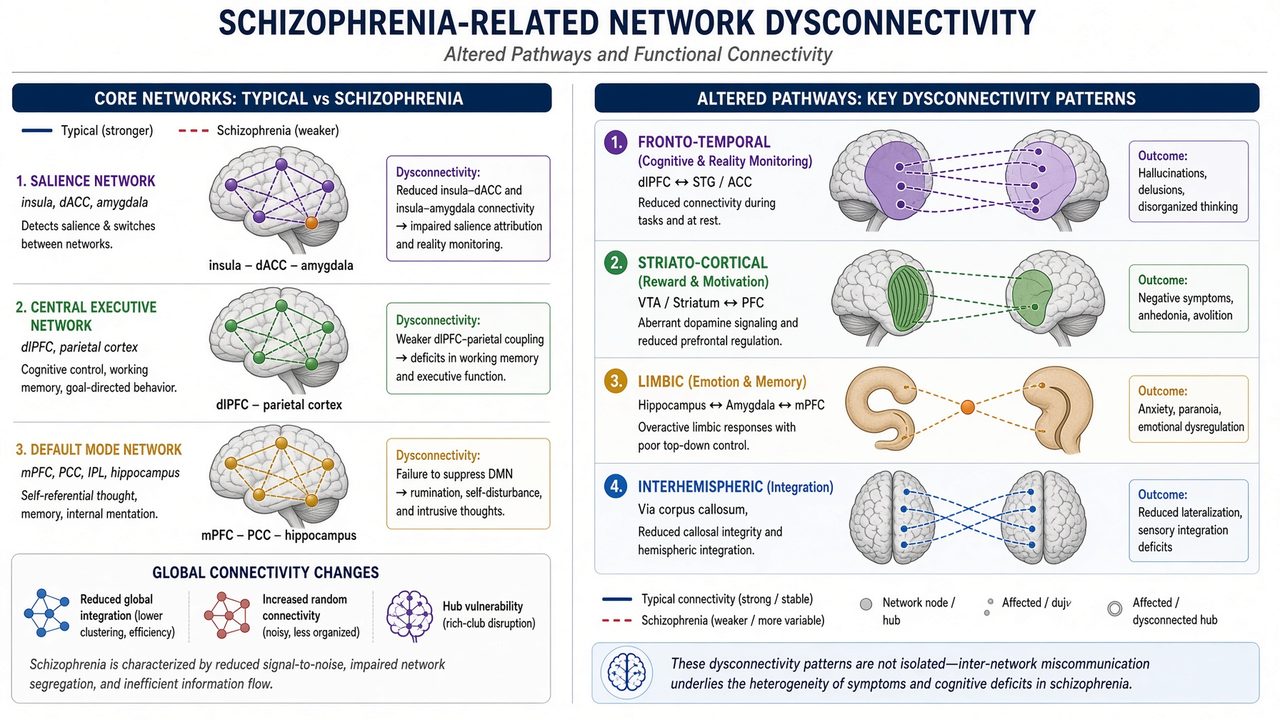
Classic psychedelics, such as psilocybin, LSD and DMT, act mainly on serotonin 2A receptors. Brain imaging by Robin Carhart-Harris and colleagues found that psychedelics reduce activity and integrity of the default mode network, which supports self-referential thinking, and increase communication between regions that normally do not connect. This may relate to the loosening of rigid thought patterns, and to altered sense of self. Psychedelics may promote neuroplasticity, with studies in animals by David Olson and others showing growth of dendritic spines. MDMA, which is not a classic psychedelic, increases release of serotonin, dopamine and norepinephrine, and oxytocin, and reduces fear responses, which may help trauma processing.
What clinical trials show
- Depression: a phase 2 trial by Robin Carhart-Harris and colleagues compared psilocybin to escitalopram and found similar primary results, with some secondary measures favoring psilocybin. A larger trial by Compass Pathways found that a single 25 milligram dose of psilocybin reduced depressive symptoms for several weeks compared with a control dose in treatment-resistant depression.
- Post-traumatic stress disorder: phase 3 trials of MDMA-assisted therapy, led by the Multidisciplinary Association for Psychedelic Studies, reported symptom improvements, but in 2024 the U.S. Food and Drug Administration declined approval and asked for additional studies, citing issues including blinding, data integrity and safety monitoring.
- Alcohol and tobacco use: small trials suggest benefits.
- End-of-life distress: studies at Johns Hopkins and New York University found reduced anxiety and depression in people with cancer.
- Other uses: eating disorders, obsessive-compulsive disorder and cluster headache are under study.
Limitations
Many trials are small, with difficulty blinding because participants know whether they have taken a psychedelic. Expectation effects may be large. Long-term outcomes are unclear, and trials often exclude people with psychosis or bipolar disorder.
Risks
- Challenging experiences, including panic, paranoia and distressing thoughts
- Psychosis or mania in people with predisposition
- Persistent perceptual changes, called hallucinogen persisting perception disorder, in rare cases
- Cardiovascular effects, especially with MDMA
- Dangerous behavior while intoxicated
- Drug interactions, including with antidepressants and lithium
- Unregulated settings and contaminated products
- Abuse of therapeutic relationship, underscoring the need for ethical safeguards
Legal status
Most psychedelics remain controlled substances in many countries. Some jurisdictions, such as Oregon and Colorado in the United States, have created regulated access programs for psilocybin, and Australia began allowing authorized psychiatrists to prescribe psilocybin and MDMA in 2023. Rules vary and are evolving.
Set, setting and support
In clinical trials, participants receive preparation sessions, supervised dosing in a comfortable room with trained therapists, and follow-up integration sessions to help them make sense of the experience. These elements are considered important to safety and benefit, and they are very different from recreational use.
Microdosing
Taking tiny doses of psychedelics is popular, but placebo-controlled trials so far, including a self-blinding study by Balázs Szigeti and colleagues, have found that benefits are largely explained by expectation. Safety over the long term is unknown.
Takeaway
Psychedelic research is promising, but it is not yet proven treatment for most people. Seek supervised, legal clinical trials, not do-it-yourself use.
Further reading from authoritative sources
This article is educational and does not replace advice from a licensed clinician. See the medical disclaimer. Looking for specialist care? Browse the neurology clinic directory.