Biomarkers for Neurodegeneration: The Search for Early Signs
Neurodegenerative diseases begin silently, with brain changes accumulating years or even decades before symptoms. Biomarkers, measurable indicators of biological processes, offer a way to detect and track these changes. Progress in the past decade has transformed research and is beginning to shape care.
Why biomarkers matter
Symptoms-based diagnosis can be wrong, especially early in disease. Biomarkers help confirm the underlying pathology, differentiate among diseases, select participants for trials, track treatment effects and potentially identify people at risk for prevention.
Alzheimer's biomarkers
Researchers describe categories based on what they measure, including amyloid, tau and neurodegeneration.
Spinal fluid
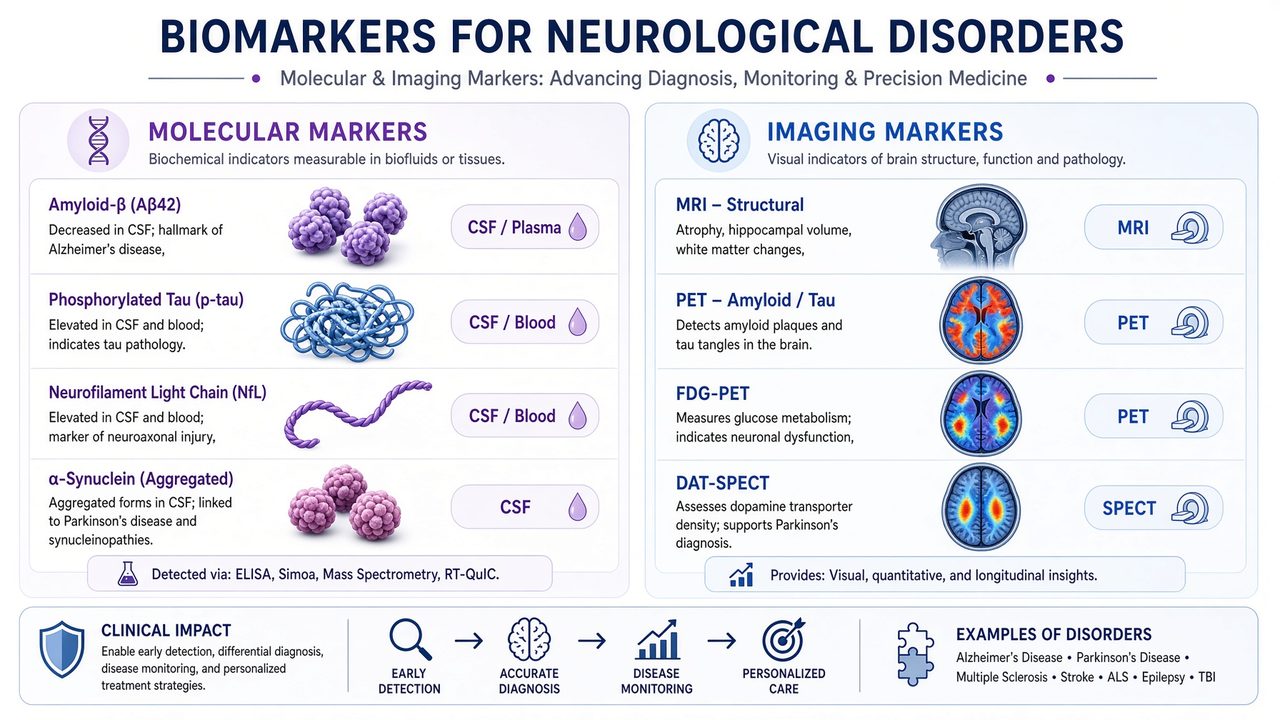
A lumbar puncture can measure Abeta42, total tau and phosphorylated tau. A low Abeta42 or low Abeta42 to Abeta40 ratio, together with high phosphorylated tau, strongly suggests Alzheimer's pathology.
PET imaging
- Amyloid PET shows plaques in the brain
- Tau PET shows tangles and correlates well with symptoms and location of damage
- FDG-PET measures brain metabolism, showing patterns of reduced activity
Blood tests
Blood-based biomarkers have advanced quickly. Tests measuring phosphorylated tau (p-tau217, p-tau181) and the Abeta42/40 ratio can detect Alzheimer's pathology with good accuracy, and regulators have cleared some tests for specific uses. Neurofilament light chain, a marker of nerve damage, rises in many conditions and indicates general neuronal injury rather than a specific disease. Blood tests are less invasive and cheaper than PET or spinal fluid, and may expand access.
MRI
Structural MRI reveals atrophy patterns, such as hippocampal shrinkage in Alzheimer's or frontal and temporal loss in frontotemporal dementia.

Other diseases
- Parkinson's disease and Lewy body dementia. The alpha-synuclein seed amplification assay can detect abnormal alpha-synuclein in spinal fluid and, in research, other tissues such as skin. DaTscan shows reduced dopamine transporters.
- Frontotemporal dementia. Genetic testing and imaging are used. Some fluid markers are under study.
- Huntington's disease. Genetic testing is definitive, and neurofilament light helps track progression.
- ALS. Neurofilaments are being used in clinical trials and care.
- Prion diseases. The RT-QuIC test detects abnormal prion protein.
Digital and functional biomarkers
Smartphone and wearable data on gait, speech, typing and sleep may flag early changes. Eye tracking, retinal imaging and olfactory tests are also under investigation. These approaches are promising but need validation.
Limitations
- Presence of pathology is not the same as dementia. Many older adults have amyloid on scans without symptoms, and not all will progress.
- Accuracy varies across populations, ages and conditions such as kidney disease, which can affect blood markers.
- Access and cost are barriers, and PET scans are expensive.
- Ethical issues. Learning of risk without effective prevention can cause distress, and results can affect insurance and employment decisions.
- Interpretation requires expertise.
Should you get tested?
Biomarker tests are most useful for people with memory or thinking symptoms, evaluated by a specialist. Routine testing of people without symptoms is not generally recommended outside research. Ask your doctor what question the test will answer, and what you will do with the result.
Looking ahead
Biomarkers have enabled anti-amyloid therapies to be selected and monitored, and may allow earlier, more precise treatment as new drugs emerge. A combination of blood tests, imaging and clinical assessment is likely to become standard.
Further reading from authoritative sources
This article is educational and does not replace advice from a licensed clinician. See the medical disclaimer. Looking for specialist care? Browse the neurology clinic directory.