Schizophrenia and the Brain: Current Understanding
Schizophrenia is a serious brain disorder affecting about 1 in 300 people worldwide. It typically emerges in late adolescence or early adulthood and involves changes in thinking, perception, emotion and behavior. With treatment and support, many people recover well or manage symptoms effectively.
Symptoms
- Positive symptoms: hallucinations, most often hearing voices, delusions, and disorganized speech or behavior
- Negative symptoms: reduced emotional expression, motivation, speech and social interest
- Cognitive symptoms: difficulties with attention, memory and executive function, which strongly affect daily functioning
Many people experience a prodromal phase with declining function, social withdrawal and unusual experiences before a first psychotic episode.
Causes and risk factors
Heritability is about 80 percent in twin studies, but no single gene causes schizophrenia. Large genome-wide studies by the Psychiatric Genomics Consortium identified more than 100 risk loci, including variants in the complement component 4 gene, which Steven McCarroll and colleagues linked to synaptic pruning. Environmental risks include obstetric complications, prenatal infection, urban upbringing, childhood adversity, cannabis use in adolescence and migration-related stress. These factors interact over time, in the neurodevelopmental model.

Brain findings
- Dopamine: excess dopamine signaling in the striatum is linked to psychotic symptoms, which explains why antipsychotics block dopamine receptors. Oliver Howes and colleagues have shown increased dopamine synthesis capacity in people at risk.
- Glutamate: drugs that block NMDA receptors, such as ketamine, can induce symptoms resembling schizophrenia, leading to theories of NMDA receptor hypofunction.
- Structure: large studies from the ENIGMA consortium found smaller hippocampal and thalamic volumes and thinner cortex on average, with small effects. Ventricle enlargement is common.
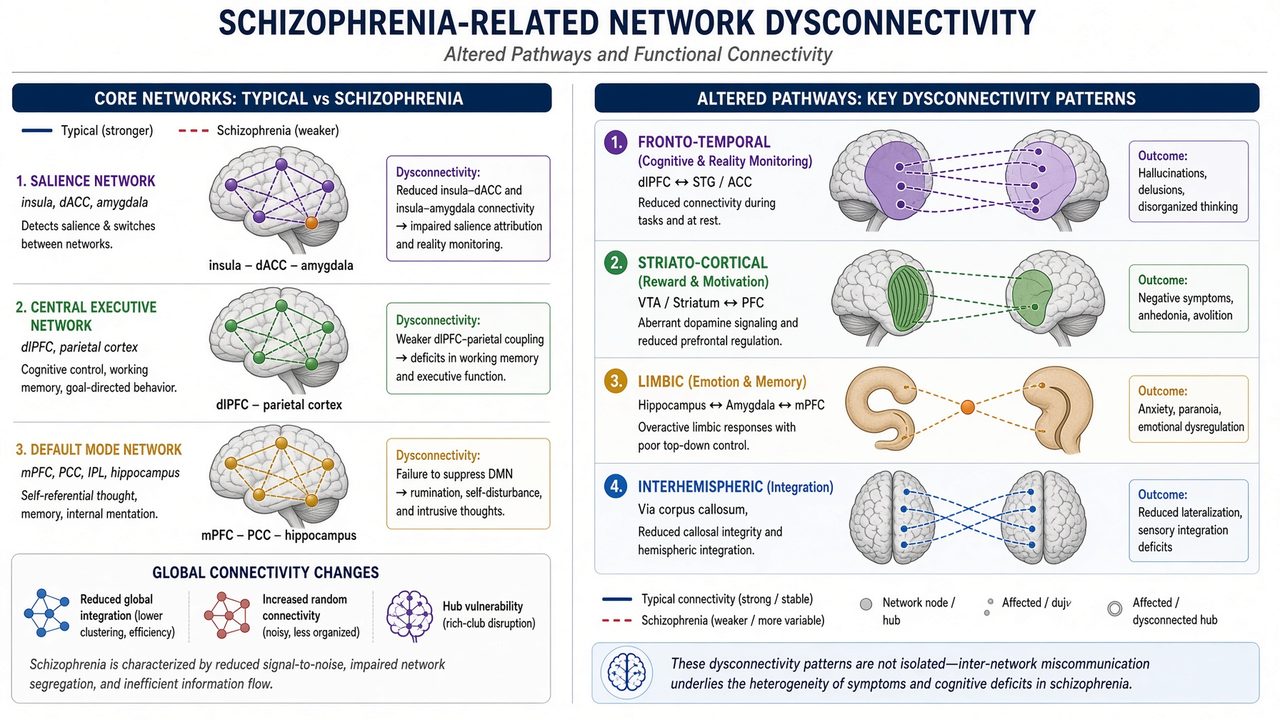
- Connectivity: disrupted communication between frontal, temporal and thalamic regions.
- Synaptic pruning: exaggerated pruning in adolescence is hypothesized.
Treatment
- Antipsychotic medication: reduces hallucinations and delusions, and prevents relapse. Clozapine is effective for treatment-resistant illness. Side effects such as weight gain, movement problems and metabolic changes need monitoring, and long-acting injections can help with adherence.
- Coordinated specialty care: teams offering therapy, medication, family education, supported employment and education, shown in the RAISE trial to improve outcomes for first-episode psychosis.
- Cognitive behavioral therapy for psychosis and family interventions
- Cognitive remediation for thinking skills
- Social and vocational support, housing and peer support
- Treating substance use, which worsens outcomes
Recovery
Outcomes vary. Many people achieve substantial recovery, and a sizable minority live with ongoing symptoms. Early treatment, strong support, avoiding drugs, and good physical health care improve prospects. Life expectancy is shortened on average by cardiovascular and other conditions, which makes physical health monitoring vital. Stigma and misconceptions, including the false idea that schizophrenia means split personality or inherent violence, harm people. Most people with schizophrenia are not violent, and are more likely to be victims.
How families can help
Learn about the illness, communicate calmly, support treatment, set realistic expectations and look after your own wellbeing. In a crisis, contact emergency services or crisis teams.
Early help
Anyone experiencing new voices, strong suspicion, or sharp decline in functioning should see a doctor promptly, since shorter duration of untreated psychosis is associated with better outcomes.
Takeaway
Schizophrenia is treatable. Early care and steady support make recovery possible.
Further reading from authoritative sources
This article is educational and does not replace advice from a licensed clinician. See the medical disclaimer. Looking for specialist care? Browse the neurology clinic directory.