Neuroeconomics: How the Brain Makes Financial Choices
Economists once assumed that people make rational choices to maximize benefit. Neuroeconomics combines economics, psychology and neuroscience to examine how the brain actually makes decisions about money, risk and time.
Valuation circuits
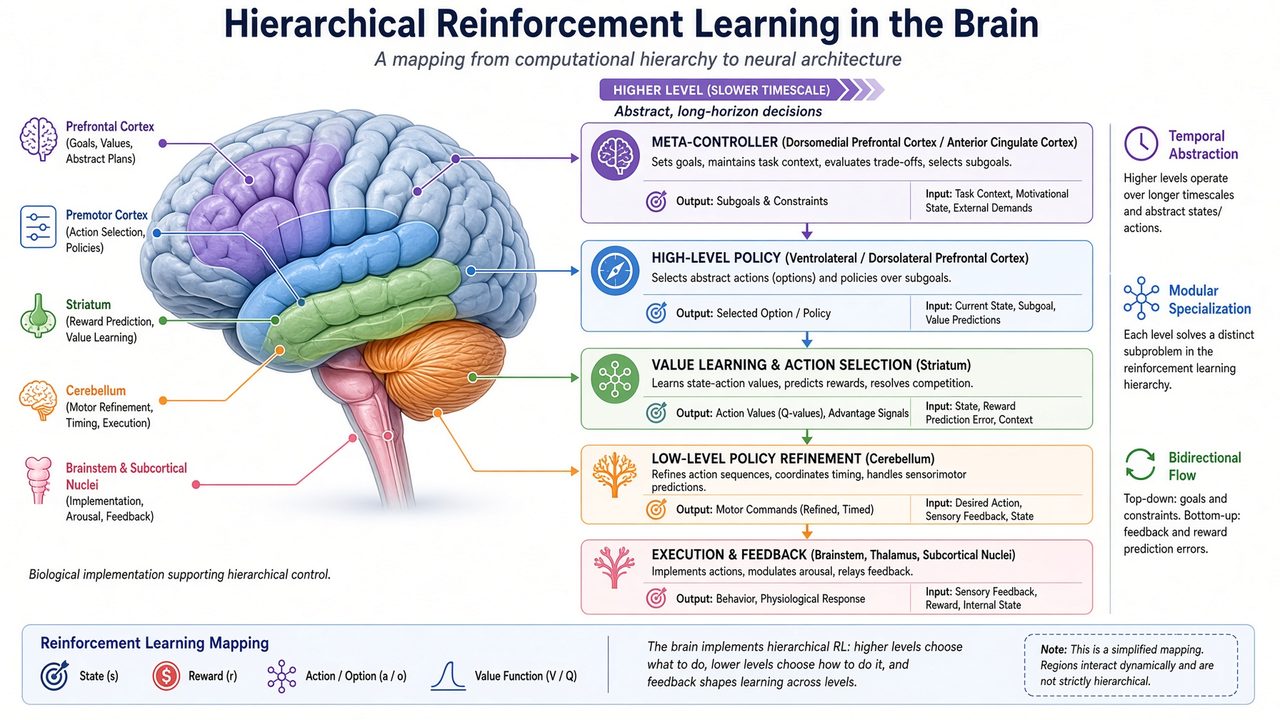
Imaging studies, including work by Paul Glimcher, Read Montague, Antonio Rangel and others, show that the ventromedial prefrontal cortex and ventral striatum encode the subjective value of options, acting as a common currency to compare very different goods. Dopamine neurons signal reward prediction errors, the difference between expected and actual outcomes, as discovered by Wolfram Schultz, which drive learning about what is valuable.
Risk and loss
- Loss aversion: Daniel Kahneman and Amos Tversky's prospect theory describes that losses loom larger than equivalent gains. Brain studies, such as one by Sabrina Tom and colleagues, found that as potential gains increased, activity in reward regions rose, and as potential losses increased, activity fell, with loss-averse individuals showing steeper declines.
- Anticipation and risk: the anterior insula activates when anticipating losses or risk, and Brian Knutson and colleagues found that insula activity before choices predicted excessive risk-averse mistakes, while nucleus accumbens activity before choices predicted risk-seeking mistakes.
- Amygdala: involved in framing effects, as shown by Benedetto De Martino and colleagues.
- Overconfidence and herding: following the crowd activates social and reward circuits, and being out of step with others can feel painful, as in conformity studies. Gregory Berns found that disagreeing with the group activated the amygdala.

Time and patience
People tend to prefer immediate rewards over larger delayed ones, a pattern called delay discounting. Samuel McClure and colleagues proposed that limbic regions drive impulsive choices, while lateral prefrontal regions support patience, though later work suggests a more integrated valuation system. Imagining the future self vividly can increase patience, as shown in research by Hal Hershfield, and scarcity and stress reduce it.
Trust and fairness
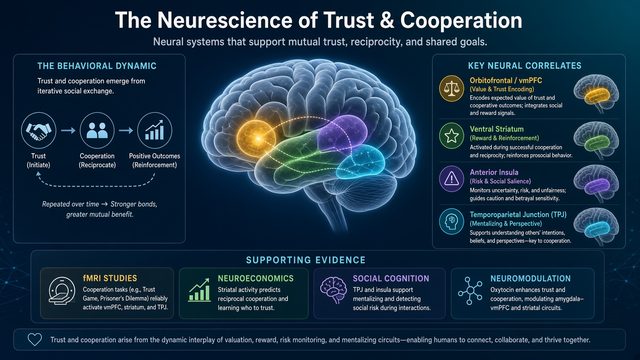
In ultimatum and trust games, people reject unfair offers, activating the anterior insula, and prefer fairness, reflecting social preferences beyond self-interest.
Everyday implications
- Automate savings and bills to bypass impulse
- Frame choices carefully: think about overall wealth, not single gains and losses
- Slow down when emotions run high, and avoid checking portfolios obsessively
- Be wary of scarcity and urgency tactics
- Make commitments that reduce temptation
- Diversify and plan, and consider independent advice
- Understand that markets can trigger herding, which can fuel bubbles
- Recognize that stress and sleep loss impair judgment
Limits
Neuroeconomic studies often use small samples and simplified tasks, and brain activity does not tell what you should do. This article is educational and is not financial advice.
Money and wellbeing
Research suggests that spending on experiences and on others, and building a buffer of savings, tends to improve wellbeing more than buying possessions. Chronic financial stress also takes a toll on attention and sleep, so small steps toward stability matter for the brain as well as the budget.
Takeaway
Financial choices are shaped by brain systems that evolved for other purposes. Knowing their quirks helps you design better habits.
Further reading from authoritative sources
- National Institute of Neurological Disorders and Stroke (NINDS)
- National Institute of Mental Health (NIMH)
This article is educational and does not replace advice from a licensed clinician. See the medical disclaimer. Looking for specialist care? Browse the neurology clinic directory.