The Neuroscience of Creativity
Creativity is the ability to produce ideas or works that are both novel and useful. It feels mysterious, but neuroscientists have begun to describe what the brain does when people improvise music, solve problems in an unexpected way or come up with new ideas. The findings overturn some popular myths.
Myth: creative people are right-brained
The popular notion of a creative right brain and a logical left brain is not supported. Imaging shows that creative tasks recruit both hemispheres. Language, memory and attention, all spread across the brain, play roles.
The networks involved
Default mode network
This set of regions, including the medial prefrontal cortex and posterior cingulate, is active when the mind wanders, imagines, recalls memories and simulates future events. It supports spontaneous idea generation and combining distant concepts.
Executive control network
Dorsolateral prefrontal and parietal regions support focused attention, working memory and evaluation. They help select, refine and test ideas against goals.
Salience network
The anterior insula and anterior cingulate help switch between internal thought and external focus.
Studies of people in creative tasks, such as generating unusual uses for objects, show that these networks interact more strongly than in less creative people. Highly creative individuals appear to have flexible coupling between the default and executive systems.
Divergent and convergent thinking
- Divergent thinking generates many possible answers, such as listing uses for a brick. It is often tested in creativity research.
- Convergent thinking narrows toward one best answer, as in a riddle.
Real creative work alternates between the two.
Insight
Sudden "aha" moments are accompanied by a burst of activity in the right anterior temporal lobe, with a preceding increase in alpha activity over visual areas, which may reflect reduced external input. Taking a break, sleeping or doing something undemanding often helps solutions surface, a process researchers call incubation.
Chemistry and creativity
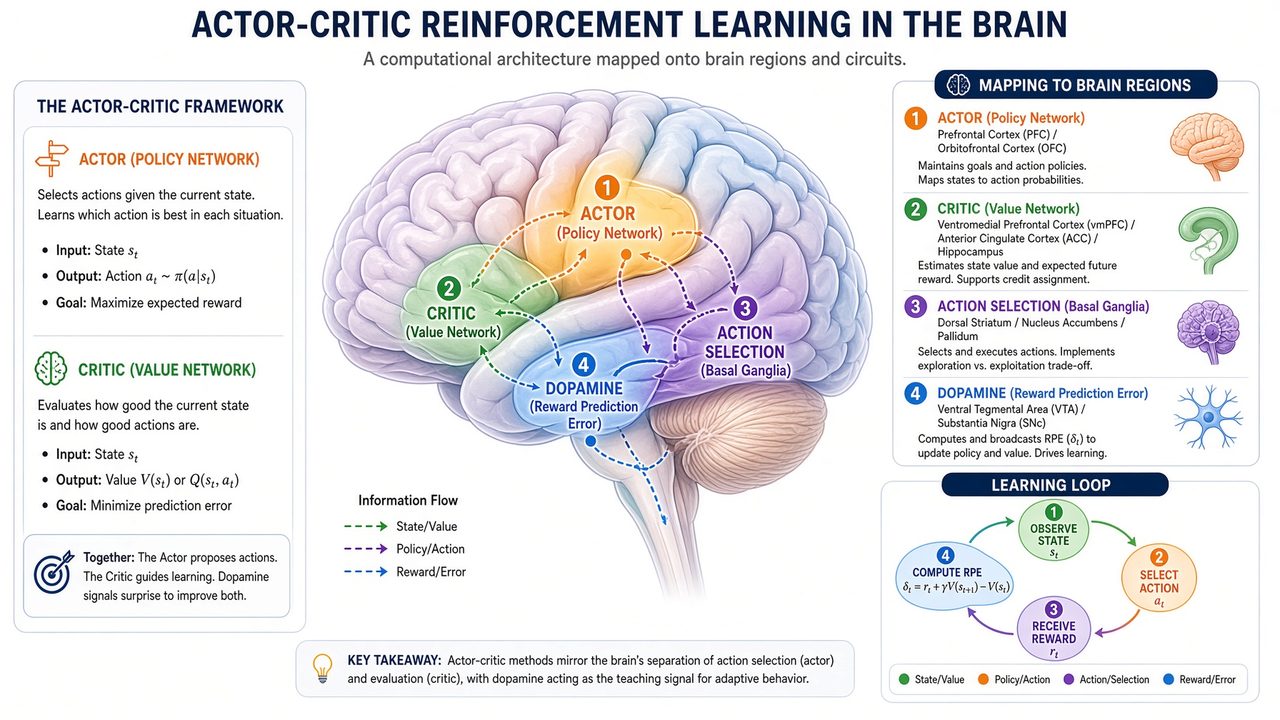
Dopamine is linked to exploration, novelty seeking and cognitive flexibility. Very high or very low levels may impair flexibility, with moderate levels favoring creative thinking. Mood also matters, as positive moods tend to broaden thinking.
Experts and improvisers
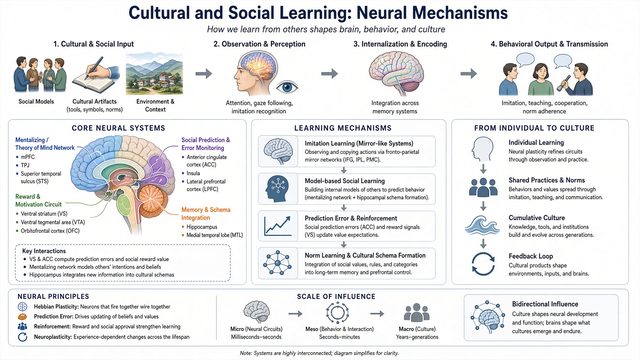
Studies of jazz musicians and freestyle rappers found that, during improvisation, activity in the medial prefrontal cortex rises while parts of the dorsolateral prefrontal cortex quiet. This pattern suggests that self-monitoring relaxes to allow spontaneous output. Later, evaluation resumes.
Creativity and mental health
Some research reports links between creative professions and traits or conditions related to mood, though the evidence is mixed and often overstated. Most people with mental health conditions are not exceptionally creative, and most creative people are mentally healthy. Creativity can be a source of well-being.
How to nurture creativity
- Allow mind wandering. Take walks and give your attention unstructured time.
- Sleep well, since sleep supports insight and memory integration.
- Expose yourself to varied experiences, because novel combinations need raw material.
- Separate generating from judging. Brainstorm first, edit later.
- Practice a skill deeply, since expertise supplies the building blocks.
- Move your body. Studies show walking can boost idea generation.
- Embrace constraints, which often spark inventive solutions.
- Collaborate with people who think differently.
Can creativity be trained?
Training in divergent thinking, mindfulness and open-monitoring meditation can improve performance on creativity tests, though effects vary and transfer to real-world work is less certain. Creative skill, like other skills, grows with practice and persistence.
The bottom line
Creativity emerges from the interplay of memory, imagination, attention and evaluation across the whole brain. That means it is not reserved for a gifted few. It is a capacity that can be cultivated.
Further reading from authoritative sources
- National Institute of Neurological Disorders and Stroke (NINDS)
- National Institute of Mental Health (NIMH)
This article is educational and does not replace advice from a licensed clinician. See the medical disclaimer. Looking for specialist care? Browse the neurology clinic directory.