How Naps Boost Memory and Performance
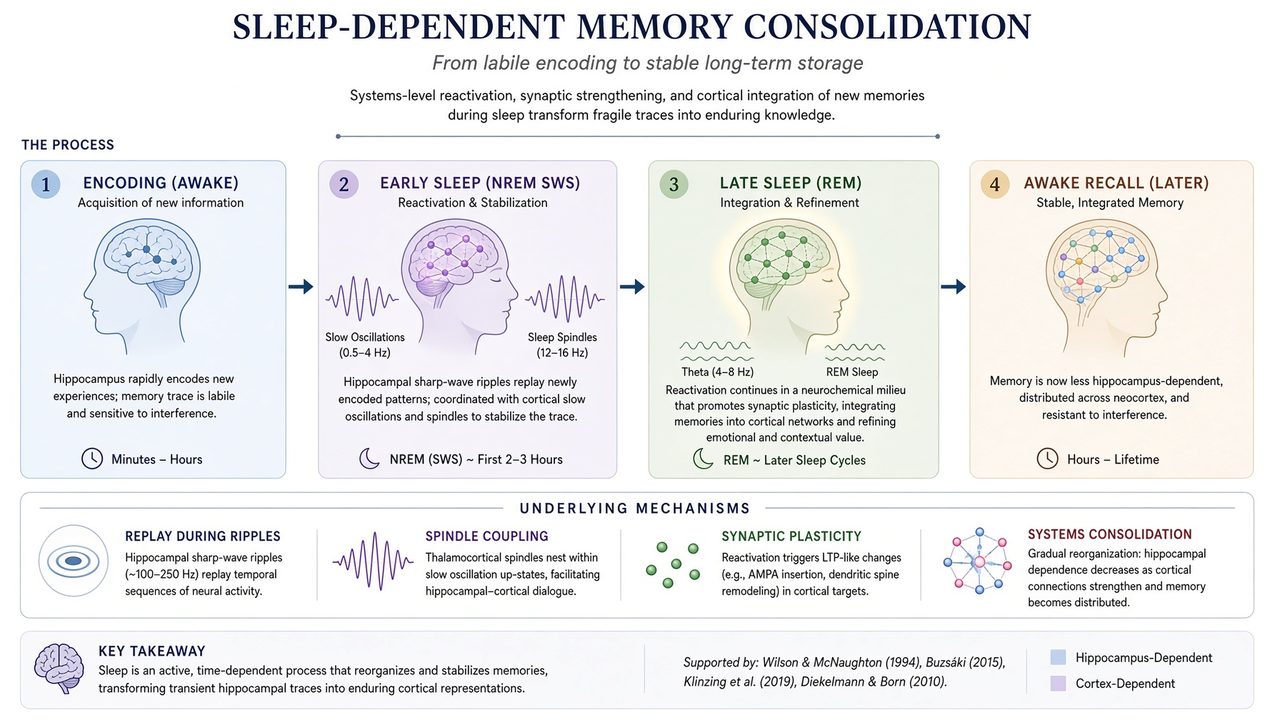
A well-timed nap can restore alertness, improve mood and help consolidate what you have learned. Sleep research shows that even brief periods of sleep can boost memory and performance.
What happens during a nap
Sleep proceeds through stages. A nap of about 10 to 20 minutes stays in light sleep, stage 1 and 2 non-REM. Longer naps of 60 minutes or more may reach slow-wave sleep, and 90 minutes can include a full cycle with REM sleep.
Evidence for benefits
- Alertness and performance: NASA studied pilots on long flights and found that a 26-minute nap improved alertness by about 54 percent and performance by 34 percent. Short naps benefit shift workers, drivers and healthcare staff.
- Memory consolidation: Sara Mednick and others found that naps improve performance on declarative memory tasks such as word-pair learning, and procedural tasks such as finger tapping and visual discrimination. A 90-minute nap with both slow-wave and REM sleep improved performance on a perceptual task as much as a full night of sleep in one study.
- Spindles and slow waves: stage 2 spindles and slow-wave sleep during naps are linked with better retention.
- Learning capacity: a study by Matthew Walker found that a 90-minute midday nap refreshed hippocampal capacity for learning new facts in the afternoon, compared with staying awake.
- Creativity: naps that include REM sleep may help with problem solving that requires creative association.
- Mood: napping reduces fatigue and can improve mood.
- Children: naps in preschoolers appear to benefit memory consolidation of recently learned material.

Nap length guide
- 10 to 20 minutes: a "power nap" for quick boosts in alertness and performance with little grogginess
- 30 minutes: may cause sleep inertia, the groggy feeling after waking from deeper sleep, that can last 15 to 30 minutes or more
- 60 minutes: improves memory for facts due to slow-wave sleep, with some grogginess upon waking
- 90 minutes: a full cycle, which includes REM sleep, supports creativity and procedural memory, with lower inertia
Timing
Most people experience a natural dip in alertness in the early afternoon, around 1 to 3 pm, which is the best time to nap. Napping late in the day can interfere with nighttime sleep.
Caffeine nap
Drinking coffee right before a 15-to-20-minute nap, because caffeine takes about 20 to 30 minutes to take effect, can lead to enhanced alertness upon waking, and some studies in drivers and students have shown benefits.
Who should be careful
- People with insomnia may find that napping reduces their sleep drive at night.
- Older adults: long, frequent daytime naps are associated with cognitive decline and health problems in some studies, though the direction of causation is unclear. Excessive daytime sleepiness warrants evaluation for sleep apnea and other conditions.
- People with narcolepsy use scheduled naps under medical guidance.
- Drivers and machinery operators should not rely on naps to compensate for chronic sleep deprivation.
How to nap well
- Choose a consistent time in the early afternoon.
- Set an alarm so that you do not oversleep.
- Create a dark, quiet, cool space, using an eye mask or earplugs.
- Lie down if possible, but even a seated nap helps.
- Do not fret about falling asleep: quiet rest also offers benefits.
- Allow a few minutes to wake up, and use light and movement to reduce grogginess.
- Do not use naps to avoid addressing poor nighttime sleep.
Takeaway
A nap is a simple, evidence-supported way to refresh the brain. Match the length to your goal and timing to your schedule for the best results.
Further reading from authoritative sources
- National Institute of Neurological Disorders and Stroke (NINDS)
- National Center for Complementary and Integrative Health (NCCIH)
This article is educational and does not replace advice from a licensed clinician. See the medical disclaimer. Looking for specialist care? Browse the neurology clinic directory.