The Neuroscience of Test Anxiety
Your heart pounds, your mind goes blank, and answers you knew an hour ago vanish. Test anxiety affects a large share of students, and it is a real phenomenon with measurable effects on brain function, not a sign of weakness or poor preparation.
What is test anxiety
Test anxiety is a form of performance anxiety with cognitive components (worry, self-doubt, negative thoughts), emotional components (fear, tension) and physical symptoms (rapid heart rate, sweating, nausea). Surveys suggest that roughly 20 to 40 percent of students experience significant test anxiety. It is more common in high-stakes situations, and among students with perfectionism, low confidence or past negative experiences.
How anxiety interferes with performance
- Attentional control theory: Michael Eysenck proposed that anxiety biases attention toward threat and reduces the efficiency of the prefrontal executive functions. Worrisome thoughts compete for limited working memory capacity, so less is available for solving problems. Sian Beilock showed that people with high anxiety and high working memory capacity are especially affected on math problems that rely on working memory, since they would normally use their capacity for such tasks.
- Stress hormones: acute stress floods the prefrontal cortex with catecholamines, impairing working memory, and high cortisol at the time of retrieval impairs memory recall, as discussed in studies of stress and memory.
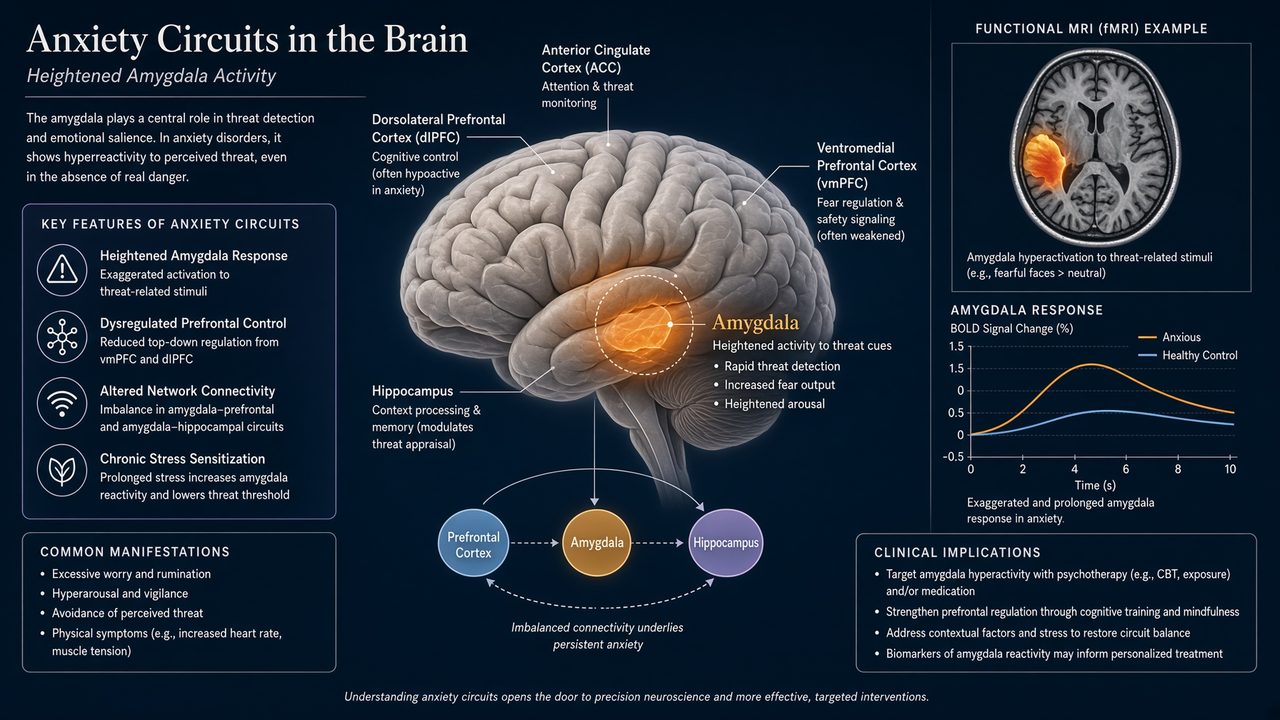
- Amygdala hyperactivity: threat detection increases and prefrontal control decreases, which narrows attention and promotes avoidance.
- Choking under pressure: in skilled performance, overthinking and self-monitoring can disrupt automated processes.

It is not just about preparation
Poor preparation can lead to anxiety, but many anxious students are well prepared and still underperform because of interference. Distinguishing the two helps target solutions: skill gaps need better studying, and anxiety needs regulation strategies, and many students need both.
Strategies with evidence
- Prepare with retrieval practice: practice under test-like conditions, since well-learned material is more resistant to stress. Studies suggest that stress inoculation, practicing under mild pressure, reduces the impact on performance.
- Expressive writing: Gerardo Ramirez and Sian Beilock found that having students write about their worries for ten minutes before a high-stakes exam improved performance, especially in anxious students, perhaps by offloading worries from working memory.
- Reappraisal: Jeremy Jamieson showed that telling students that stress arousal can improve performance led to better test performance and more adaptive physiological responses.
- Relaxation and breathing: slow diaphragmatic breathing, progressive muscle relaxation and mindfulness can lower arousal. Heart rate variability biofeedback has shown promise in reducing test anxiety.
- Cognitive behavioral therapy: challenges unhelpful thoughts such as "If I fail this, my life is over" and builds coping skills. CBT is among the most effective treatments for test anxiety.
- Exposure: practice tests in the real setting, to build familiarity.
- Sleep, exercise and nutrition: protect the brain's resilience. Avoid all-nighters.
- Test-taking strategies: read through the exam, start with easier questions to build momentum, and manage time.
- Positive self-talk and self-compassion.
- Limit caffeine if it worsens jitteriness.
- Arrive early and prepare materials the day before to reduce logistical stress.
- Seek accommodations if anxiety is severe and diagnosed, through school disability services.
For teachers and parents
- Reduce the stakes where possible, with frequent low-stakes quizzes.
- Avoid emphasizing fear of failure.
- Teach coping strategies, and normalize anxiety.
- Provide clear expectations and practice opportunities.
- Watch for signs of severe anxiety, including avoidance, physical symptoms, sleep problems and panic, and encourage professional support.
When to seek help
If anxiety is intense, persistent, impacts daily functioning or is accompanied by symptoms of depression or panic, consult a mental health professional or school counselor. Treatments are effective.
Takeaway
Test anxiety is a brain-based response that can be managed. With practice, reappraisal and calming techniques, most students can perform closer to their true ability.
Further reading from authoritative sources
- National Institute of Neurological Disorders and Stroke (NINDS)
- National Center for Complementary and Integrative Health (NCCIH)
This article is educational and does not replace advice from a licensed clinician. See the medical disclaimer. Looking for specialist care? Browse the neurology clinic directory.