Brainstem Basics: The Unseen Controller of Vital Functions
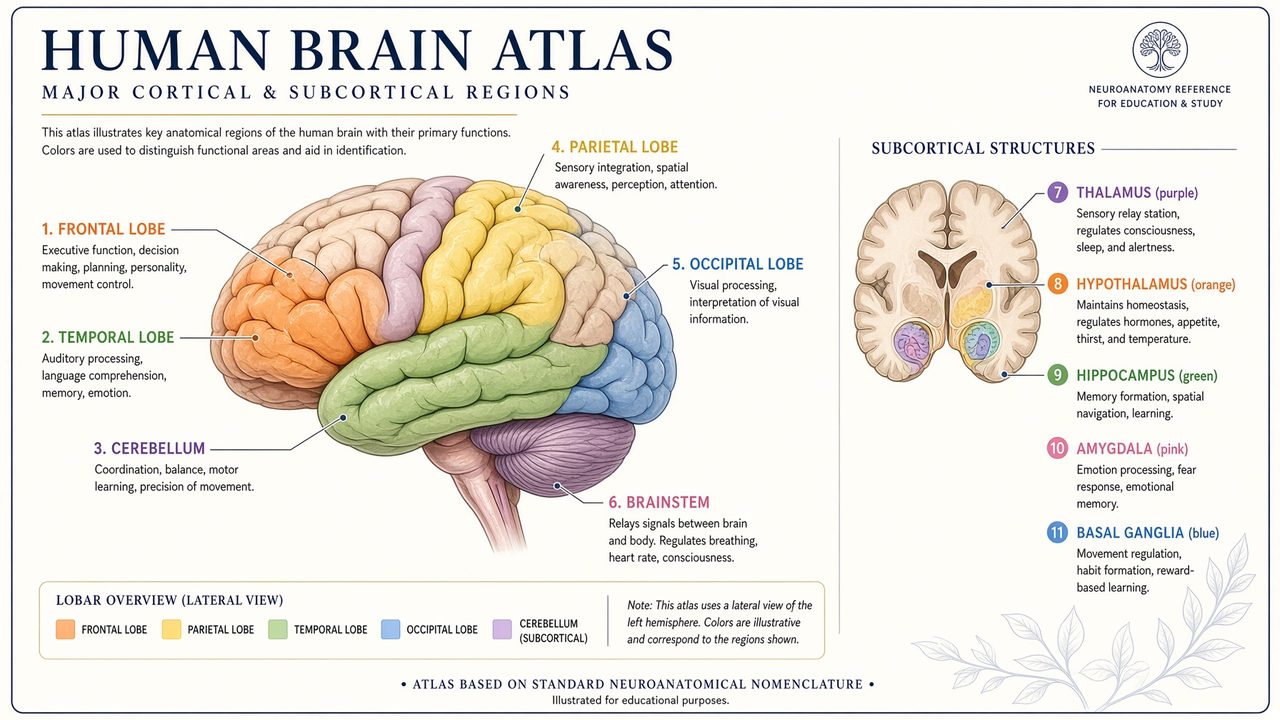
The brainstem is the stalk-like structure connecting the brain to the spinal cord. Though small, it houses circuits that keep you alive and awake. Almost every message between the brain and body passes through it.
Three levels
Midbrain
The topmost part contains nuclei for eye movements (cranial nerves III and IV), the substantia nigra, whose dopamine neurons degenerate in Parkinson's disease, and the superior and inferior colliculi, which orient the eyes and head to visual and auditory stimuli.
Pons
The middle part relays information between the cerebrum and cerebellum, and contains nuclei for cranial nerves V through VIII, controlling chewing, facial sensation and movement, hearing and balance. It also helps regulate breathing rhythm and sleep.
Medulla oblongata
The lowest part contains centers that control heart rate, blood pressure, breathing, swallowing, vomiting, coughing and sneezing. Most motor fibers cross to the opposite side here, which is why the left brain controls the right side of the body.
Pathways
Ascending sensory pathways carry touch, pain and temperature signals upward, and descending motor tracts carry commands downward. Twelve cranial nerves, ten of which emerge from the brainstem, serve the head and neck.

The reticular formation
A network of neurons running through the brainstem, the reticular formation, regulates arousal, sleep-wake cycles and attention. Its ascending portion, the reticular activating system, projects to the thalamus and cortex to maintain wakefulness. Other nuclei produce neurotransmitters that influence the whole brain: locus coeruleus (norepinephrine), raphe nuclei (serotonin) and the ventral tegmental area (dopamine).
Reflexes and autonomic control
The brainstem coordinates the pupillary light reflex, the gag reflex, the corneal blink reflex and the vestibulo-ocular reflex, which keeps vision steady as the head moves. Doctors test these reflexes to assess brainstem function.
Injury and disease
- Brainstem stroke can cause dizziness, double vision, facial weakness, trouble swallowing, paralysis or locked-in syndrome, in which a person is aware but unable to move except for the eyes.
- Head trauma can damage the brainstem, impairing consciousness or breathing.
- Tumors, such as diffuse midline gliomas in children
- Multiple sclerosis, with lesions affecting eye movement or balance
- Infections and inflammation
- Brain death, defined as the irreversible loss of all brain functions including the brainstem, determined by specific clinical tests
Signs of brainstem problems
Sudden double vision, vertigo with trouble walking, slurred speech, trouble swallowing, facial numbness or weakness, and a decreased level of consciousness require emergency attention, since they may indicate stroke.
Sleep, breathing and the brainstem
Sleep apnea can involve brainstem control of breathing. Opioids and sedatives can suppress respiratory centers, which is why overdoses are dangerous.
Evaluation and treatment
Neurologists examine eye movements, facial strength, swallowing, reflexes and coordination. MRI shows brainstem structure, and auditory brainstem response testing assesses the hearing pathway. Treatment depends on the cause and may involve emergency stroke care, rehabilitation, swallowing therapy or surgery.
Takeaway
The brainstem works constantly in the background. Keeping vascular health strong, avoiding head injury and respecting the dangers of sedating drugs help protect it.
Further reading from authoritative sources
This article is educational and does not replace advice from a licensed clinician. See the medical disclaimer. Looking for specialist care? Browse the neurology clinic directory.