Hypothalamus Highlights: The Brain's Master Regulator
Smaller than an almond, the hypothalamus sits at the base of the brain, just above the pituitary gland. Despite its size, it keeps the body in balance, regulating temperature, hunger, thirst, sleep, hormones and responses to stress.
Key nuclei and their roles
- Suprachiasmatic nucleus: the master circadian clock, receiving light information from the eyes
- Paraventricular and supraoptic nuclei: produce oxytocin and vasopressin (antidiuretic hormone) and release hormones that control the pituitary
- Arcuate nucleus: senses leptin, insulin and ghrelin, and regulates hunger
- Lateral hypothalamus: promotes feeding and wakefulness, containing orexin neurons
- Ventromedial nucleus: signals satiety
- Preoptic area: regulates body temperature and sleep onset, and sexual behavior
- Anterior hypothalamus: cooling responses such as sweating
- Posterior hypothalamus: heat conservation
- Mammillary bodies: involved in memory circuits
Controlling the pituitary
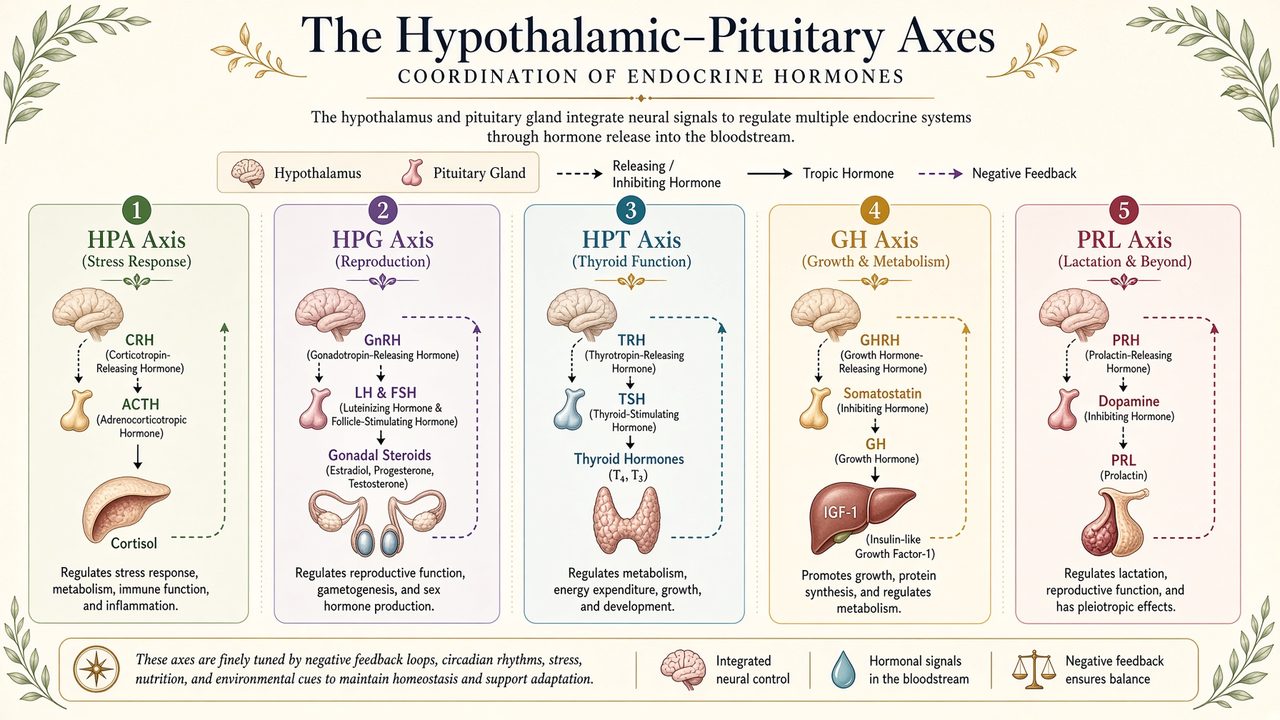
The hypothalamus controls the anterior pituitary by releasing hormones through a small portal blood system, including:
- Corticotropin-releasing hormone (CRH) for the stress response
- Thyrotropin-releasing hormone (TRH)
- Gonadotropin-releasing hormone (GnRH) for reproduction
- Growth hormone-releasing hormone (GHRH) and somatostatin
- Dopamine, inhibiting prolactin
It also produces oxytocin and vasopressin, which are transported down nerve fibers to the posterior pituitary for release.
The stress axis
When stressed, the hypothalamus releases CRH, which triggers ACTH from the pituitary and cortisol from the adrenal glands, the HPA axis. It also activates the sympathetic nervous system via brainstem pathways.
Hunger and thirst
Signals from the gut and fat, including ghrelin (hunger) and leptin and insulin (satiety), act on hypothalamic circuits. Osmoreceptors detect blood concentration, prompting thirst and vasopressin release to conserve water.
Temperature control
The preoptic area works like a thermostat. When body temperature rises, it triggers sweating and blood vessel dilation, and when it falls, shivering and vasoconstriction. Fever results when immune signals raise the set point.
Sleep and circadian rhythms
The suprachiasmatic nucleus synchronizes body clocks with the day-night cycle. Sleep-promoting neurons in the preoptic area and wake-promoting orexin neurons control sleep-wake transitions. Loss of orexin neurons causes narcolepsy.
Emotion and behavior
The hypothalamus participates in aggression, sexual behavior, parental behavior and bonding, partly through oxytocin and vasopressin.
When things go wrong
- Hypothalamic tumors and craniopharyngiomas can cause obesity, hormone deficiencies and visual problems
- Hypothalamic obesity after surgery or injury
- Diabetes insipidus from vasopressin deficiency
- Prader-Willi syndrome, with insatiable hunger
- Narcolepsy type 1, due to orexin loss
- Traumatic brain injury and stroke can disrupt hormone function
- Temperature dysregulation in some neurological disease
- Kallmann syndrome with GnRH deficiency
Evaluation
Endocrinologists measure hormone levels, and MRI visualizes the area. Treatments depend on the cause, and may include hormone replacement, medications, surgery or radiation.
Supporting healthy regulation
Regular sleep, balanced meals, physical activity, stress management and avoiding extreme temperature exposure support hypothalamic function. Chronic stress and sleep loss can disrupt its regulation.
Questions researchers are asking
Neuroscientists are mapping hypothalamic cell types with genetic tools, finding dozens of neuron populations that influence feeding, sleep, social behavior and temperature. This detail may lead to more precise treatments for obesity and sleep disorders. Researchers are also studying how early life stress can set hypothalamic stress responses for years, a link that helps explain why childhood adversity affects adult health.
Takeaway
The hypothalamus is the brain's master regulator, quietly maintaining balance so everything else can function.
Further reading from authoritative sources
This article is educational and does not replace advice from a licensed clinician. See the medical disclaimer. Looking for specialist care? Browse the neurology clinic directory.