The Ventral Tegmental Area and the Reward Circuit
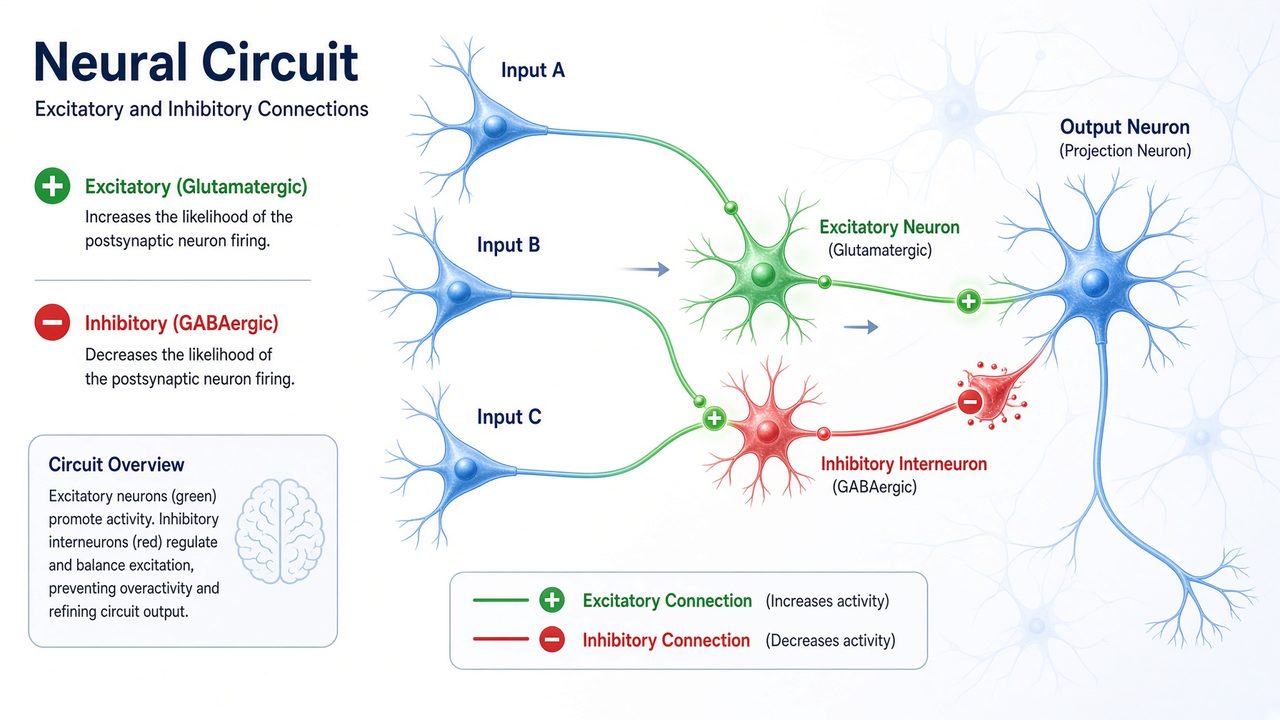
Deep in the midbrain lies a small cluster of neurons that exerts large influence on motivation, learning and desire: the ventral tegmental area (VTA). Its dopamine-producing cells project to the nucleus accumbens, prefrontal cortex and other regions, forming the core of the brain's reward circuit.
Pathways
- Mesolimbic pathway: VTA to nucleus accumbens, amygdala and hippocampus, central to motivation and reward
- Mesocortical pathway: VTA to prefrontal cortex, involved in attention, planning and working memory
Besides dopamine neurons, the VTA contains GABA and glutamate neurons that shape these signals. It receives input from the prefrontal cortex, lateral hypothalamus, amygdala and habenula, among other areas.
What dopamine does
Early theories called dopamine the "pleasure chemical." Research by Wolfram Schultz and others showed that dopamine neurons fire in response to reward prediction errors: they increase when a reward is better than expected, stay steady when it is as expected, and dip when it is worse. This signal teaches the brain which cues and actions lead to good outcomes. Kent Berridge distinguished "wanting," which depends on dopamine, from "liking," which depends on opioid and other systems in small hotspots. This explains why a person can crave something that no longer gives enjoyment.

Natural rewards
Food, social contact, sex, music and novelty all engage the circuit. Dopamine also responds to aversive and surprising events in some neurons, so the system is more complex than a simple reward detector.
Learning and habit
Repeated reward-linked actions shift control from the nucleus accumbens to dorsal striatal habit circuits. Cues that predict rewards come to trigger dopamine themselves, which is why the smell of food or a phone notification can create urges.
Addiction
Addictive drugs such as cocaine, amphetamine, nicotine, opioids and alcohol increase dopamine signaling in the reward circuit, in some cases far above natural levels. With repeated use:
- Cues become powerfully motivating.
- Natural rewards feel less appealing as the circuit adapts.
- Control from the prefrontal cortex weakens.
- Stress and craving drive relapse.
Addiction is a chronic condition involving learning and control as well as reward, and effective treatment combines behavioral therapy, medication where available, and social support.
Depression, ADHD and Parkinson's
- Depression: reduced motivation and pleasure, termed anhedonia, has been linked to altered reward circuit function.
- ADHD: stimulant medications raise dopamine and norepinephrine signaling.
- Parkinson's disease: degeneration mainly affects the neighboring substantia nigra, though VTA changes contribute to motivational symptoms, and dopamine medications can sometimes trigger compulsive behaviors such as gambling.
- Schizophrenia: dopamine dysregulation is linked to psychotic symptoms.
Healthy reward
- Exercise raises dopamine and builds motivation.
- Set small, achievable goals and acknowledge progress.
- Seek variety and meaningful challenge.
- Limit endless scrolling, which exploits unpredictable rewards.
- Sleep and social connection support reward function.
Questions researchers are asking
Neuroscientists are mapping VTA cell types with genetic tools and finding that dopamine neurons are more diverse than once thought, with subgroups responding to reward, novelty, aversion or movement. Understanding this diversity may lead to treatments that target motivation problems in depression and addiction without broadly altering dopamine. Studies also examine how early life stress changes VTA development.
Takeaway
The VTA reward circuit teaches us what to want and drives us to pursue it. Understanding it clarifies both motivation and the vulnerability to addiction.
Further reading from authoritative sources
This article is educational and does not replace advice from a licensed clinician. See the medical disclaimer. Looking for specialist care? Browse the neurology clinic directory.