Brain-Computer Interfaces: Connecting Minds and Machines
A brain-computer interface (BCI) is a system that reads brain activity and translates it into commands for an external device, bypassing the usual muscle pathways. Once science fiction, BCIs now allow some paralyzed people to type, move cursors, control robotic limbs and even produce speech.
How a BCI works
1. Signal acquisition. Sensors record neural activity. 2. Signal processing. Software filters noise and extracts features. 3. Decoding. Algorithms, often machine learning, map patterns to intended commands. 4. Output. The command drives a cursor, speller, prosthesis, wheelchair or speech synthesizer. 5. Feedback. The user sees or feels the result and adapts, and the system adapts too.
Types of interface
Noninvasive
EEG-based BCIs use scalp electrodes. They are safe and portable but have limited resolution and noise. Common paradigms include imagining movement and attending to flashing letters, using the P300 response. They have been used for communication and stroke rehabilitation.
Minimally invasive
Devices such as a stent-electrode (Stentrode) are threaded through blood vessels to sit near the motor cortex, avoiding open brain surgery. Early trials enabled people with paralysis to control devices.
Invasive
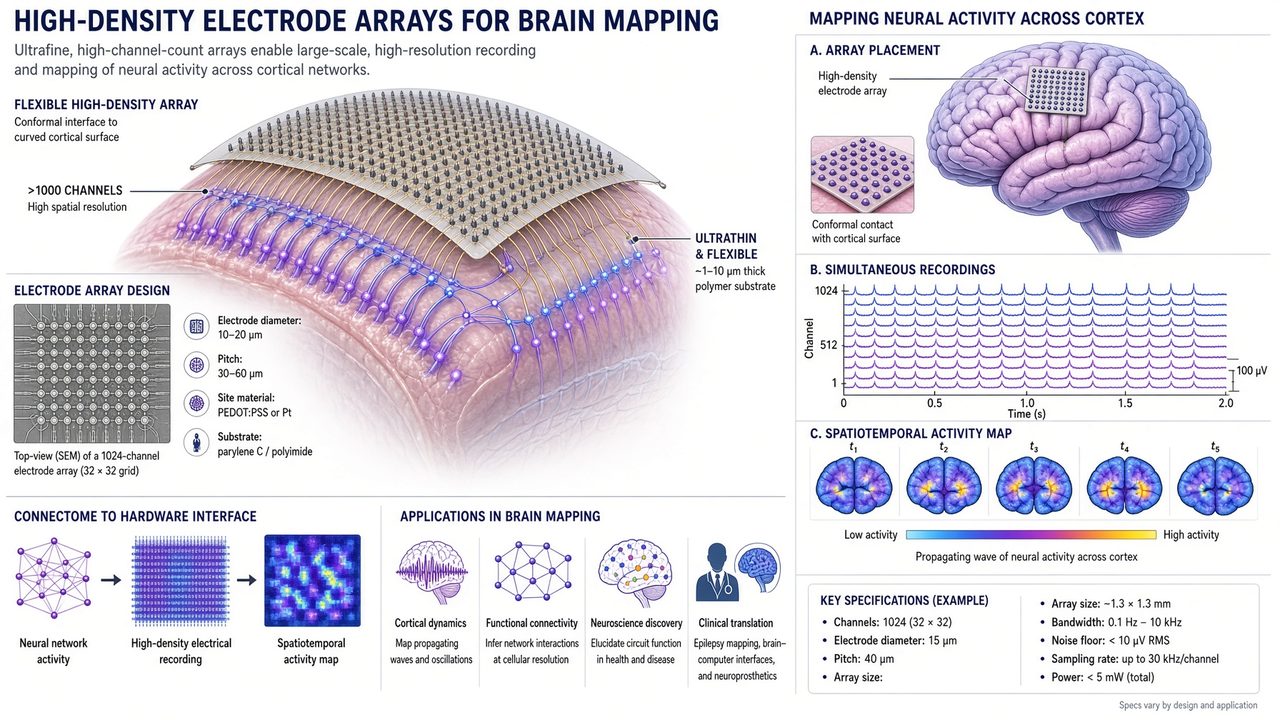
Arrays of tiny electrodes implanted in the cortex record from individual neurons. The BrainGate consortium demonstrated that people with tetraplegia could control cursors and robotic arms. In 2023, teams at Stanford and UCSF reported systems that decoded attempted speech into text or synthesized voice at speeds approaching natural conversation for people who had lost the ability to speak. Other teams have decoded handwriting imagined by paralyzed people at high typing speeds.
Electrocorticography
Grids placed on the brain's surface record richer signals than EEG with less penetration than needles, used in epilepsy monitoring and increasingly in BCIs.

Restoring movement and sensation
BCIs can be paired with spinal cord stimulation to bypass injury. In studies, a "digital bridge" has allowed people with spinal cord injury to walk using decoded brain signals. Stimulating sensory cortex can also provide a sense of touch from a prosthetic hand.
Medical applications
- Communication for people with ALS, brainstem stroke or locked-in syndrome
- Motor restoration after spinal cord injury or stroke
- Neurorehabilitation, where BCIs guide movement imagination to promote plasticity
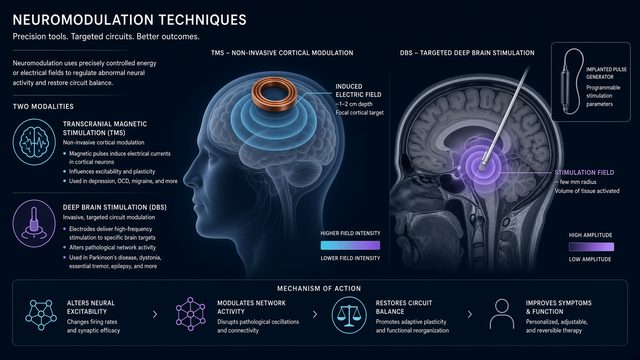
- Closed-loop therapies, such as responsive neurostimulation for epilepsy and adaptive deep brain stimulation for Parkinson's disease
Challenges
- Durability. Implanted electrodes can lose signal over time due to scarring.
- Surgery risks, including infection and bleeding.
- Calibration. Systems often need frequent retraining.
- Speed and accuracy limits.
- Power and wireless transmission.
- Cost and access.
- Long-term support. Users can be left without devices if companies fail.
Ethical questions
BCIs raise issues about privacy of brain data, agency and responsibility, consent for vulnerable people, equitable access and potential enhancement by healthy users. Companies, including Neuralink, have begun human trials, and regulators and ethicists emphasize transparency and independent oversight.
Consumer products
Headbands and earbuds with EEG sensors are marketed for focus, sleep and meditation. They provide coarse signals, and claims should be treated cautiously.
The road ahead
Research aims for higher-bandwidth, wireless, long-lasting devices, and broader clinical trials. For now, BCIs remain mainly investigational, available through research studies. People interested may consult specialty centers, many of which are listed in our directory.
Further reading from authoritative sources
- National Institute of Neurological Disorders and Stroke (NINDS)
- National Center for Complementary and Integrative Health (NCCIH)
This article is educational and does not replace advice from a licensed clinician. See the medical disclaimer. Looking for specialist care? Browse the neurology clinic directory.