Understanding Brainwave Bands in Neurofeedback Training
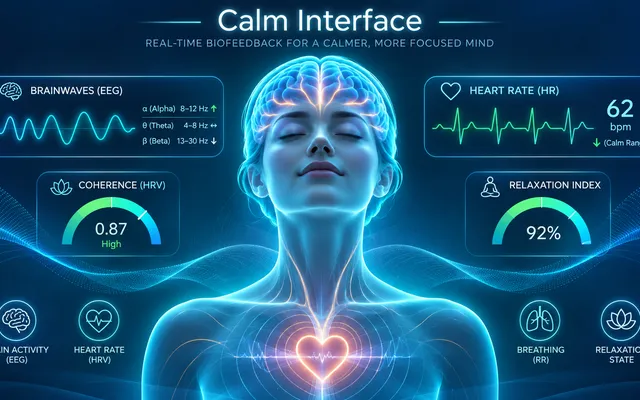
Neurofeedback practitioners often talk about training brainwave bands. These bands, defined by frequency, are linked to different brain states. Knowing what they represent helps you follow what happens in a session and think critically about what is claimed.
The bands
Delta (0.5 to 4 Hz)
Dominant in deep sleep and in infants. Excess delta while awake, especially focal, can signal brain injury or disease. Some training protocols aim to reduce excess slow activity, and others examine the infraslow range below 0.1 Hz.
Theta (4 to 8 Hz)
Associated with drowsiness, meditation, memory processing and, in frontal midline regions, focused mental effort. Elevated theta relative to beta has been observed in some people with ADHD, which inspired the theta/beta ratio protocol, although later analyses have questioned its reliability as a marker.
Alpha (8 to 12 Hz)
Strongest over the back of the head when relaxed with eyes closed, and reduced by opening the eyes or concentrating. Alpha seems to reflect inhibition of irrelevant processing. Alpha training is used for relaxation, anxiety and performance, and alpha-theta training, in which the person lowers into a drowsy state, has been studied for PTSD and addiction.
Sensorimotor rhythm (12 to 15 Hz)
Measured over the sensorimotor strip, linked to quiet, still alertness. SMR training is used for attention, sleep, epilepsy and motor control.
Beta (13 to 30 Hz)
Related to active thinking, alertness and motor control. Low beta (12-20 Hz) is associated with calm focus, while high beta (above 20 Hz) can accompany anxiety and rumination. Training may raise low beta for attention and lower high beta for overarousal.
Gamma (30 to 100 Hz)
Linked to local processing, attention and perceptual binding. Gamma is hard to measure from the scalp because muscle activity contaminates it, and training is mostly experimental.
Common protocols
- SMR up, theta down: attention and impulsivity
- Beta up, theta down: ADHD (the Lubar approach)
- Alpha up: relaxation and stress reduction
- Alpha asymmetry training: raising left frontal relative to right frontal activity for mood, based on research on frontal asymmetry in depression
- Alpha-theta: deep relaxation and trauma work
- Slow cortical potentials: attention and epilepsy
- Z-score training: moving multiple measures toward norms, guided by a database
Where you record matters
The same frequency has different meanings at different sites. Frontal theta may signal concentration, while theta over posterior regions during wakefulness may indicate drowsiness. Electrode placements such as Cz, Fz, C3 and C4 are chosen for specific aims.
Cautions about simple labels
- Bands overlap and each contains diverse sources.
- Individual differences are large. People have distinct peak alpha frequencies, and some do not follow textbook patterns.
- State matters: eyes open versus closed, time of day, medication and caffeine change results.
- Artifacts can mimic bands: muscle tension masquerades as high beta or gamma, and eye movements as delta.
- Population averages do not predict an individual's needs.
- Correlation is not causation: changing a band does not guarantee a change in symptoms.
What to expect as a client
A good provider explains which bands are being trained and why, shows how you are doing, and checks that changes are due to brain activity and not artifact. Session experiences range from calm alertness to nothing noticeable. Progress is typically measured by symptoms, sleep, and performance, not by band numbers alone.
Takeaway
Brainwave bands provide a common language for neurofeedback, but they are tools rather than truths. Understanding them helps you ask informed questions and avoid overblown claims.
Further reading from authoritative sources
- National Institute of Neurological Disorders and Stroke (NINDS)
- National Center for Complementary and Integrative Health (NCCIH)
This article is educational and does not replace advice from a licensed clinician. See the medical disclaimer. Looking for specialist care? Browse the neurology clinic directory.