Consumer EEG Devices: A Buyer's Guide to the Science
Consumer EEG devices bring a laboratory tool into homes. They come as headbands, caps, earbuds and sleep headbands, and they claim to measure meditation, focus, stress or sleep. Knowing how EEG works helps you judge what they can and cannot do.
How EEG works
Electrodes on the scalp detect tiny voltage changes produced by synchronized activity of large groups of neurons, usually in the cortex. The signal is only a few microvolts and is easily contaminated by blinks, eye movements, jaw clenching, head motion and electrical noise. Research EEG caps use 32 to 256 wet electrodes with careful skin preparation. Consumer devices typically use one to eight dry electrodes, in limited locations such as the forehead or around the ear.
What they can measure reasonably well
- Eyes-closed alpha rhythm and its blocking when eyes open
- Broad sleep stages, including wake and deep sleep, with moderate agreement compared with polysomnography. Devices such as the Dreem headband were validated against sleep lab standards in studies, though accuracy for lighter stages is lower, and the company later changed its business.
- Event-related potentials under controlled conditions
- Relative band power trends such as increases in alpha during relaxation
- Brain-computer interface control of simple tasks in research
What they cannot do well
- Detect specific emotions, thoughts or intentions
- Diagnose conditions such as ADHD, depression or concussion
- Measure deep brain structures
- Produce reliable "focus scores" that mean the same across people. Algorithms are proprietary, often not validated and may reflect muscle artifact more than brain activity.
- Provide medical-grade seizure detection (some specialized medical devices exist).
Questions to ask before buying
- Purpose: meditation feedback, sleep tracking, research or curiosity?
- Validation: are there peer-reviewed studies comparing the device with research-grade EEG?
- Electrode type and placement: more channels and appropriate locations matter.
- Data access: can you see or export raw data?
- Privacy: what happens to your brain data, is it sold or used for advertising and can you delete it?
- Comfort and usability: poor contact ruins data.
- Cost and subscriptions.
- Claims: be wary of "boosts IQ," "reads your emotions" or "treats ADHD."
Using the data wisely
Treat scores as rough feedback. Look at trends over time, combine with how you feel and avoid becoming anxious about numbers. Do not use consumer EEG to self-diagnose, and see a clinician for concerns about sleep, seizures or cognition.
Useful applications
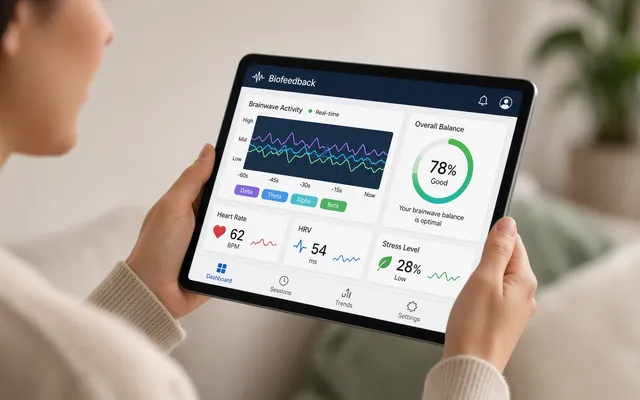
For many people the value is educational: seeing alpha rhythms increase with eyes closed or watching a meditation score change can build awareness of relaxation. Researchers use inexpensive EEG for classroom projects and large citizen-science studies. These uses make sense as long as the numbers are treated as approximate.
Keep it in perspective
Even a perfect headband cannot replace a medical evaluation, and a single night or session of data is rarely meaningful. Use it to learn, not to worry.
Takeaway
Consumer EEG can be a fun and educational tool for relaxation and awareness, but it is not a mind reader or medical device. Choose validated products and protect your data.
Further reading from authoritative sources
- National Institute of Neurological Disorders and Stroke (NINDS)
- National Center for Complementary and Integrative Health (NCCIH)
This article is educational and does not replace advice from a licensed clinician. See the medical disclaimer. Looking for specialist care? Browse the neurology clinic directory.