The Neuroscience of Social Media
Social platforms are designed to capture attention, and they tap into brain systems that evolved for social connection. Researchers are working to understand what this does to mood, attention and development, and the evidence is more nuanced than headlines suggest.
Reward and social feedback
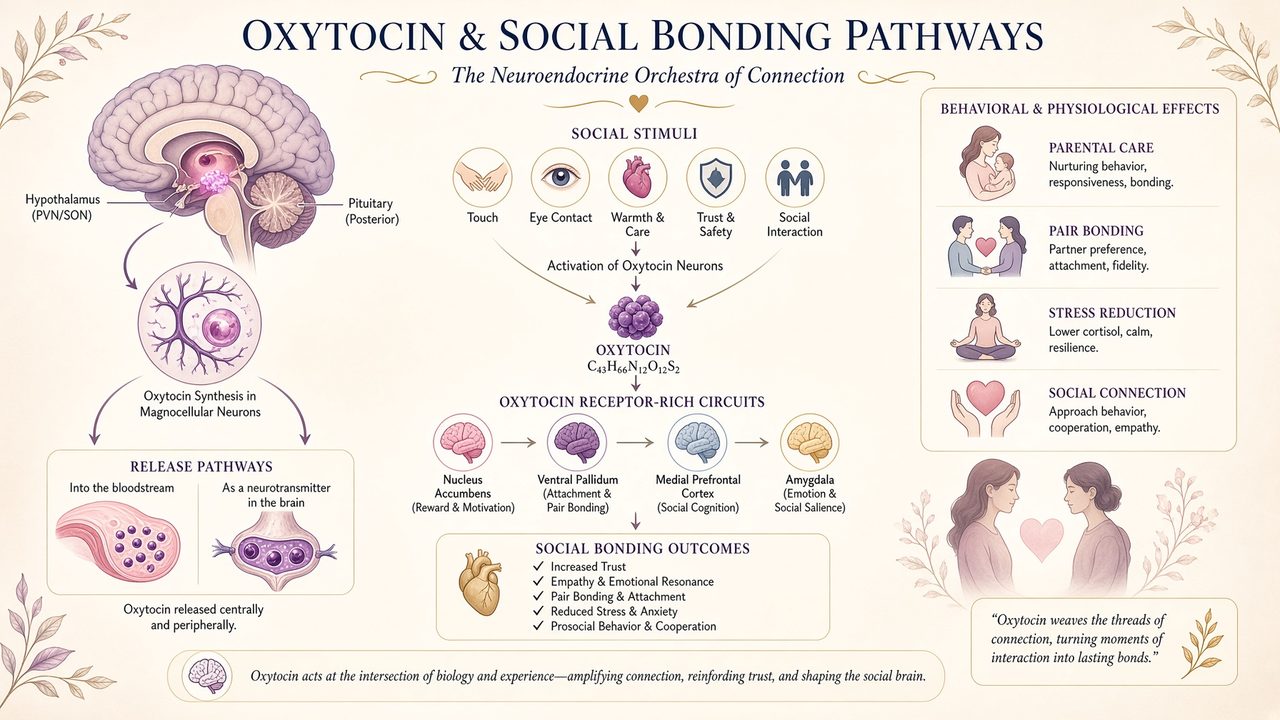
Humans are strongly motivated by social approval. In a brain imaging study by Lauren Sherman, Patricia Greenfield and colleagues at UCLA, teenagers viewing photos with many "likes" showed greater activation in the nucleus accumbens, part of the reward system, and in regions involved in social cognition and attention. Variable reward, in which rewards arrive unpredictably, as with notifications and endless feeds, is a powerful driver of habit formation, in line with research on dopamine and reward prediction error. Dopamine here signals anticipation and motivation more than pleasure.
Social comparison and the self
Regions such as the medial prefrontal cortex are engaged when thinking about the self and others. Social media encourages comparison with curated images of others, which can lower mood and body image in some people, particularly adolescents. Fear of missing out and rejection sensitivity can increase anxiety.
Attention and multitasking
Frequent notifications fragment attention and make deep focus harder. Studies find that the mere presence of a smartphone can reduce available cognitive capacity in some experiments, though replication has been mixed. Heavy media multitasking is associated with poorer performance on some attention tasks, but causality is unclear.
Adolescent brains
Adolescence is a period of heightened sensitivity to social reward and peer evaluation, along with still-maturing prefrontal control. This is why some researchers worry about social media effects in teens. In 2023, the U.S. Surgeon General issued an advisory stating that there is not enough evidence to conclude that social media is sufficiently safe for children and adolescents, and called for action.
What research shows about mental health
Large studies, including analyses by Amy Orben and Andrew Przybylski, find small average associations between screen use or social media and wellbeing, with effects comparable to many ordinary factors. Others, such as Jean Twenge and Jonathan Haidt, argue that rising teen anxiety and depression coincide with smartphone and social media adoption and that effects are meaningful. Experiments in which people reduce social media use for a few weeks have found modest improvements in some measures, such as depression and loneliness in a study from the University of Pennsylvania led by Melissa Hunt, but not in all studies. The scientific debate continues, and individual differences are large: those who are lonely, or experiencing cyberbullying or sleep loss, appear more vulnerable. Active use for connection may be less harmful than passive scrolling.
Practical tips
- Turn off nonessential notifications.
- Set time limits, and keep phones out of bedrooms at night.
- Curate your feed: follow accounts that inform and support you, and mute those that cause comparison or distress.
- Prefer active connection such as messaging friends over passive scrolling.
- Take breaks, and notice how you feel.
- For parents: talk about online experiences, set shared family rules and model healthy use.
- Seek help if social media use is linked to distress, sleep problems, self-harm thoughts or inability to cut down.
Takeaway
Social media taps into powerful social and reward systems. Mindful use, and protecting sleep, relationships and offline activities, can reduce risks.
Further reading from authoritative sources
- National Institute of Neurological Disorders and Stroke (NINDS)
- National Center for Complementary and Integrative Health (NCCIH)
This article is educational and does not replace advice from a licensed clinician. See the medical disclaimer. Looking for specialist care? Browse the neurology clinic directory.