The Science of Binaural Beats

Binaural beats are a sound phenomenon that has become popular in apps and videos, promoted for relaxation, focus, meditation and sleep. The science is interesting and mixed.
What they are
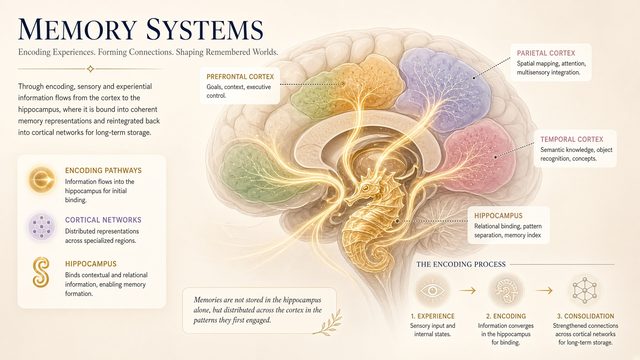
When you hear a slightly different pure tone in each ear through headphones, for example 400 hertz in the left and 410 hertz in the right, your brain perceives a pulsing beat at the difference frequency, 10 hertz in this example. The effect was discovered by Heinrich Wilhelm Dove in 1839. The beat is generated in the brainstem's auditory pathways, in the superior olivary complex, where signals from the two ears first converge, and it is not present in the external sound. Stereo headphones are needed.
The claim of brainwave entrainment
Proponents claim that listening to beats in the delta, theta, alpha or beta ranges will entrain brain rhythms of that frequency, producing sleepiness, relaxation or alertness. Some EEG studies report changes in oscillatory activity, but findings are inconsistent, and it is unclear that the observed effects match the target frequency or that they are specific to binaural beats instead of other sounds.

What studies show
- Anxiety: a few randomized trials, including studies in patients before surgery, found lower anxiety after listening to binaural beats than control sounds. A meta-analysis suggested a moderate effect on anxiety, though studies were small, with risk of bias.
- Mood and pain: some small studies show improvements, while others do not.
- Sleep: limited data suggest improved sleep quality, particularly with delta beats, but more rigorous trials are needed.
- Attention and memory: a few studies report modest benefits, for example improved attention or memory with beta or gamma beats, while others find none or even worsened performance. A review noted that effects of beta beats on attention and memory were inconsistent.
- Mechanism uncertainty: many studies lack adequate controls for music, expectation or relaxation.
Safety
Binaural beats are generally considered low risk. People with epilepsy or sensitivity should consult a doctor, since rhythmic stimulation may in theory provoke seizures, though case reports are lacking. Keep volume safe for hearing, and be careful when driving or operating machinery, as some sessions induce drowsiness.
How to try them
- Use stereo headphones at a comfortable volume.
- Choose a purpose: relaxation, sleep or focus, and try for 15 to 30 minutes.
- Combine with relaxation techniques such as slow breathing.
- Treat it as an experiment, and note your response.
- Do not replace treatment for anxiety, insomnia or ADHD with binaural beats.
- Be skeptical of exaggerated claims such as "instant genius" or "cure for insomnia."
Related sound approaches
Other auditory methods, such as isochronic tones, pink noise and calming music, are also used for relaxation and sleep. Some research suggests that steady pink noise may improve sleep depth in certain people, and music listening has solid evidence for reducing stress and pain around medical procedures. Because binaural beats are usually embedded in music or nature sounds, benefits may come from the pleasant background rather than the beat itself.
Choosing wisely
Try a free track before paying for a subscription, compare it against plain music, and keep whichever helps you most. If sleep problems last more than a few weeks, talk to a clinician, since cognitive behavioral therapy for insomnia has far stronger evidence.
Takeaway
Binaural beats are a harmless auditory curiosity that may help some people relax, but they are not a reliable brain tuner.
Further reading from authoritative sources
- National Institute of Neurological Disorders and Stroke (NINDS)
- National Center for Complementary and Integrative Health (NCCIH)
This article is educational and does not replace advice from a licensed clinician. See the medical disclaimer. Looking for specialist care? Browse the neurology clinic directory.