The Gut-Brain Axis: Microbiome and Mood
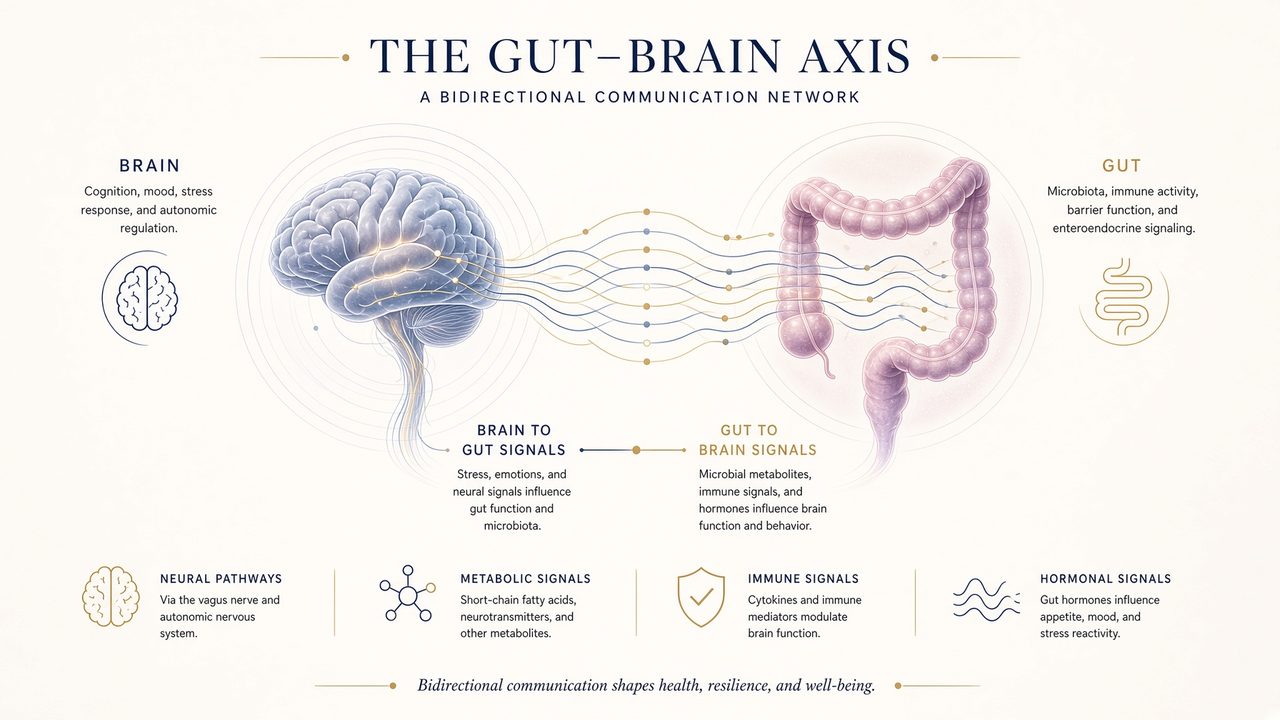
Your digestive tract contains trillions of microbes and a network of half a billion neurons known as the enteric nervous system. These systems talk to the brain through what scientists call the gut-brain axis. Interest in this link has exploded, but findings must be interpreted carefully.
The communication channels
- The vagus nerve, which carries signals from the gut to the brainstem
- The immune system, with gut microbes influencing inflammation
- Microbial metabolites, such as short-chain fatty acids produced when bacteria ferment fiber
- Neurotransmitters and hormones. Gut cells and microbes produce or influence serotonin, GABA and others. About 90 percent of the body's serotonin is made in the gut, though it does not cross the blood-brain barrier directly.
- The stress system, including the HPA axis and cortisol
Evidence from animals
Germ-free mice, raised without microbes, show altered stress responses, anxiety-like behavior and brain development. Transferring gut bacteria from depressed people or from anxious mice to germ-free animals has been reported to transfer some behaviors. These findings suggest influence but do not prove that human mood disorders are caused by gut bacteria.

Evidence in people
- Depression and anxiety. Studies find differences in gut microbial composition in people with depression, with lower levels of some fiber-fermenting bacteria. Direction of causation is unclear.
- Probiotics. Some trials of probiotics, sometimes called "psychobiotics," show small improvements in depressive symptoms or anxiety, though results vary, and effects are not consistent across strains or studies.
- Diet trials. A randomized trial known as SMILES found that a Mediterranean-style diet improved symptoms in people with major depression. Whether the gut microbiome mediates this is uncertain.
- Irritable bowel syndrome. It commonly co-occurs with anxiety and depression, and treatments aimed at the brain such as cognitive behavioral therapy and gut-directed hypnotherapy help gut symptoms.
- Neurological conditions. Gut changes appear early in Parkinson's disease, and researchers are studying links to autism, Alzheimer's and multiple sclerosis. Findings are preliminary.
Diet and the microbiome
Microbial diversity is promoted by:
- Fiber from vegetables, fruit, legumes and whole grains
- Fermented foods, such as yogurt, kefir, kimchi and sauerkraut. A Stanford trial found that fermented foods increased microbiome diversity and reduced inflammatory markers.
- Plant variety, with many types per week
- Polyphenol-rich foods, such as berries, tea and olive oil
Highly processed diets, excessive sugar and artificial emulsifiers may harm diversity, though studies are ongoing. Antibiotics also disrupt gut bacteria, and should be used only when needed.
Caution about claims
Commercial tests that claim to diagnose mental health conditions from stool samples, and many probiotic products marketed for mood, are not backed by strong evidence. Probiotics are not risk-free for people with weakened immunity.
Practical steps
- Eat a varied, plant-rich, high-fiber diet.
- Include fermented foods if you tolerate them.
- Limit ultra-processed foods and excess alcohol.
- Exercise, sleep and manage stress, all of which affect the gut.
- Talk to a doctor before using probiotics, especially if you have a medical condition.
- Seek professional help for persistent mood or digestive symptoms.
Looking ahead
Research aims to identify specific microbial strains and metabolites that influence brain function and to test targeted interventions. For now, a healthy diet remains the best-supported strategy.
Further reading from authoritative sources
This article is educational and does not replace advice from a licensed clinician. See the medical disclaimer. Looking for specialist care? Browse the neurology clinic directory.