How Light Affects Sleep and Brain Health
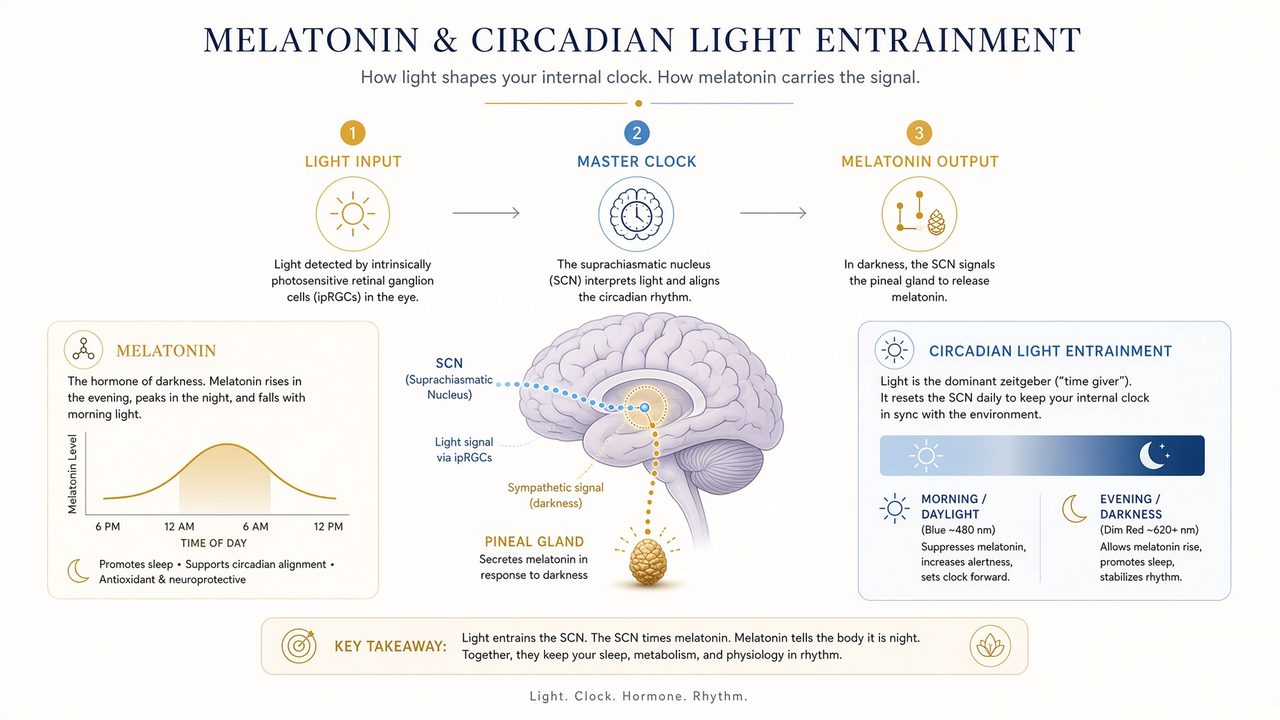
Light is the most powerful cue for synchronizing the brain's internal clock with the outside world. When and how much light you get influences when you feel sleepy, how well you sleep, and even your mood and alertness.
How the brain detects light
In addition to rods and cones used for vision, the eye contains intrinsically photosensitive retinal ganglion cells, which contain the pigment melanopsin. They are most sensitive to short-wavelength light, in the blue range, and send signals directly to the suprachiasmatic nucleus (SCN) in the hypothalamus, the master circadian clock. The SCN coordinates timing across the body and regulates the pineal gland's release of melatonin.
Timing matters
Light's effect depends on when you receive it, described by a phase response curve:
- Morning light advances the clock, making you sleepy earlier at night.
- Evening light delays the clock, pushing sleep later.
- Light in the late night or early hours can shift timing and suppress melatonin.
This is why bright morning light is often recommended to people who struggle to fall asleep, while evening bright light can contribute to later bedtimes.
Blue light and screens
Electronic devices emit light with substantial blue content. Studies find that evening use of light-emitting screens can suppress melatonin, delay sleep and reduce morning alertness, especially at high brightness and close distance. The effect is not only about blue light. Content that is stimulating, emotional or work related also keeps the mind aroused. Blue-light-blocking glasses show mixed results in studies, with some benefit reported in people with sleep problems or mania, but modest effects overall.
Light at night
Even dim light can affect sleep and physiology. Experiments show that sleeping with a lamp or television on can alter sleep architecture, heart rate and glucose responses compared with darkness. Large studies have linked light exposure at night with poorer sleep and higher rates of depression and metabolic problems, though cause and effect are not fully settled. Shift workers face circadian disruption, a risk factor for various health conditions.
Daytime light
Bright daytime light, especially outdoors, improves alertness, mood and nighttime sleep quality. Indoor lighting is typically far dimmer than daylight. Even on an overcast day, outdoor light is brighter than a well-lit room.
Light and mood
Seasonal affective disorder, a pattern of depression in winter, is treated effectively with bright light therapy, commonly 10,000 lux for 20 to 30 minutes in the morning, under clinician guidance. Light exposure also appears to influence mood in non-seasonal depression and may help in bipolar disorder under medical supervision.
Brain health
Circadian disruption is increasingly linked with cognitive decline. Regular light-dark cycles support clearing of waste products during sleep. Older adults, especially in care homes with little daylight, may benefit from increased light exposure, and trials show improvements in sleep and mood.
Practical advice
- Get outside within an hour of waking, for 15 to 30 minutes if possible.
- Spend time near windows during the day.
- Dim lights in the evening, using warm, low lamps.
- Reduce screen use one to two hours before bed or turn down brightness and use night modes.
- Sleep in a dark room, using blackout curtains or a sleep mask.
- Use dim red or amber night lights if needed for the bathroom.
- Keep a consistent schedule, which makes light timing more effective.
For shift workers and travelers
Plan bright light and darkness carefully. For jet lag, seeking morning light after traveling east and evening light after traveling west can help adjust, and a sleep specialist can advise on timing.
Safety
Light therapy boxes can cause eye strain or irritability and may trigger mania in people with bipolar disorder. People with eye disease or using photosensitizing medications should consult a doctor first.
Further reading from authoritative sources
- National Institute of Neurological Disorders and Stroke (NINDS)
- National Center for Complementary and Integrative Health (NCCIH)
This article is educational and does not replace advice from a licensed clinician. See the medical disclaimer. Looking for specialist care? Browse the neurology clinic directory.