How Sleep Affects Emotional Memory
Why do we remember emotional events so vividly? And why does the sting of a bad memory often fade after sleep? Studies show that sleep plays a role in both the strengthening and the softening of emotional memories.
Emotional memories are prioritized
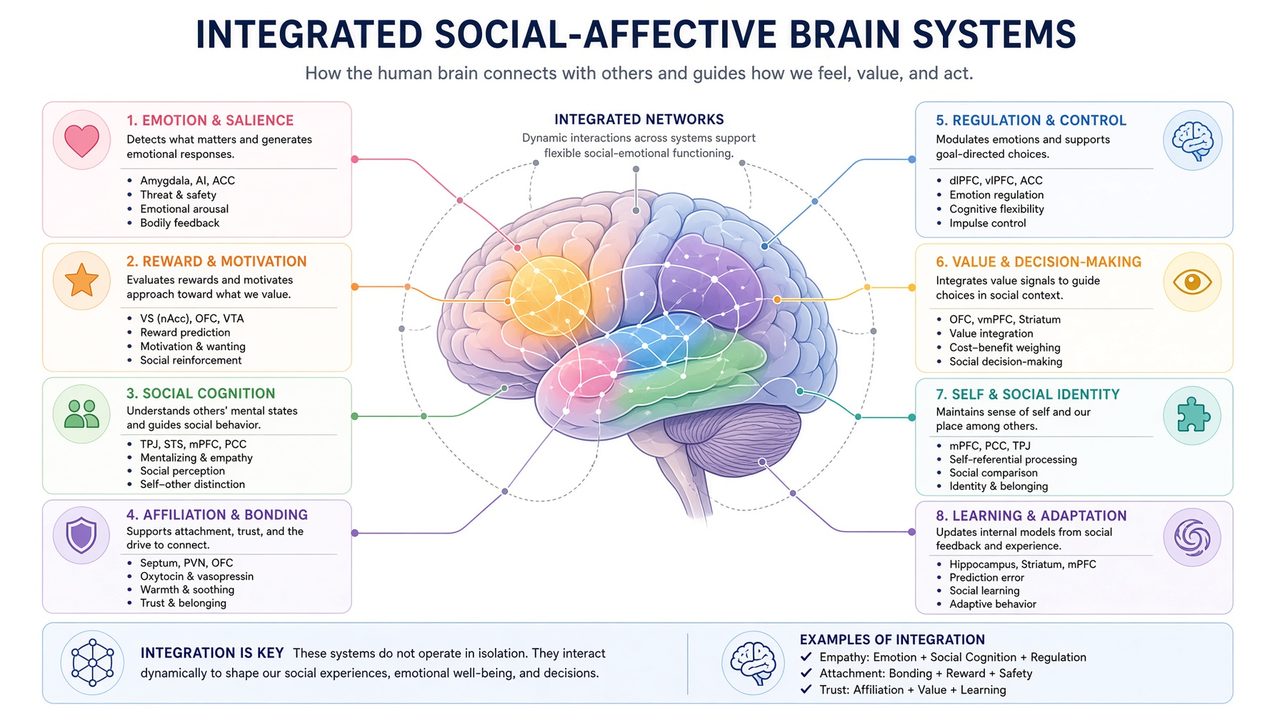
The amygdala tags emotional experiences as important, and enhances their consolidation by the hippocampus. During sleep, the brain preferentially replays and strengthens such memories. In studies by Jessica Payne, Robert Stickgold and Elizabeth Kensinger, participants who slept after viewing scenes containing emotional objects remembered the emotional objects better than the neutral background, while those who stayed awake forgot more of the whole scene. Sleep thus preserves emotional memories selectively, especially after a night with REM.
Softening the emotional charge
The "sleep to forget and sleep to remember" proposal by Matthew Walker and Els van der Helm holds that during REM sleep, with low noradrenaline, the emotional tone of memories is reduced while the content is retained. Evidence includes:
- Reduced amygdala reactivity to the same emotional images after sleep versus wake in some studies, with stronger prefrontal-amygdala connectivity.
- Overnight changes in subjective emotional intensity correlated with REM characteristics.
- Findings in clinical populations: in depression and PTSD, where REM is disrupted, emotional memories may stay vivid and distressing.

Conflicting evidence
Not all studies agree. Some find that sleep does not reduce emotional reactivity but preserves or even enhances it, and results depend on factors such as the type of stimuli, the delay between learning and test, and individual differences. Research on sleep deprivation after trauma has been mixed: some studies in the "intrusion" model suggest that sleep deprivation in the first hours after a trauma film reduced later intrusive memories, while others suggest sleep protects against PTSD. Current consensus is that sleep after emotional events is generally beneficial for recovery, and that no one should be advised to stay awake after trauma. Findings are still under investigation.
Slow wave sleep and REM roles
- Slow wave sleep: consolidates hippocampal-dependent explicit memory, and reactivation during slow wave sleep promotes retention of emotional content.
- REM sleep: processes emotional components, supports integration and may influence mood regulation.
- Stage 2 spindles: may also contribute.
- Sequence hypothesis: the combination of both stages across a night is probably crucial.
Fear memory and extinction
Sleep after extinction training strengthens extinction memory in animals and humans, so that fear is less likely to return, suggesting that sleep after exposure therapy may help. Sleep disruption impairs extinction recall.
Practical lessons
- Sleep after emotional events: do not sacrifice sleep to ruminate or work.
- After therapy sessions, especially exposure-based, get adequate sleep.
- Avoid alcohol after emotional experiences, since it suppresses REM.
- Use journaling or talking before bed, if helpful, but not to the point of rumination.
- Treat nightmares and insomnia with evidence-based therapy.
- Students and professionals: note that emotional material may be easier to recall, but stress hampers learning, so plan.
- Seek help if upsetting memories persist or disrupt sleep.
Takeaway
Sleep is an editor of emotional memory, keeping the lessons and softening the pain. Protect it, particularly after hard days.
Further reading from authoritative sources
- National Institute of Neurological Disorders and Stroke (NINDS)
- National Center for Complementary and Integrative Health (NCCIH)
This article is educational and does not replace advice from a licensed clinician. See the medical disclaimer. Looking for specialist care? Browse the neurology clinic directory.