Sleep and Weight Regulation: The Brain's Role
Weight management is usually framed around diet and exercise, but sleep is a third pillar. A large body of research shows that insufficient sleep is associated with weight gain, and experiments reveal changes in brain and hormone responses that explain why.
What studies show
- Observational data: short sleepers have higher rates of obesity in children and adults, and meta-analyses estimate that short sleep increases the risk of obesity by around 50 percent in adults and 90 percent in children.
- Experiments: a study by Plamen Penev, Eve Van Cauter and colleagues found that sleep restriction to 5.5 hours led to a similar weight loss as 8.5 hours when dieting, but more of the loss came from lean body mass and less from fat, with greater hunger. Studies by Kenneth Wright, Rachel Leproult and others show that sleep restriction increases calorie intake by about 300 calories per day, particularly from late-night snacks, and reduces energy expenditure slightly. In a randomized trial led by Esra Tasali, extending sleep by about an hour in overweight adults who habitually slept less than 6.5 hours reduced calorie intake by about 270 calories a day.
Hormones
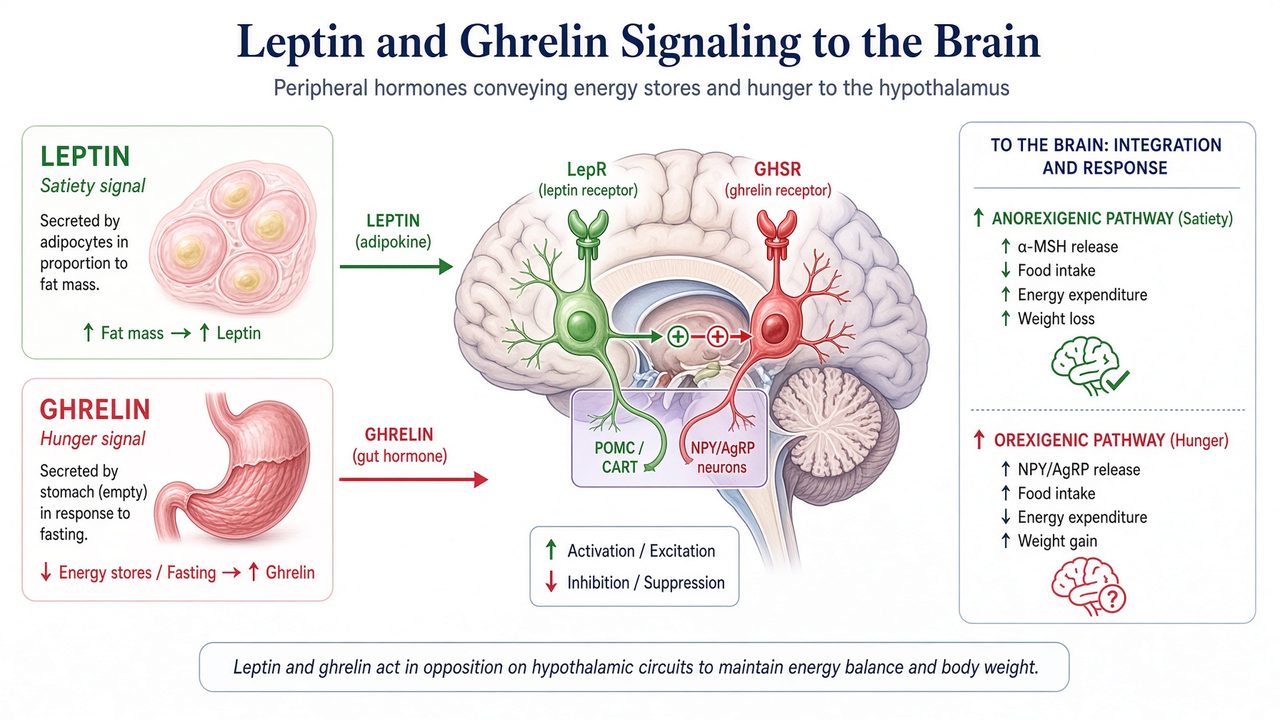
- Leptin (signals fullness) falls, and ghrelin (signals hunger) rises with sleep restriction, as found in studies by Karine Spiegel and Van Cauter, with increased appetite for calorie-dense foods.
- Cortisol and insulin resistance: short sleep raises evening cortisol and reduces insulin sensitivity, increasing the risk of type 2 diabetes.
- Endocannabinoids: a study by Erin Hanlon found elevated levels of the endocannabinoid 2-AG in the afternoon after sleep restriction, with greater hunger and snack craving.
- Growth hormone and testosterone decline.

Brain responses
Imaging studies by Matthew Walker, Stephanie Greer and colleagues found that after sleep deprivation, reward regions respond more strongly to unhealthy food images, while prefrontal regions involved in evaluation and self-control are less active. Marie-Pierre St-Onge found that sleep restriction increased brain responses to food in reward regions. These effects mean that willpower is lower and cravings greater when tired.
Timing and quality
Late sleep timing and irregular sleep are linked to higher body mass index, independent of duration. Shift work and social jet lag, the mismatch between weekday and weekend sleep, are associated with metabolic problems. Sleep apnea, common in people with obesity, further disrupts sleep and worsens weight regulation, creating a cycle.
What helps
- Aim for seven to nine hours, with regular timing.
- Make sleep part of your weight plan, alongside diet and activity.
- Keep meals regular and avoid late-night eating, since eating late can disturb sleep and circadian metabolism.
- Get daytime light and exercise, which help sleep and metabolism.
- Limit alcohol and caffeine late in the day.
- Plan healthy snacks and keep tempting foods out of reach when tired.
- Screen for sleep apnea if you snore loudly or are very sleepy.
- For children, protect sleep and limit evening screens.
- Be realistic: sleep extension helps but is not a guaranteed weight-loss method on its own.
- Talk to your doctor about weight and sleep concerns.
Takeaway
Sleep quietly shapes appetite and energy balance through the brain. Getting enough of it makes healthy choices easier.
Further reading from authoritative sources
- National Institute of Neurological Disorders and Stroke (NINDS)
- National Center for Complementary and Integrative Health (NCCIH)
This article is educational and does not replace advice from a licensed clinician. See the medical disclaimer. Looking for specialist care? Browse the neurology clinic directory.