Sleep Deprivation and Cognitive Function
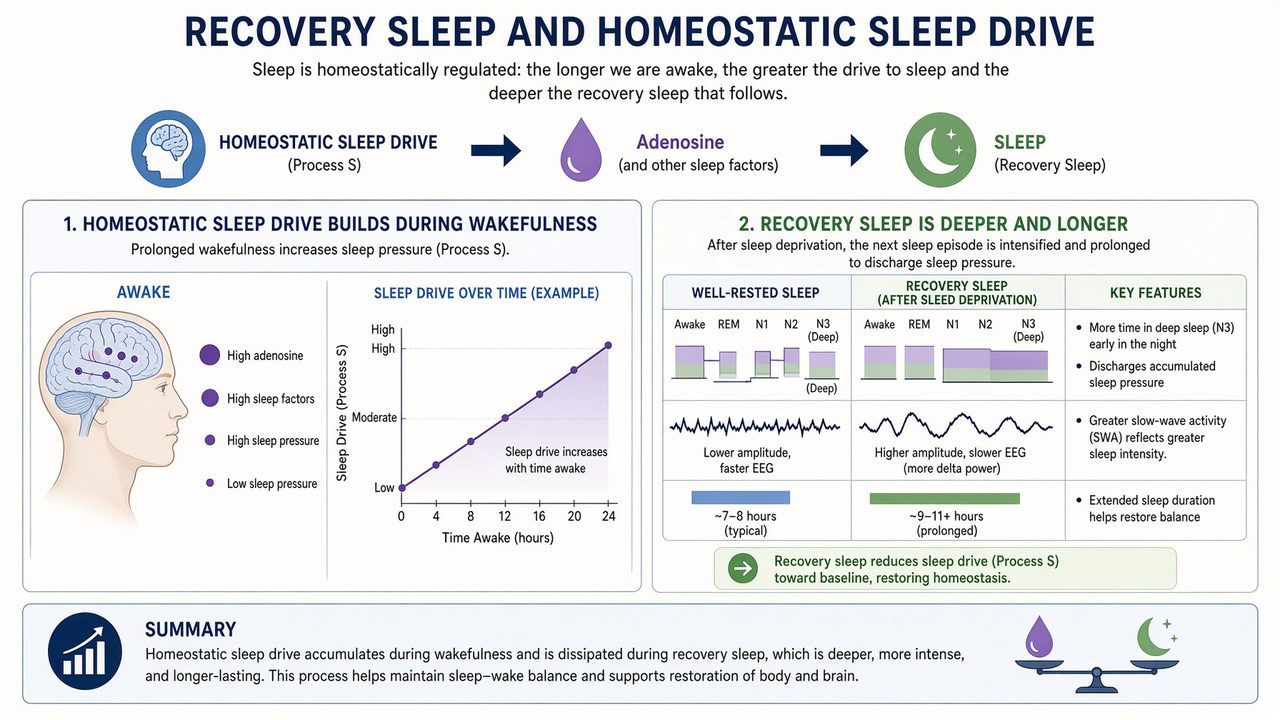
Most people have experienced how a bad night makes thinking harder. Research confirms that even modest sleep loss measurably impairs cognitive performance, and the effects accumulate when short nights repeat.
Attention and alertness
The most reliable effect of sleep loss is on attention. People develop microsleeps, brief lapses lasting seconds, and show slower and more variable reaction times. Tests such as the psychomotor vigilance task reveal these lapses clearly. After about 17 to 19 hours awake, performance on some tasks resembles that of someone with a blood alcohol concentration of 0.05 percent, and after 24 hours it resembles 0.10 percent, according to widely cited studies.
Memory and learning
- Encoding. After a night without sleep, the hippocampus functions less effectively, and people form fewer new memories, according to studies by Matthew Walker and others.
- Consolidation. Sleep after learning strengthens memory. Sleep deprivation after learning reduces retention.
- Working memory. Holding and manipulating information becomes less reliable.

Executive function and decision-making
Sleep loss impairs prefrontal function, leading to poorer planning, flexibility, creativity and judgment. People become more risk-seeking in some tasks and less able to adjust strategies. Impulse control declines.
Emotion
The amygdala becomes more reactive after sleep loss, and its connection to the prefrontal cortex weakens, according to imaging studies. People report more irritability, anxiety and mood swings. Chronic insufficient sleep is a risk factor for depression and anxiety disorders.
Chronic partial sleep restriction
Experiments restricting sleep to about four to six hours per night for two weeks found cumulative declines in performance equivalent to staying awake for one to two nights, while participants' self-ratings of sleepiness plateaued. In other words, people adapted subjectively but not objectively.
The brain's response
Sleep deprivation raises adenosine levels, alters dopamine and other neurotransmitters, and changes patterns of brain activity, with increased activation in some regions as the brain compensates. It also impairs the clearing of metabolic waste. Research links long-term short sleep with higher risk of cognitive decline and dementia, although cause and effect continue to be studied.
Health and safety effects
Drowsy driving causes thousands of crashes each year. Fatigue contributes to workplace errors, medical mistakes and accidents. Chronic sleep loss is linked with obesity, diabetes, high blood pressure, heart disease and weakened immunity.
Who is at risk
Shift workers, students, new parents, health professionals, people with sleep disorders such as sleep apnea, and teenagers whose biological clocks delay are all at risk of insufficient sleep.
Recovering from sleep loss
- Prioritize sleep for several nights. Extra sleep can help repay a short-term debt, though recovery of some functions may take days.
- Take a short nap of 10 to 20 minutes, which can boost alertness. Avoid long naps late in the day.
- Use caffeine strategically. It can improve alertness temporarily but does not replace sleep and can delay later sleep.
- Get bright light during the day.
- Avoid driving when drowsy. Pull over and nap if you feel drowsy.
Prevention
Aim for seven to nine hours for adults, keep a consistent schedule, create a good sleep environment and limit alcohol and screens before bed. If you routinely feel unrefreshed despite enough time in bed, ask a doctor about sleep disorders.
Further reading from authoritative sources
- National Institute of Neurological Disorders and Stroke (NINDS)
- National Center for Complementary and Integrative Health (NCCIH)
This article is educational and does not replace advice from a licensed clinician. See the medical disclaimer. Looking for specialist care? Browse the neurology clinic directory.