Mindfulness Meets Biofeedback: Combining Approaches
Mindfulness trains the mind to notice experience without judgment, and biofeedback shows what the body is doing in real time. Combined, they form a practical partnership, with feedback guiding awareness and awareness giving context to numbers on a screen.
Why they complement each other
- Mindfulness builds attention, interoceptive awareness and nonreactivity. Many beginners find it hard to tell whether they are actually relaxing.
- Biofeedback shows measurable changes, such as heart rate variability, breathing rate, skin conductance or brain activity, which reinforce progress and help people learn what works for them.
- Together: feedback can make internal states more visible, and mindful awareness helps people approach the feedback with curiosity, not effort or frustration. Trying too hard to relax can raise arousal, and mindfulness counteracts that.
What research shows
- Mindfulness-based interventions such as mindfulness-based stress reduction (MBSR) and mindfulness-based cognitive therapy (MBCT) reduce stress, anxiety, depression relapse and chronic pain symptoms, according to meta-analyses, with small to moderate effects.
- HRV biofeedback reduces anxiety, stress and depressive symptoms, according to meta-analyses of randomized trials.
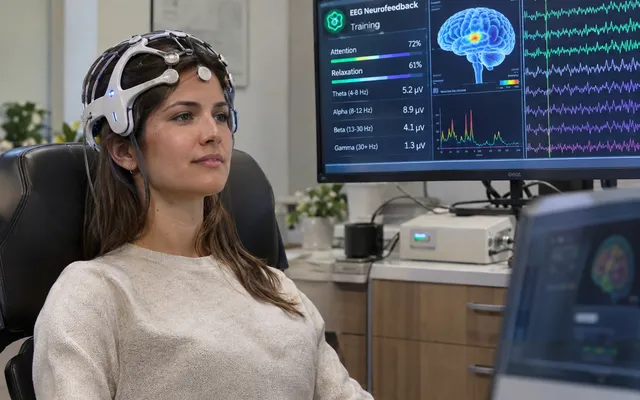
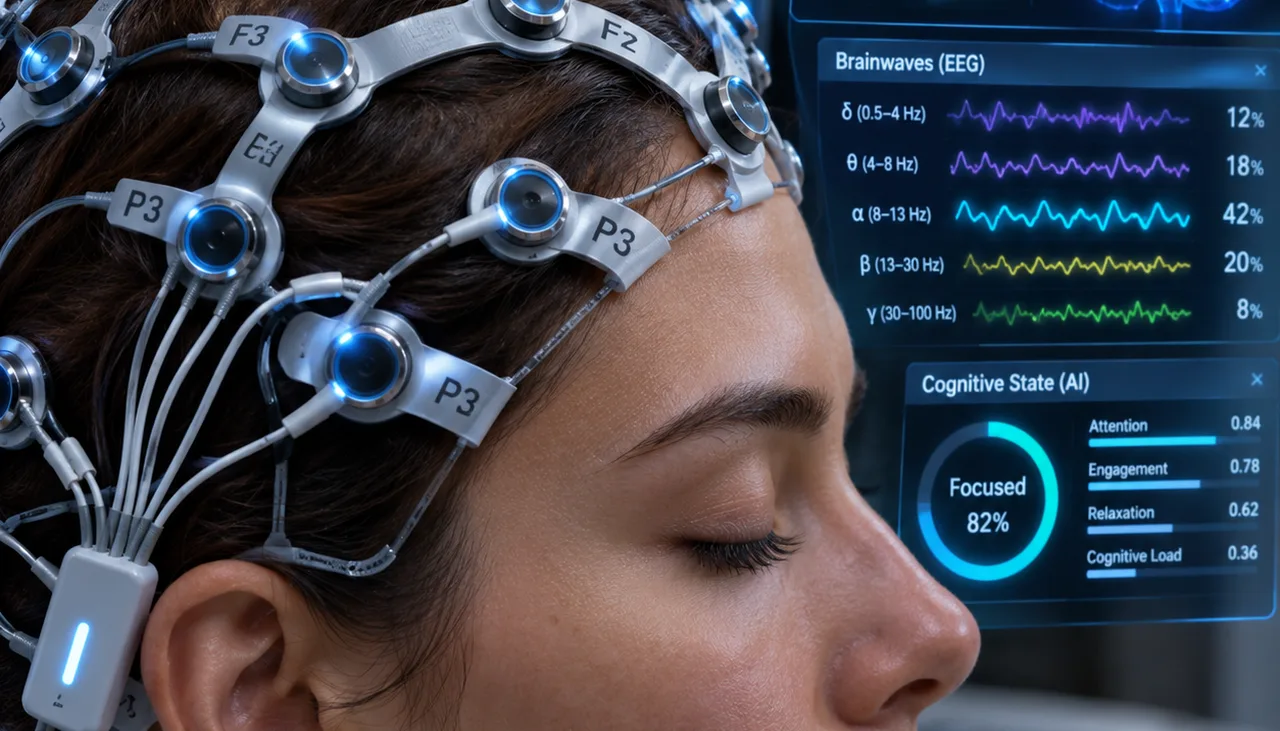
- Combined approaches: early studies of mindfulness plus biofeedback report improvements in stress, anxiety, attention and well-being. In some, participants using HRV or EEG feedback during meditation reported deeper relaxation, and EEG neurofeedback targeting meditation-related states has been explored for novices. Controlled trials are limited, so the evidence for combination being superior to either alone is not yet established.
- Interoceptive awareness: studies suggest that mindfulness training and biofeedback both improve awareness of bodily signals, which is relevant to emotion regulation.
- Measurement: physiological markers show that meditation can increase HRV and alter brain rhythms such as alpha and theta, though results vary by experience level and technique.
Practices to combine them
Mindful breathing with HRV feedback
Sit comfortably with an HRV sensor and a pacer. Breathe slowly at your resonance rate, about 4.5 to 6.5 breaths per minute, while noticing the sensations of breathing. When your mind wanders, gently return to the breath. Watch the HRV waveform as a mirror, not a score.
Body scan with EMG or skin conductance feedback
Slowly move attention through the body while observing feedback from sensors on the forehead or shoulders. Notice where tension releases and where it persists, without forcing change.
Open monitoring with a feedback check
Practice open awareness for ten minutes, then review the data. Note patterns, such as how thoughts about work affect breathing.
Mindful use during stress
Use brief breathing practices at stressful moments, such as before a meeting, and later review biofeedback records to see patterns.
Tips for success
- Start simple: a chest-strap sensor and a breathing app are enough.
- Practice daily for 10 to 20 minutes, in a quiet space.
- Avoid chasing numbers: treat the metrics as information and focus on curiosity.
- Use a trained instructor for MBSR or MBCT, and a certified biofeedback practitioner for personalized training.
- Track experiences: journaling about mood, sleep and stress helps connect practice with outcomes.
- Be patient: skills build over weeks.
- Be cautious with trauma history: some people find meditation distressing, and should seek trauma-sensitive instruction.
- Seek clinical care for depression, anxiety or PTSD, since these approaches complement but do not replace treatment.
Takeaway
Mindfulness and biofeedback share a goal of helping people regulate themselves. Used together, they let you see and feel the effects of calming the mind and body.
Further reading from authoritative sources
- National Institute of Mental Health (NIMH)
- National Center for Complementary and Integrative Health (NCCIH)
This article is educational and does not replace advice from a licensed clinician. See the medical disclaimer. Looking for specialist care? Browse the neurology clinic directory.