The Neuroscience of Sleep-Onset Relaxation
Falling asleep seems passive, but it is a transition the brain has to allow. For many people, the difficulty is not sleep drive but an inability to downshift arousal. Understanding sleep onset suggests useful techniques.
What happens as you fall asleep
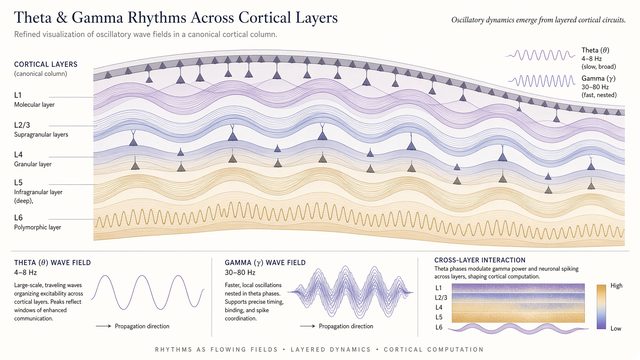
- Brain waves: EEG shifts from the fast beta and gamma activity of wakefulness to relaxed alpha waves with closed eyes, then to slower theta rhythms as sleep begins. Sleep spindles and K-complexes appear in stage N2 sleep.
- Thalamic gating: the thalamus reduces transmission of sensory information to the cortex, so the sleeper becomes less responsive to the environment.
- Arousal systems quiet: noradrenergic, serotonergic, histaminergic, cholinergic and orexin activity declines, while sleep-promoting neurons in the preoptic area become active.
- Cortical changes: activity declines in a patchy, regional manner. Some areas "fall asleep" before others, with frontal and association areas deactivating, and primary sensory areas lingering.
- Default mode network: thoughts shift into fragmentary imagery and loosened logic, called hypnagogia, at sleep onset. Hypnic jerks, sudden muscle twitches, are common and harmless.
- Autonomic changes: heart rate and blood pressure fall, breathing slows and becomes regular, and core temperature drops.
- Muscle tone: relaxes.
Why it fails
In people with insomnia, studies show high-frequency EEG activity near sleep onset, elevated heart rate, reduced heart rate variability and increased metabolic activity. Cognitive arousal, such as worry, planning and rumination, and trying hard to sleep, prevents deactivation. Anxiety about sleep creates performance pressure, called "sleep effort."

Techniques that help
- Slow breathing: exhaling longer than inhaling, for example in for four, out for six, for several minutes, increases vagal tone and lowers heart rate. The 4-7-8 pattern is a popular variant, though any slow, comfortable pace works.
- Progressive muscle relaxation: tense and release muscle groups from feet to face, which reduces somatic tension and has evidence in insomnia.
- Body scan: slowly directing attention through the body, as in mindfulness practice.
- Guided imagery: visualizing a calm, detailed scene, which occupies the mind and reduces worry. Research by Allison Harvey found that imagery distraction helped people fall asleep faster than general distraction or no instruction.
- Cognitive shuffling: imagining random, unconnected words or objects, a technique proposed by Luc Beaudoin, to mimic the loosened thinking of sleep onset, which has limited research so far.
- Paradoxical intention: gently trying to stay awake with eyes open, reducing performance anxiety.
- Mindfulness and acceptance: letting go of the effort to sleep.
- Worry time and writing a to-do list earlier in the evening, or writing tasks before bed, which a study by Michael Scullin found helped people fall asleep faster.
- Warm bath, cool room and consistent routine.
- Get out of bed if you are awake for a long time, and return when sleepy.
- Biofeedback and HRV training can help some people learn to relax.
- Seek help if difficulty falling asleep persists, since CBT-I can retrain the process.
Takeaway
Sleep arrives when the brain is allowed to power down. Practicing relaxation teaches the nervous system to make that transition more easily.
Further reading from authoritative sources
- National Institute of Neurological Disorders and Stroke (NINDS)
- National Center for Complementary and Integrative Health (NCCIH)
This article is educational and does not replace advice from a licensed clinician. See the medical disclaimer. Looking for specialist care? Browse the neurology clinic directory.