The Science of Sleep: What Happens While You Dream
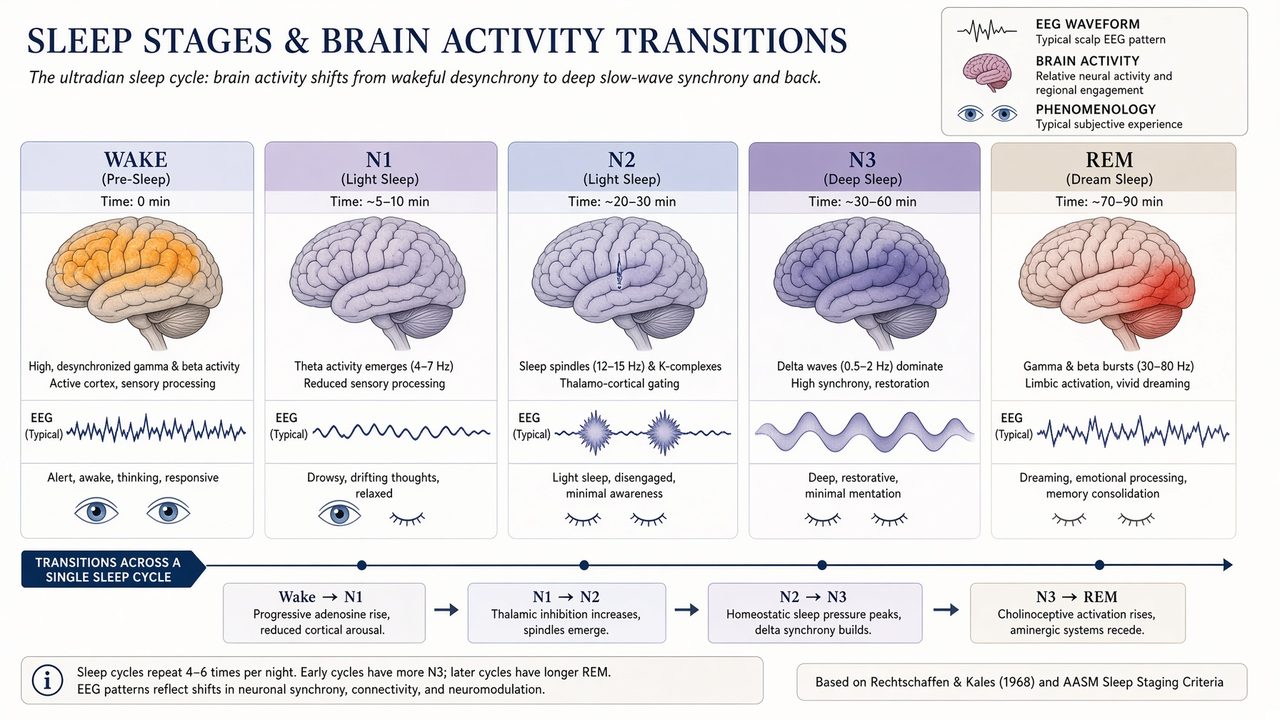
Sleep is not a passive shutdown. During a typical night, the brain moves through a predictable series of stages, each with its own pattern of electrical activity, chemistry and purpose. Researchers have learned that sleep supports memory, mood, metabolism and the clearing of waste from the brain.
How sleep is measured
Sleep scientists use polysomnography, which records brain waves (EEG), eye movements, muscle tone, heart rate and breathing. These recordings reveal the stages.
The stages
Stage N1: light sleep
The transition from wakefulness lasts a few minutes. Alpha waves give way to slower theta waves, muscles relax and you can be woken easily. You may experience a sudden jerk, called a hypnic jerk.
Stage N2: deeper light sleep
This stage makes up about half of the night. EEG shows sleep spindles, brief bursts of activity, and K-complexes, large waves that help maintain sleep. Spindles are linked to memory consolidation.
Stage N3: slow-wave sleep
Also called deep sleep, it features large, slow delta waves. It is hardest to wake from and is most abundant in the first half of the night. It is associated with physical restoration, hormone release including growth hormone, and consolidation of declarative memories.
REM sleep
Rapid eye movement sleep is when most vivid dreaming occurs. The brain is highly active, resembling wakefulness on EEG, while most voluntary muscles are temporarily paralyzed, preventing you from acting out dreams. Heart rate and breathing become irregular. REM is linked to emotional processing and certain kinds of learning, and it lengthens in the later part of the night.
Sleep cycles
A cycle runs through N1, N2, N3 and then REM, and repeats about four to six times per night. Early cycles contain more deep sleep, while later cycles contain more REM. That is one reason cutting sleep short disproportionately reduces REM.
What controls sleep
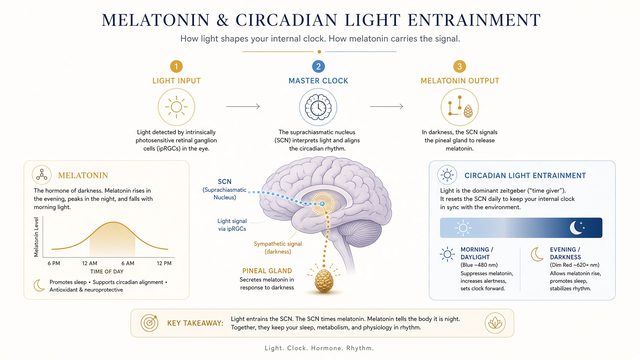
Two main systems interact. The homeostatic drive builds the longer you are awake, driven partly by accumulating adenosine. The circadian clock in the suprachiasmatic nucleus of the hypothalamus times sleepiness and alertness across the 24-hour day, influenced by light. Brainstem and hypothalamic circuits, including GABA-releasing neurons and orexin-producing neurons, switch the brain between sleep and waking.
Why we sleep
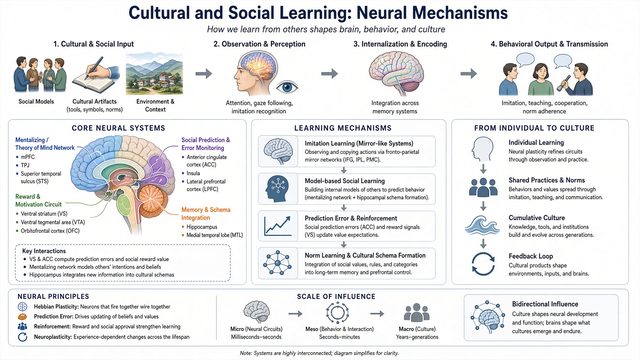
- Memory consolidation. Sleep helps stabilize new memories and integrate them with existing knowledge.
- Waste clearance. The glymphatic system is more active during sleep, flushing metabolic byproducts.
- Synaptic housekeeping. One hypothesis proposes that sleep scales back synapses strengthened during the day to maintain efficiency.
- Emotional regulation. REM sleep appears to help process emotional experiences.
- Metabolic and immune function. Sleep influences hormones, glucose regulation and immune defense.
How much sleep do you need?
Most adults need seven to nine hours, according to major sleep medicine organizations. Teenagers need eight to ten, and school-age children nine to twelve. Needs vary somewhat among individuals, and sleep quality matters as well as quantity.
Dreaming
Dreams occur in all stages but are most vivid in REM. Theories about their function include memory processing, emotional regulation and simulation of threats, though no single theory is established. Nightmares are common, and frequent distressing ones can be treated.
Changes with age
Older adults tend to have lighter sleep, less slow-wave sleep and earlier timing. These changes are normal, though substantial sleep problems are not and should be evaluated.
Signs of poor sleep
Daytime sleepiness, difficulty concentrating, irritability, loud snoring with pauses in breathing, restless legs and long delays falling asleep may indicate a sleep disorder. Sleep apnea, insomnia and restless legs syndrome are common and treatable.
Protecting your sleep
Keep a regular schedule, get morning light, limit caffeine and alcohol late in the day, keep the bedroom cool, dark and quiet and wind down before bed.
Further reading from authoritative sources
- National Institute of Neurological Disorders and Stroke (NINDS)
- National Center for Complementary and Integrative Health (NCCIH)
This article is educational and does not replace advice from a licensed clinician. See the medical disclaimer. Looking for specialist care? Browse the neurology clinic directory.