The Bilingual Brain: Cognitive Benefits of Two Languages
More than half of the world's population speaks at least two languages. For neuroscientists, bilingual people offer a natural way to study how the brain juggles competing demands. Research has found interesting differences in how bilingual brains work, along with a lively debate about how far the cognitive benefits extend.
Two languages, always active
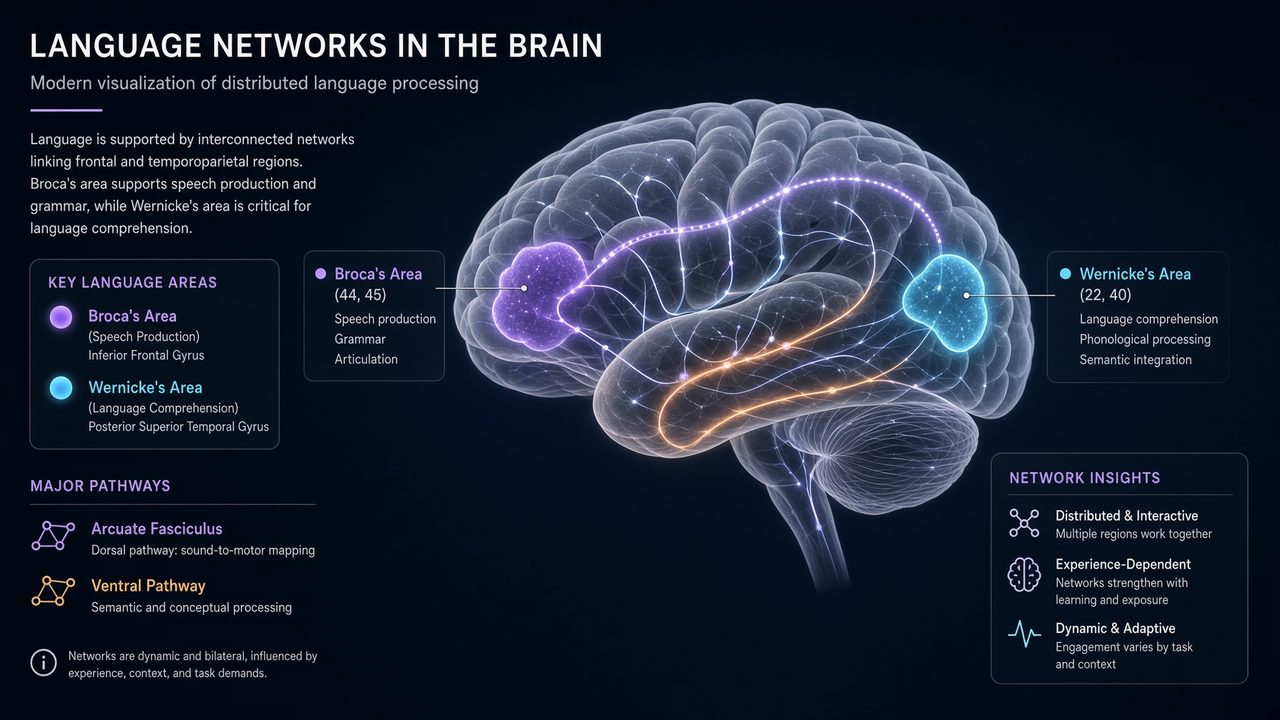
Studies show that when a bilingual person is using one language, the other is partially active as well. A Spanish-English bilingual hearing the word "marker," for example, may briefly activate the Spanish word "marcador." To speak in one language without intrusion from the other, the brain relies on control processes that select the target language and suppress the other.
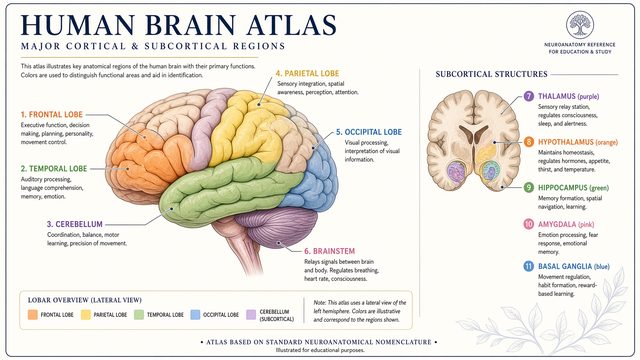
Brain imaging links this language control to regions including the prefrontal cortex, anterior cingulate cortex and basal ganglia, which are also involved in general executive control. This overlap led researchers to propose that the daily practice of language switching could train executive functions.
The proposed advantages
Early studies in children and adults reported that bilinguals did better than monolinguals on tasks requiring ignoring distractions and switching between rules. Research on older adults has suggested that bilingualism may be associated with a later onset of dementia symptoms, possibly by about four years in some clinical samples, and that bilingual people may tolerate more brain pathology before symptoms appear. This fits the idea of cognitive reserve.

The debate
Later large studies and meta-analyses have not consistently reproduced the executive-function advantage. Researchers point out several reasons:
- Bilinguals differ greatly in how they use languages, when they learned and how proficient they are.
- Differences in socioeconomic status, immigration and education can confound comparisons.
- Some positive findings may have reflected publication bias.
- Tasks used to measure executive control are noisy.
Currently, many scientists conclude that if bilingualism offers cognitive advantages, they are likely small or specific to certain groups and contexts. Evidence regarding dementia delay is also mixed, with some studies finding a protective association and others finding none.
Brain structure differences
Imaging studies have found differences in gray matter density and white-matter pathways among bilinguals, especially in language and control regions, and some evidence that learning a second language increases gray matter in regions that support it. These findings fit the idea that intensive language learning changes the brain, though interpretation requires caution.
Other benefits of knowing two languages
Whatever the answer on executive function, bilingualism has clear advantages:
- Communication with more people and communities
- Cultural access and connection to heritage
- Career opportunities
- Improved awareness of language and perspective-taking in some studies
- Easier learning of additional languages
Is it ever too late?
Children often reach native-like pronunciation more easily, and there appear to be sensitive periods for certain aspects of language such as accent and grammar. However, adults can still become highly proficient, particularly in vocabulary and comprehension. Learning a language in later life is a stimulating activity associated with engagement and cognitive health, even if it is not a guaranteed safeguard against dementia.
Raising bilingual children
Evidence does not support the old fear that a second language confuses children or causes delays. Bilingual children may mix languages at times, which is normal. Consistent exposure in meaningful, interactive settings, such as conversations with family and community members, is the best way to build both languages. If you have concerns about development, a speech-language pathologist can assess the child in both languages.
Tips for adult learners
1. Practice regularly in short sessions. 2. Speak early, even if imperfectly. 3. Use the language socially by joining classes, clubs or conversation groups. 4. Combine listening, speaking, reading and writing. 5. Be patient. Progress takes years.
The takeaway
Knowing two languages is a meaningful asset for communication, culture and likely for brain flexibility, even if research has not found a dramatic cognitive boost. It is also simply rewarding.
Further reading from authoritative sources
- National Institute of Mental Health (NIMH)
- National Institute of Neurological Disorders and Stroke (NINDS)
This article is educational and does not replace advice from a licensed clinician. See the medical disclaimer. Looking for specialist care? Browse the neurology clinic directory.