The Neurobiology of Trust
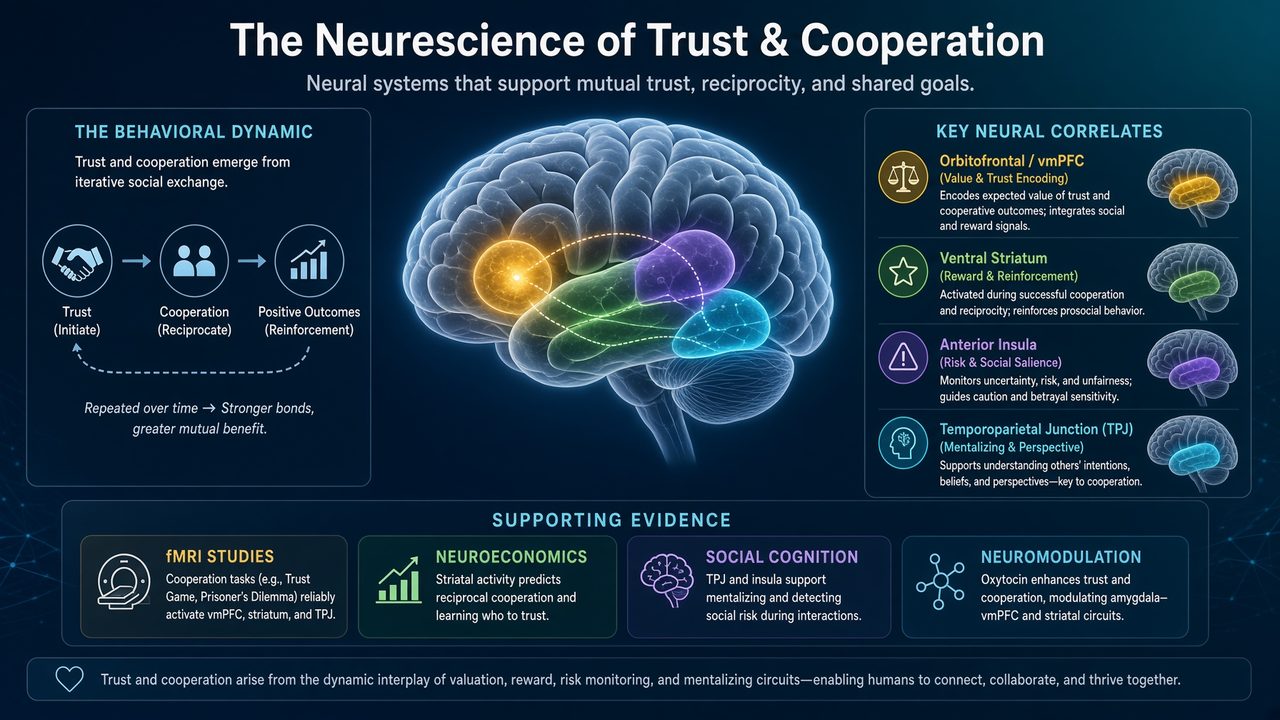
Trust is the willingness to be vulnerable to another person based on positive expectations. It is essential for cooperation, relationships and society, and neuroscience has begun to map how the brain builds it.
Brain regions involved
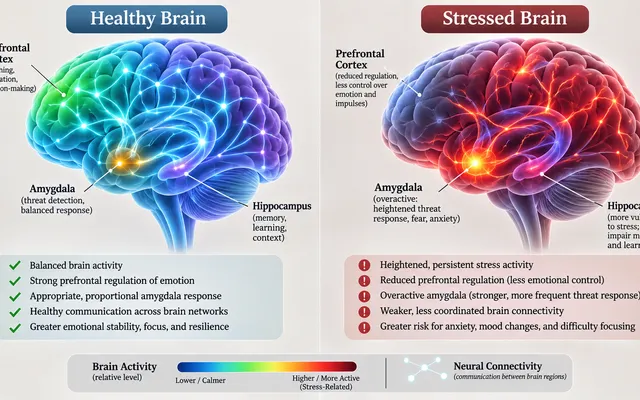
- Amygdala: quickly evaluates faces and cues, including signs of trustworthiness. Studies of people with amygdala damage show them trusting strangers too readily.
- Insula: tracks bodily feelings and uncertainty.
- Prefrontal cortex: weighs information, predicts others' intentions and regulates impulses.
- Temporoparietal junction and medial prefrontal cortex: support thinking about others' beliefs and intentions.
- Striatum: codes reward and learns from outcomes, such as whether someone repays trust.
The trust game
Economists use the trust game, in which an investor sends money to a trustee, the amount triples, and the trustee decides how much to return. Brain scans of the game by researchers including Brooks King-Casas and Read Montague showed that striatal activity anticipates the partner's reputation as repeated interactions build trust.
Oxytocin
Oxytocin, a hormone and neuromodulator involved in bonding, was reported by Michael Kosfeld and colleagues in 2005 to increase trust in a game after intranasal administration. Subsequent research has produced mixed and smaller effects, with context mattering. Oxytocin may increase sensitivity to social information, and it can also increase in-group favoritism and envy under some conditions. It is not a simple trust chemical.
Learning to trust
Trust is updated through experience. Early caregiving relationships shape expectations, with secure attachment promoting trust in others. Trauma and betrayal can lower trust and increase vigilance. People rapidly judge faces as trustworthy or not, but these snap judgments are often inaccurate, and are influenced by stereotypes.
When trust breaks
Betrayal triggers distress, anger and activation of brain regions involved in pain and negative emotion. Rebuilding trust requires consistent, reliable behavior over time, along with acknowledgment, apology and changed behavior. Negative events weigh heavily, so rebuilding is slower than breaking.
Building trust
- Be reliable: keep promises
- Communicate honestly, including admitting mistakes
- Show competence and good intent
- Listen and be responsive
- Start small, with low-risk trust steps
- Be patient after betrayal
- Seek therapy if past experiences make trust difficult
Trust across the lifespan
Infants learn whether caregivers respond reliably, and this shapes later relationships. Adolescents test trust with peers. Older adults can be more trusting, which is generally beneficial but can leave them vulnerable to scams, so awareness and family support are useful.
Trust and technology
People increasingly decide whether to trust apps, algorithms and online strangers. The same cues, such as consistency, transparency and track record, guide judgments, but online signals are easier to fake, so verify before sharing money or personal information.
Healthy skepticism
Trusting everyone is as risky as trusting no one. The healthiest approach calibrates trust to evidence, extending it gradually and adjusting when behavior changes, which is exactly what the brain's learning systems are built to do.
Takeaway
Trust is learned, not simply felt. The brain updates it with every interaction, and consistent behavior is the best way to earn it.
Further reading from authoritative sources
- National Institute of Mental Health (NIMH)
- National Institute of Neurological Disorders and Stroke (NINDS)
This article is educational and does not replace advice from a licensed clinician. See the medical disclaimer. Looking for specialist care? Browse the neurology clinic directory.