The Science of Friendship and the Brain
Friendships feel good, and brain science is beginning to explain why. Friends influence how we process rewards, stress and information, and they seem to protect health.
Reward and safety
Spending time with close friends activates reward circuits, including the ventral striatum, and releases chemicals such as dopamine, endorphins and oxytocin, which support bonding and pleasure. Studies show that having a friend nearby can reduce the brain's threat response. In a classic study by James Coan and colleagues, holding a loved one's hand during a threat reduced activity in threat-related regions.
Brain similarity among friends
Carolyn Parkinson and colleagues scanned students watching a series of videos and found that neural responses were more similar among friends than among people farther apart in the social network, suggesting that friends tend to process the world in similar ways. This may arise from choosing friends who are like us, from shared experiences and from mutual influence. Researchers have also observed synchronization of brain activity during conversation and cooperation.

Health benefits
- Lower stress reactivity and faster recovery
- Better mood and lower risk of depression
- Lower risk of mortality: meta-analysis by Julianne Holt-Lunstad and colleagues found that stronger social relationships were associated with substantially lower risk of death
- Cognitive benefits as part of an engaged lifestyle
- Healthier behaviors through shared activities
Friendship across life
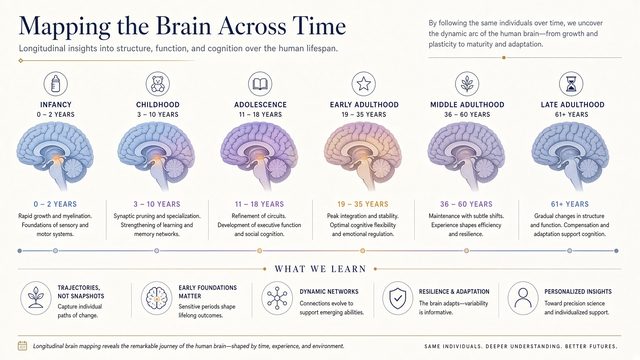
Children learn empathy, cooperation and conflict resolution through friends. In adolescence, friends become central to identity. In adulthood, friendships often shrink as jobs, partners and children take time. Robin Dunbar's research suggests that people maintain a few very close relationships, around five, within a broader circle of about 150 acquaintances, and that friendships fade without contact. Older adults with close friends tend to have better wellbeing.
Nurturing friendships
- Make time regularly, and schedule it
- Show up: shared experiences matter
- Be vulnerable: appropriate self-disclosure deepens closeness
- Offer support and gratitude
- Move beyond passive social media to real exchanges
- Join groups around interests to meet new people
- Be patient: research suggests it takes dozens of hours together to form a close friendship
- Address conflict respectfully
Friendship and technology
Messaging apps help maintain far-flung friendships, but studies suggest that richer interactions, such as calls and shared activities, support closeness more than brief reactions. Quality beats quantity.
Friendship at older ages
As people retire, move or lose peers, new friendships can still form. Community centers, classes, faith groups and volunteer programs offer regular contact, which is the key ingredient for friendship to grow.
Making new friends as an adult
Start with repeated, low-pressure contact: the same class, team or volunteer shift each week. Familiarity grows into liking, and a small invitation, such as coffee after the session, often turns acquaintances into friends.
Friendship and wellbeing at work
Workplace friendships are associated with higher engagement and lower burnout. Shared lunches and walking meetings are simple ways to build them.
Takeaway
Friends make the brain feel safer and happier. Treat them as a health habit as well as a pleasure.
Further reading from authoritative sources
- National Institute of Mental Health (NIMH)
- National Institute of Neurological Disorders and Stroke (NINDS)
This article is educational and does not replace advice from a licensed clinician. See the medical disclaimer. Looking for specialist care? Browse the neurology clinic directory.