The Science of Prejudice and the Brain

Prejudice, negative attitudes toward people based on group membership, is a social and historical phenomenon. Neuroscience and psychology can help explain the mental processes that support it, and also how it can be reduced.
Categorization
To manage information, the brain groups things into categories, including social categories like age, gender, race or nationality. Studies show that people encode these categories within a fraction of a second. Categorization can produce stereotypes, which are generalizations about groups that may be inaccurate, and prejudice, which includes feelings. The mental shortcuts are not inevitable expressions of bias, and they depend on experience and environment.
Brain responses
- Amygdala: early studies by Elizabeth Phelps and colleagues found that white participants showed greater amygdala activity to unfamiliar Black faces than familiar ones, which correlated with scores on implicit bias tests. Later work shows that amygdala activity reflects novelty, ambiguity or salience, not simply prejudice, and it is influenced by context, such as whether faces are individualized.
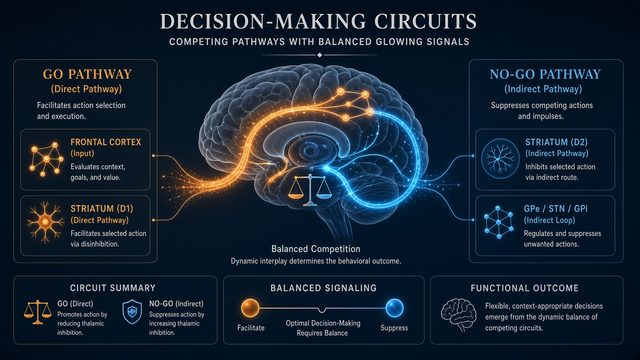
- Prefrontal cortex: supports control and can modulate automatic responses.
- Empathy networks: studies by Xiaosi Gu and Shihui Han found reduced empathic pain responses to people from other groups in some contexts, and this can be changed by situation and perspective taking.
- Reward systems: may be engaged by group competition and in-group favoritism.
Implicit bias
The Implicit Association Test measures how quickly people link concepts, and it is widely used in research. It has been criticized because individual scores are not highly reliable, and the link between implicit measures and behavior is modest. It can raise awareness of how associations form, but should not be used alone to label people.
Origins
Bias emerges early. Infants prefer faces of familiar groups, and children absorb social messages from family, media and peers. Competition for resources, threat, ideology and group identity play roles. Minimal group experiments show that even arbitrary groups produce in-group favoritism.
Reducing prejudice
- Contact: Gordon Allport's contact hypothesis states that positive, equal-status contact with people from other groups reduces prejudice. A meta-analysis by Thomas Pettigrew and Linda Tropp supports this.
- Perspective taking and storytelling
- Individuation: getting to know people as individuals
- Shared goals and common identity
- Accountability and structured decision-making: blind review and clear criteria reduce discrimination
- Education about history and bias
- Diverse environments and leadership
- Reflection: noticing and challenging assumptions
Everyday actions
Individuals can slow down snap judgments, seek out stories from different communities, speak up when they witness bias, and support policies that give fair opportunity. In workplaces, structured interviews and diverse hiring panels reduce the influence of stereotypes.
Targets of prejudice
Experiencing discrimination is itself a chronic stressor linked to higher blood pressure, anxiety, depression and sleep problems. Supportive communities, culturally competent healthcare and legal protections help protect health.
Limits of the science
Brain imaging cannot identify prejudiced people, and no brain scan should be used to judge individuals. The findings describe general tendencies within social contexts, and they highlight how changeable these tendencies are.
Takeaway
Prejudice draws on normal brain processes, but those processes are flexible. Contact, empathy and fair structures reduce it.
Further reading from authoritative sources
- National Institute of Mental Health (NIMH)
- National Institute of Neurological Disorders and Stroke (NINDS)
This article is educational and does not replace advice from a licensed clinician. See the medical disclaimer. Looking for specialist care? Browse the neurology clinic directory.