Alzheimer's Disease: The Science of Memory Loss
Alzheimer's disease is the most common cause of dementia, affecting millions of people worldwide. It is a progressive brain disease that slowly impairs memory and thinking, and eventually the ability to carry out daily tasks. Research has revealed a great deal about its biology, though it has not yet produced a cure.
What happens in the brain
Two abnormal protein deposits are the hallmarks of Alzheimer's disease:
- Amyloid plaques: clumps of beta-amyloid protein that accumulate between neurons.
- Neurofibrillary tangles: twisted fibers of tau protein that build up inside neurons and disrupt their internal transport system.
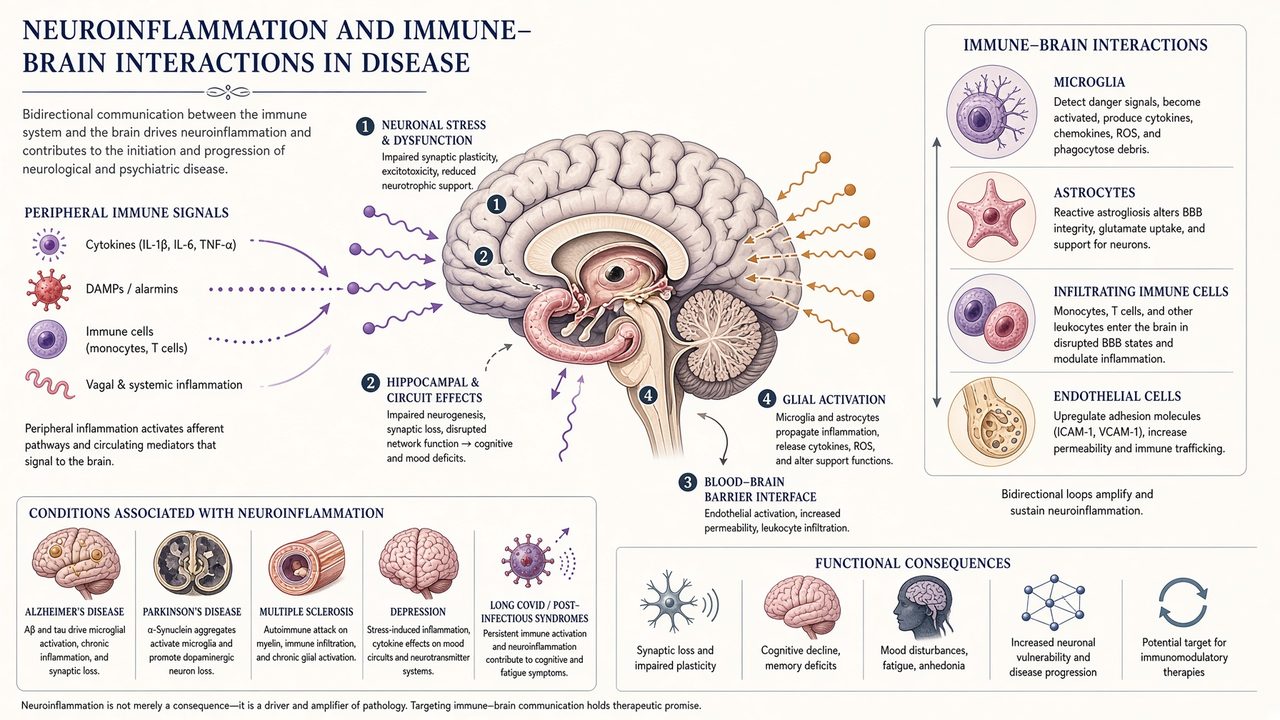
These changes are accompanied by inflammation in the brain, loss of synapses and eventually death of neurons. The damage typically begins in the entorhinal cortex and hippocampus, regions critical for memory, and spreads to other areas of the cortex. As a result, the brain shrinks over time.
Stages of the disease
Clinicians often describe three broad phases:
1. Preclinical and mild cognitive impairment. Biological changes are underway, with few or subtle symptoms. 2. Mild dementia. Problems with memory, planning and word-finding begin to interfere with daily life, though many people remain independent in basic activities. 3. Moderate to severe dementia. Increasing difficulty with language, recognition, personal care and movement, and a need for greater assistance.
Progression varies widely from person to person.
Who is at risk
- Age is the strongest risk factor, with risk rising after 65.
- Genetics. A variant of the APOE gene called ε4 raises risk, while rare mutations in other genes cause early-onset familial forms.
- Cardiovascular and metabolic health. High blood pressure, diabetes, obesity and high cholesterol raise risk.
- Lifestyle and environment. Physical inactivity, smoking, heavy alcohol use, hearing loss, depression, social isolation and head injury are associated with higher risk.
- Sex and other factors. Women make up nearly two-thirds of people with Alzheimer's, partly because they live longer, and research continues on other contributing factors.
Diagnosis
Diagnosis combines clinical history, cognitive assessment, exams and tests to rule out other causes. Brain imaging, spinal fluid analysis and PET scans can detect amyloid and tau, and blood tests for related proteins are becoming available and are being integrated into practice. Confirmation of Alzheimer's pathology traditionally required autopsy, but biomarkers now allow more accurate diagnosis during life.
Treatments
Symptomatic medications
Cholinesterase inhibitors such as donepezil, rivastigmine and galantamine, and the drug memantine, can modestly help symptoms for some people but do not stop the disease.
Anti-amyloid antibody therapies
In recent years, the first medications designed to remove amyloid from the brain have received approval in the United States, including lecanemab and donanemab. Clinical trials showed that they modestly slow cognitive decline in people with early-stage disease. They require infusions, careful screening and monitoring because they can cause amyloid-related imaging abnormalities, including brain swelling or bleeding, which are more common in people carrying two copies of the APOE ε4 gene. Their benefits are modest, and they are not a cure. Whether they are appropriate is a decision to make with a specialist.
Non-drug approaches
Exercise, social engagement, structured routines, treating coexisting conditions, safety planning and caregiver support are all important.
Prevention
There is no guaranteed way to prevent Alzheimer's, but managing vascular risk factors, staying physically and socially active, protecting hearing and vision, avoiding head injuries and not smoking are associated with lower risk.
Support
Alzheimer's affects the whole family. Organizations such as the Alzheimer's Association offer a 24/7 helpline, support groups and education. If you or a loved one is concerned about memory changes, an evaluation by a physician is the right first step.
Further reading from authoritative sources
This article is educational and does not replace advice from a licensed clinician. See the medical disclaimer. Looking for specialist care? Browse the neurology clinic directory.