Multiple Sclerosis: The Brain's Immune Battle
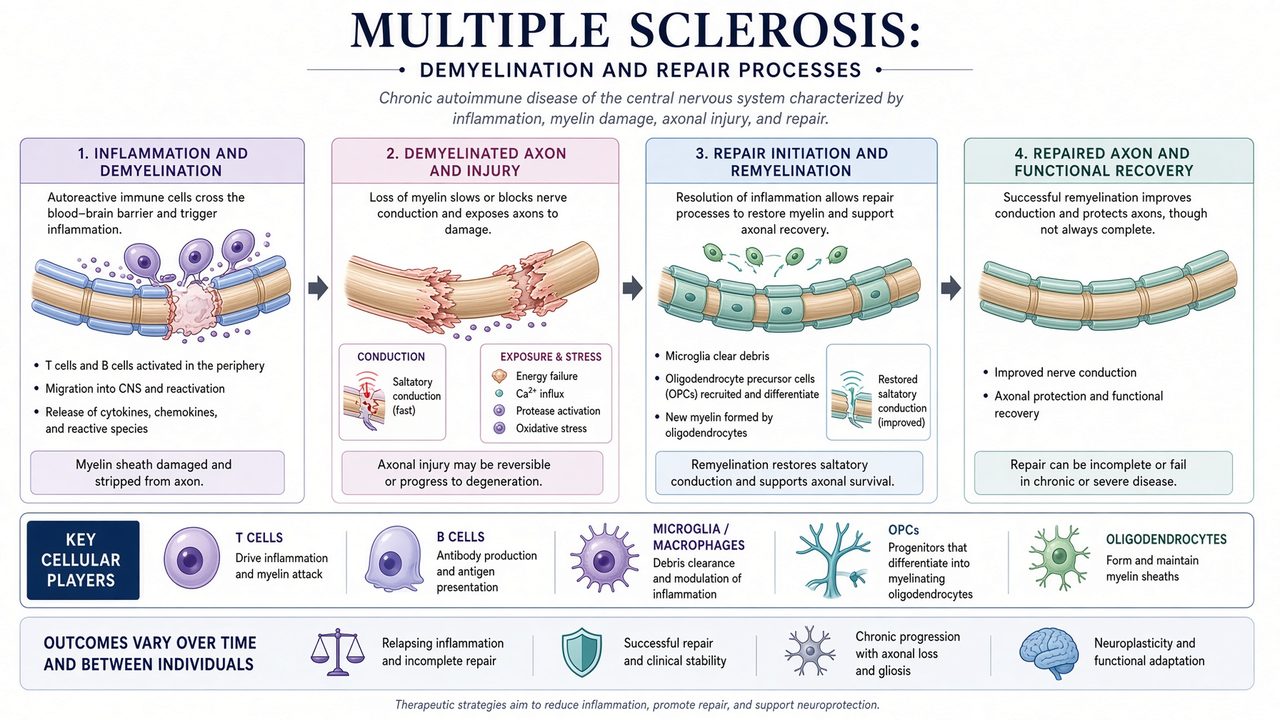
Multiple sclerosis (MS) is a chronic disease in which the immune system mistakenly attacks the protective myelin sheath around nerve fibers in the central nervous system, as well as the nerves themselves. This disrupts communication between the brain and the body. MS affects nearly a million people in the United States and about 2.9 million worldwide, and is typically diagnosed between ages 20 and 50, more often in women.
What happens
Immune cells, including T cells and B cells, cross the blood-brain barrier and trigger inflammation, damaging myelin and leaving scars, or sclerosis, called lesions or plaques. Damaged axons slow or block signals. The causes are not completely known, but involve a combination of genetic susceptibility and environmental factors, including low vitamin D, smoking, obesity in adolescence, and infection with the Epstein-Barr virus, which large studies have identified as a major risk factor.
Symptoms
Symptoms vary depending on where lesions occur:
- Vision problems, including optic neuritis with painful, blurry vision
- Numbness and tingling
- Weakness and difficulty walking
- Fatigue, one of the most common and disabling symptoms
- Balance problems and dizziness
- Spasticity and muscle stiffness
- Bladder and bowel problems
- Cognitive changes with slowed processing, attention and memory problems
- Depression and anxiety
- Heat sensitivity, with temporary worsening of symptoms when body temperature rises (Uhthoff's phenomenon)

Types of MS
- Relapsing-remitting MS, the most common, with episodes of new or worsening symptoms followed by recovery
- Secondary progressive MS, in which disability gradually accumulates, often after a relapsing phase
- Primary progressive MS, with steady progression from the start
- Clinically isolated syndrome, a first episode that may or may not become MS
Diagnosis
Neurologists use the McDonald criteria, which combine clinical history, neurological examination and evidence of lesions separated in space and time on MRI. Spinal fluid analysis showing oligoclonal bands, evoked potentials and blood tests help exclude other conditions.
Treatment
Managing relapses
High-dose corticosteroids speed recovery from a relapse. Plasma exchange may be used in severe cases.
Disease-modifying therapies
More than a dozen approved drugs reduce relapses, limit new lesions and slow disability. They include injectable medications such as interferon beta and glatiramer, oral drugs such as dimethyl fumarate, teriflunomide and sphingosine receptor modulators, and infusions such as natalizumab, ocrelizumab, ofatumumab and alemtuzumab. Some have higher efficacy and higher risks, such as infections. Treatment decisions depend on disease activity, risk, pregnancy plans and preferences. Newer drugs, such as BTK inhibitors, are being tested for progressive disease.
Symptom management
Medications and rehabilitation address fatigue, spasticity, pain, bladder problems and mood. Physical, occupational and speech therapy help maintain function.
Lifestyle
- Exercise improves strength, fatigue, mood and cognition
- Do not smoke, since smoking is linked to faster progression
- Healthy diet, with no diet proven to alter MS course
- Vitamin D adequacy is recommended, and discuss supplementation with your doctor
- Manage stress and seek mental health support
- Stay cool if heat worsens symptoms
- Vaccinations, after consultation with the care team
Pregnancy
Many people with MS have healthy pregnancies. Relapses often decrease during pregnancy and may increase postpartum. Plan with a neurologist, since some medications must be adjusted.
Outlook
MS varies widely. With modern therapy, many people remain active and ambulatory for decades. Research continues into repairing myelin and preventing progression. Specialized MS centers, many of which appear in our directory, offer comprehensive care. The National Multiple Sclerosis Society provides support and information.
Further reading from authoritative sources
This article is educational and does not replace advice from a licensed clinician. See the medical disclaimer. Looking for specialist care? Browse the neurology clinic directory.