Gene Therapy and Neurodegeneration
Many neurodegenerative diseases have genetic roots, which makes genes an obvious target. Gene therapy tries to correct, replace or silence faulty genetic instructions, and the first treatments for nervous system diseases are now reaching patients.
Main approaches
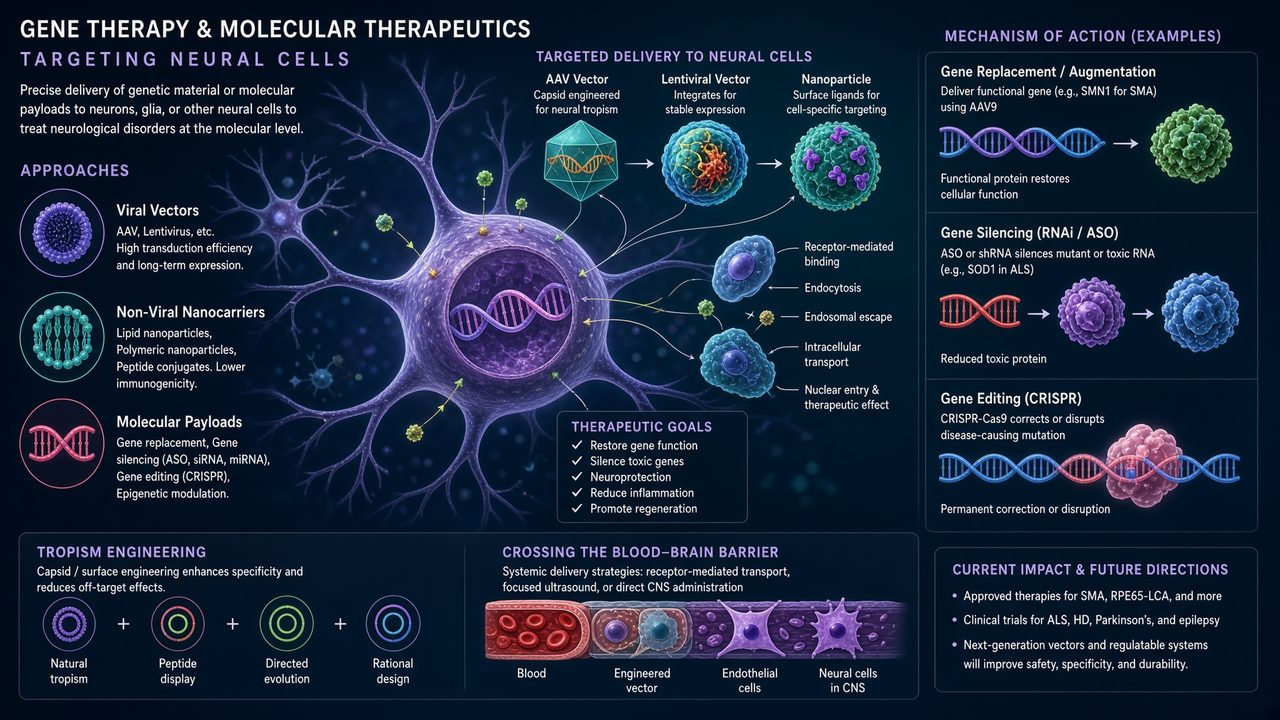
- Gene replacement: a working copy of a gene is delivered, usually inside an adeno-associated virus, or AAV, vector. This suits diseases caused by a missing gene.
- Gene silencing: antisense oligonucleotides, small interfering RNA and similar tools reduce production of a harmful protein.
- Gene editing: tools such as CRISPR aim to alter DNA directly. Base and prime editing refine the approach.
- Delivering helpful factors: vectors carry genes for growth factors or enzymes that support neurons.
Examples in practice
- Spinal muscular atrophy: onasemnogene abeparvovec (Zolgensma) delivers the SMN1 gene by AAV9 and, given early, dramatically improved survival and motor function in infants. Nusinersen, an antisense drug injected into spinal fluid, was the first approved therapy for the condition.
- ALS: tofersen reduces SOD1 protein in people with SOD1 mutations.
- Huntington's disease: huntingtin-lowering strategies include antisense drugs and the AAV-delivered therapy AMT-130, which reported slowed progression in an early study.
- Parkinson's disease: trials are testing delivery of genes for dopamine-producing enzymes or the growth factor GDNF, and targeting GBA1 and LRRK2.
- Alzheimer's disease: approaches under study include lowering tau, editing APOE and delivering protective variants. The rare APOE Christchurch mutation, which appeared to protect a Colombian woman with a genetic form of Alzheimer's, has inspired research.
- Rare childhood disorders: therapies for metachromatic leukodystrophy, AADC deficiency and others have been approved or are in trials.

Challenges
- Crossing the blood-brain barrier: some vectors are injected directly into the brain or spinal fluid, which is invasive, while newer engineered capsids aim to cross the barrier from the bloodstream.
- Reaching enough cells: the brain is large and complex.
- Immune reactions and safety: high doses of AAV have caused liver injury and serious adverse events in some patients.
- Durability: neurons live long, so effects may last, but reversibility is limited.
- Cost: some therapies cost millions of dollars.
- Complex diseases: common diseases such as sporadic Alzheimer's and Parkinson's involve many factors, so a single gene may not be enough.
- Ethics: germline editing is not permitted in most countries, and fair access is a concern.
What to watch
Genetic testing and counseling are becoming more available for families with inherited conditions. Clinical trials are listed at clinicaltrials.gov, and you should be cautious about clinics offering unproven gene or cell treatments, since some have caused harm.
Questions to ask
If a gene therapy trial is suggested, ask what is being delivered, how it is administered, what side effects are known, how long follow-up lasts and whether any monitoring or immune-suppressing drugs are needed. Ask whether you would be able to receive other treatments afterward. Genetic counselors can explain what testing means for relatives, which is often an important part of the decision.
Takeaway
Gene therapy is moving from promise to practice for some neurological diseases. For common neurodegeneration, progress will depend on better delivery, safety and understanding of disease biology.
Further reading from authoritative sources
This article is educational and does not replace advice from a licensed clinician. See the medical disclaimer. Looking for specialist care? Browse the neurology clinic directory.