Obsessive-Compulsive Disorder: The Brain's Stuck Loop
Obsessive-compulsive disorder affects about 1 to 3 percent of people. It involves obsessions, which are unwanted, intrusive thoughts, images or urges that cause distress, and compulsions, which are repetitive behaviors or mental acts performed to reduce distress or prevent feared outcomes.
What it looks like
Common themes include contamination, harm, symmetry and order, unwanted taboo thoughts, and doubt. Compulsions include washing, checking, counting, arranging, repeating, reassurance seeking, and mental rituals. People usually recognize that their fears are excessive but feel unable to stop. The disorder consumes at least an hour a day or causes significant impairment. It often starts in adolescence or early adulthood, and can appear in childhood.
Brain circuits
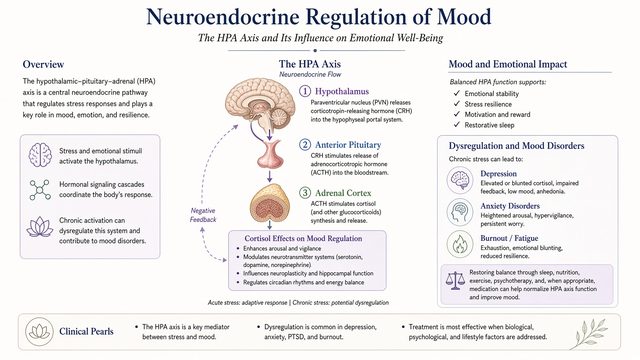
Imaging studies show hyperactivity in the orbitofrontal cortex, anterior cingulate and caudate nucleus, parts of cortico-striato-thalamo-cortical loops responsible for error detection, habits and evaluating threat. Researchers such as Lewis Baxter found that activity in these regions decreases with successful treatment, whether through medication or therapy. Differences in serotonin, glutamate and dopamine signaling are implicated. Many people with OCD show tendencies toward habit formation and difficulty with cognitive flexibility. Genetic factors contribute, with heritability estimated around 40 to 50 percent, and environmental factors such as stress and infections in some cases. A rare condition called pediatric acute-onset neuropsychiatric syndrome has been proposed to follow infections, but remains debated.
Related conditions
OCD frequently co-occurs with anxiety, depression, tic disorders and body-focused repetitive behaviors, and is related to body dysmorphic disorder and hoarding disorder.
Treatment
- Exposure and response prevention: a form of cognitive behavioral therapy in which people gradually face feared situations without performing compulsions. It is the most effective psychotherapy, and works for many people, with gains maintained over time.
- Medication: selective serotonin reuptake inhibitors, often at higher doses than for depression, and clomipramine. Augmentation with low-dose antipsychotics is used in some cases. Treatment effects may take 8 to 12 weeks.
- Intensive programs and residential care for severe cases
- Transcranial magnetic stimulation: deep TMS received approval from the U.S. Food and Drug Administration for OCD in 2018.
- Deep brain stimulation: reserved for severe, treatment-resistant cases at specialized centers.
- Acceptance-based approaches and support groups
Helping a loved one
Family accommodation, such as providing reassurance or participating in rituals, can maintain OCD, so gently reducing accommodation under the guidance of a therapist helps. Be patient and supportive, and avoid blaming or arguing with fears.
When to get help
If intrusive thoughts or rituals interfere with life, consult a mental health professional with experience in exposure therapy. If you have thoughts of harming yourself, seek immediate help, such as the 988 Suicide and Crisis Lifeline in the United States.
Common myths
OCD is not simply being neat, and not everyone who likes order has OCD. Intrusive thoughts are common in the general population, but in OCD they cause intense distress and lead to rituals. Having an unwanted violent or taboo thought does not mean a person will act on it.
Children and teens
Young people may hide rituals or show them as long homework or bathroom times, meltdowns when rituals are interrupted, or repeated reassurance seeking. Family-based exposure therapy is effective, and early treatment prevents years of suffering.
Self-help
Resources from the International OCD Foundation provide education, therapist finders and support groups. Expect treatment to feel uncomfortable at first, because the aim is to learn that anxiety fades without rituals.
Takeaway
OCD is not a quirk or a character flaw. Specialized therapy and medication help the brain break out of the loop.
Further reading from authoritative sources
This article is educational and does not replace advice from a licensed clinician. See the medical disclaimer. Looking for specialist care? Browse the neurology clinic directory.