Occupational Therapy and Cognitive Recovery
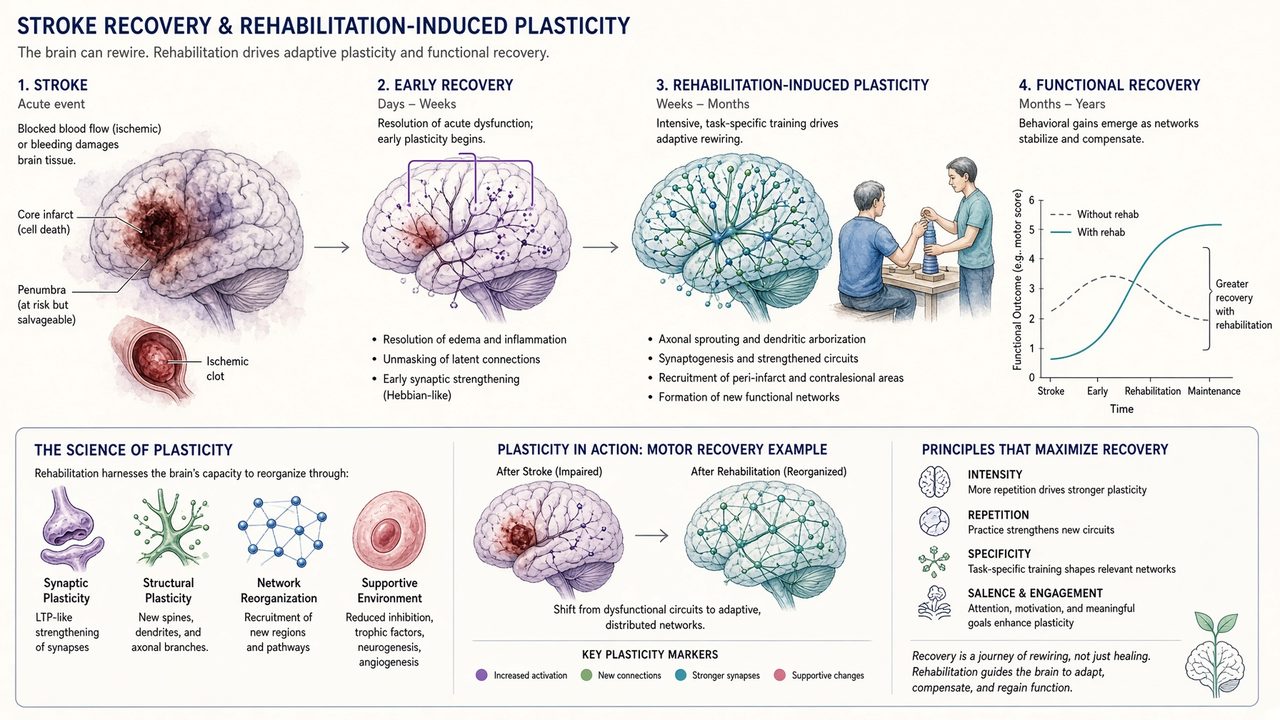
Occupational therapy focuses on helping people do the activities that matter to them, from dressing and cooking to working and driving. For people with brain conditions, therapists address thinking, movement, vision and emotional factors that affect daily life.
What occupational therapists assess
Therapists evaluate how a person performs everyday activities, such as managing medications, preparing meals, handling money, using phones, shopping and caring for others. They assess attention, memory, planning, visual perception, motor skills, sensation, fatigue and mood, as well as the home, workplace and community environment. Standardized tools such as the Assessment of Motor and Process Skills or the Executive Function Performance Test help to link cognition with function.
Approaches
- Task practice in context: practicing real tasks, such as making a snack or a bus trip, improves skill and confidence.
- Cognitive strategy training: the Cognitive Orientation to daily Occupational Performance approach, developed by Helene Polatajko and Angela Mandich, teaches a goal-plan-do-check strategy and has shown benefits for adults after stroke and for children with coordination disorders.
- Compensatory tools: pillboxes, phone reminders, visual schedules, labels and checklists
- Adaptive equipment: one-handed gadgets, adapted utensils, grab bars and bathroom aids
- Visual and perceptual training: for neglect, field loss and spatial problems
- Upper limb rehabilitation, including task-oriented training and constraint-induced therapy
- Energy conservation and fatigue management: pacing, planning and prioritizing
- Home modifications: to prevent falls and support independence
- Return to work and driving evaluation: assessing readiness, recommending accommodations, and advising on safe driving
- Caregiver training: teaching families how to help without taking over

Conditions served
Stroke, traumatic brain injury, dementia, Parkinson's disease, multiple sclerosis, spinal cord injury, cerebral palsy, ADHD, autism and sensory processing differences, among others.
Evidence
Reviews show that occupational therapy after stroke improves activities of daily living and reduces dependency, and that home-based occupational therapy for people with dementia and their caregivers, such as the Tailored Activity Program by Laura Gitlin and colleagues, reduces behavior problems and caregiver burden.
Strategies to try at home
- Establish routines for medications, meals and sleep
- Use a central calendar and a single notebook
- Break tasks into steps, and write them down
- Reduce clutter and distractions
- Take rest breaks before fatigue builds
- Use technology reminders
- Practice tasks that matter to you, safely
Finding an occupational therapist
Ask your doctor or rehabilitation team for a referral, and check coverage. Therapists can see people in hospitals, clinics, homes and schools.
Returning to work and school
Therapists can contact employers and teachers to recommend accommodations such as flexible hours, quiet spaces, written instructions, reduced workloads at first and rest breaks. A gradual return, building up hours over weeks, helps prevent setbacks.
Driving after brain injury
Specialists assess vision, reaction time, judgment and physical control. Some people can return to driving with adaptations such as hand controls, and others need alternatives such as public transport or ride services.
Takeaway
Occupational therapy bridges the gap between recovery and daily life. It helps people do what they want and need to do.
Further reading from authoritative sources
This article is educational and does not replace advice from a licensed clinician. See the medical disclaimer. Looking for specialist care? Browse the neurology clinic directory.