How Biofeedback Devices Work: A Practical Guide
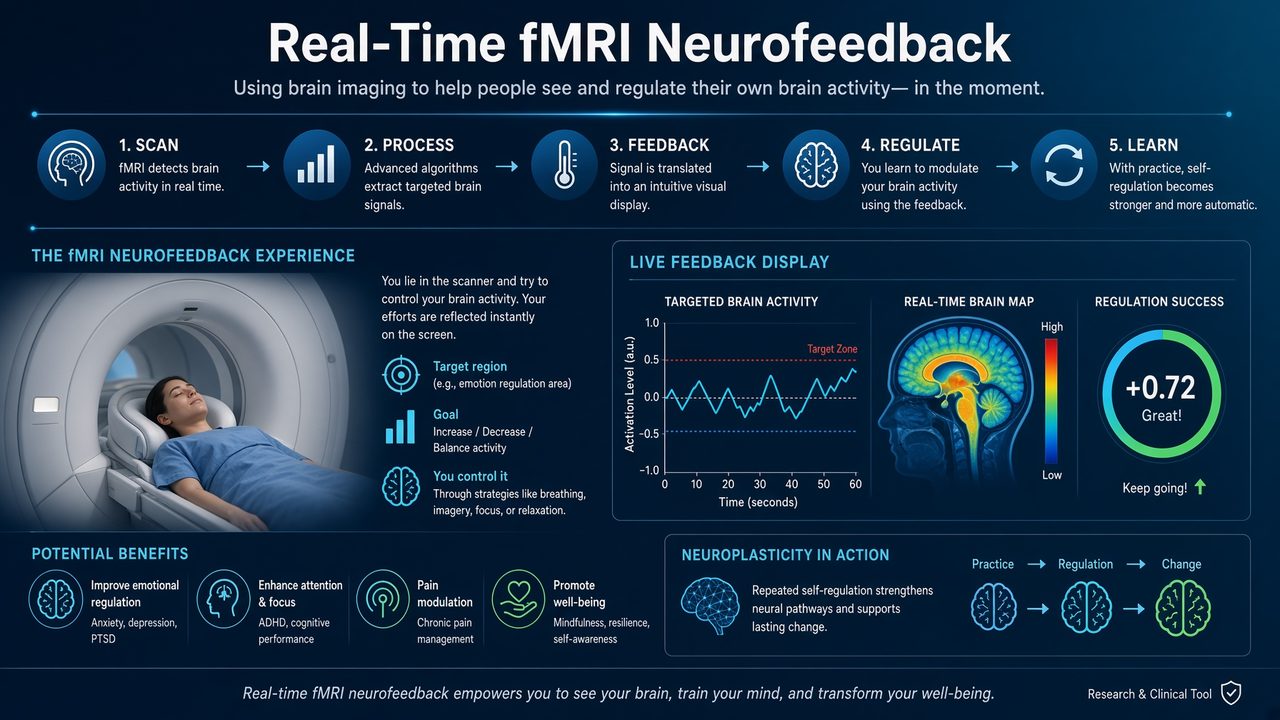
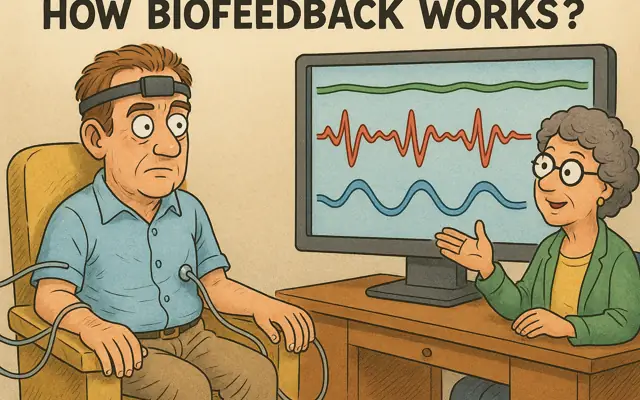
Every biofeedback device, whether it is a clinical system in a therapist's office or a smartphone app with a small sensor, follows the same basic loop: measure a body signal, process it, display it, and let the user respond. Knowing how these pieces work helps you understand what your device can tell you and how much to trust it.
The feedback loop
1. Sensing. Sensors pick up a physiological signal. 2. Processing. Electronics amplify the signal, filter out noise and extract a measure such as heart rate or muscle tension. 3. Display. The result is shown as a graph, a number, a sound, a color or a game. 4. Learning. The user tries a strategy, notices the change and adjusts.
Over repeated practice, people learn to recognize the internal sensations associated with relaxed or tense states and to control them without the equipment.
Common sensors
Photoplethysmography (PPG)
A small light shines into the skin, usually on a fingertip or earlobe, and a detector measures how much is absorbed as blood pulses through the vessels. It is used to estimate heart rate and heart rate variability in many consumer devices. It is comfortable and convenient but sensitive to movement, and accuracy for variability measures is lower than with ECG, particularly with wrist-worn devices during activity.
Electrocardiography (ECG)
Electrodes on the chest or limbs record the heart's electrical activity directly. It provides more precise beat-to-beat timing than PPG, which is why it is considered the standard for heart rate variability analysis.
Surface electromyography (sEMG)
Electrodes placed on the skin over a muscle detect electrical activity produced when muscle fibers contract. The signal is shown as microvolts and used to train relaxation, strengthen weak muscles or correct movement patterns.
Respiration sensors
Stretchy belts around the chest or abdomen detect changes in circumference as you breathe, showing rate and depth. Some devices use airflow or carbon dioxide sensors.
Electrodermal activity (EDA)
Two small electrodes on the fingers measure skin conductance, which rises with sweat gland activity, a marker of emotional arousal.
Skin temperature
A thermistor measures fingertip temperature. Hands tend to warm as the body relaxes and cool during stress.
Electroencephalography (EEG)
Scalp electrodes measure brain electrical activity for neurofeedback. Clinical systems use gel or paste for good contact, while consumer systems use dry sensors.
How the signal becomes feedback
- Amplification and filtering remove noise such as electrical interference.
- Artifact detection removes blinks, movement or muscle contamination.
- Feature extraction converts raw signals into meaningful metrics, such as heart rate variability or the power in a frequency band.
- Thresholds and rewards decide when feedback changes, for example a tone that plays when tension falls below a set level.
Clinical versus consumer devices
Clinical systems usually have more sensors, higher-quality signal processing and software that is operated by a trained professional who sets goals and interprets data. Consumer devices emphasize convenience and are generally less accurate, and many are not regulated as medical devices. Some products have regulatory clearance for specific uses, so check what a manufacturer claims and what evidence supports it.
Choosing a device
- Match the sensor to your goal. Breathing and heart rhythm for stress, muscle sensors for tension or rehabilitation, EEG for neurofeedback guided by a clinician.
- Check signal quality and whether independent studies validated the device.
- Consider ease of use. You are more likely to practice with something comfortable.
- Look at the privacy policy.
- Ask a professional. A certified practitioner can recommend equipment suited to your needs.
Getting the most from your device
1. Practice regularly, in short sessions. 2. Use feedback to find what works for you, then rely less on the device. 3. Record your experiences in a journal. 4. Avoid obsessing over numbers. 5. If symptoms are severe or worrying, see a clinician.
The takeaway
Biofeedback devices are tools for self-awareness and skill building. Understanding what they measure helps you use them effectively and keeps expectations realistic.
Further reading from authoritative sources
- National Institute of Neurological Disorders and Stroke (NINDS)
- National Center for Complementary and Integrative Health (NCCIH)
This article is educational and does not replace advice from a licensed clinician. See the medical disclaimer. Looking for specialist care? Browse the neurology clinic directory.