How the Brain's Reward System Motivates Behavior
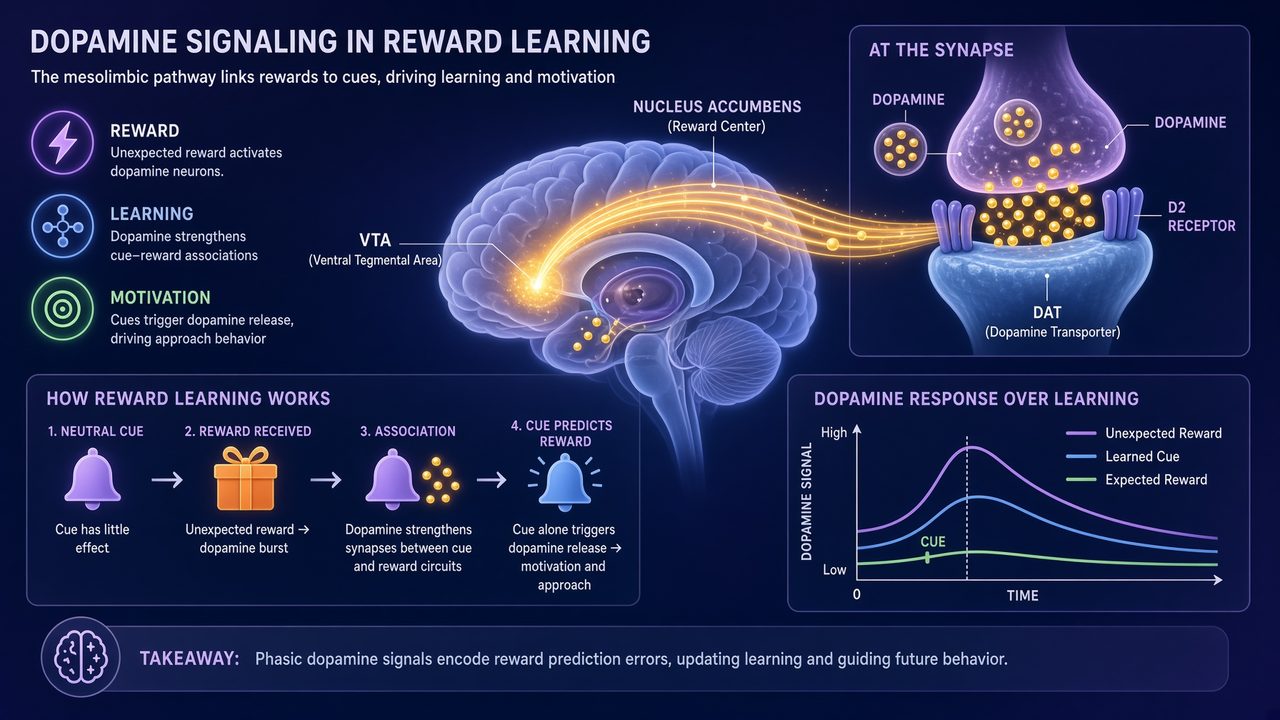
Every day you make hundreds of choices driven by motivation, from reaching for coffee to starting a project. Behind these choices lies a network that assigns value to outcomes, drives pursuit and records what worked. This is the reward system.
The main players
- Ventral tegmental area and substantia nigra: produce dopamine
- Nucleus accumbens (ventral striatum): converts motivation into action
- Dorsal striatum: habit formation
- Orbitofrontal and ventromedial prefrontal cortex: represent the value of options
- Amygdala: links cues to emotional value
- Lateral habenula: signals disappointment and negative outcomes
- Hypothalamus: connects reward with hunger, thirst and other drives
Wanting, liking and learning
Wanting is the incentive salience that makes a cue attractive and pulls you toward it, driven largely by dopamine. Liking is the hedonic pleasure of consuming a reward, generated by small hotspots in the nucleus accumbens and ventral pallidum using opioid and endocannabinoid signaling. Learning occurs when prediction errors update expectations. The distinction explains why you might scroll endlessly without enjoying it.
Value and decision-making
The prefrontal cortex converts different rewards into a common currency, allowing choices between a sandwich and a vacation. Effort, delay and risk adjust value. People tend to discount delayed rewards, which is why immediate gratification can beat long-term goals, and why impulsive discounting is higher in addiction and ADHD.
Variable rewards
Rewards that arrive unpredictably, like slot machines or social media notifications, produce strong dopamine responses and persistent behavior, which is why they are so engaging.
Motivation and effort
Dopamine in the nucleus accumbens influences how much effort an animal will spend for a reward. Low dopamine can make people less willing to work, even when they still enjoy the outcome. This is relevant to the fatigue and apathy seen in some conditions.
When rewards go wrong
- Addiction: drugs hijack the system.
- Behavioral addictions such as gambling disorder
- Depression: blunted reward responsiveness, or anhedonia
- Binge eating and obesity: altered reward sensitivity to food cues
- Parkinson's disease: reduced motivation, and compulsive behaviors with dopamine agonists
- Schizophrenia: abnormal salience assignment
Using reward science for better habits
- Make desired behaviors immediately rewarding, for example by pairing exercise with a favorite podcast.
- Track progress, since visible progress is rewarding.
- Break goals into small steps so wins arrive often.
- Reduce friction for good behaviors and add friction for unwanted ones.
- Use social commitments, as social approval is a powerful reward.
- Plan for lapses, since prediction errors from setbacks can discourage you.
- Notice intrinsic rewards, such as mastery and meaning, which are more sustainable than external incentives.
Children and rewards
Praise for effort and strategies builds motivation better than praise for traits, and excessive external rewards can undermine intrinsic interest in activities children already enjoy.
Questions researchers are asking
Researchers are studying why some people are more sensitive to reward cues than others, how adolescence changes reward sensitivity, and whether digital media design shapes reward learning. Brain stimulation and medication trials aim to restore reward function in conditions marked by apathy and anhedonia. Findings so far suggest that both biology and environment matter.
Takeaway
The reward system is not about chasing pleasure but about learning what to pursue. Designing your environment to align with it makes good behavior easier.
Further reading from authoritative sources
This article is educational and does not replace advice from a licensed clinician. See the medical disclaimer. Looking for specialist care? Browse the neurology clinic directory.